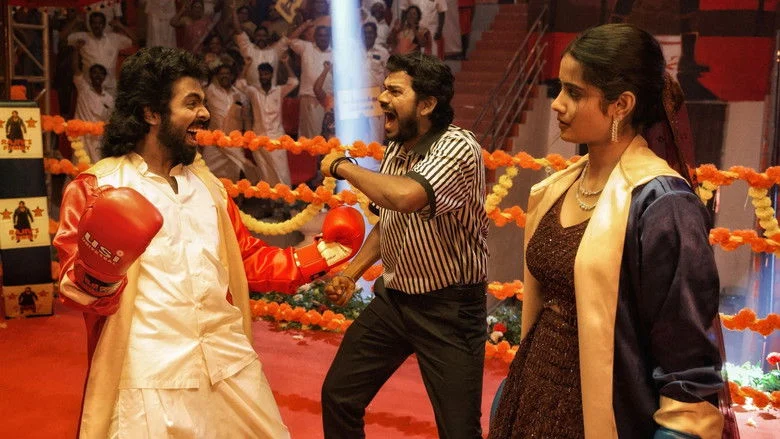
Happy Raj (2026): George Maryan’s Craft Rescues an Uneven Comedy


A narrator’s voice fills the first fifteen minutes of Happy Raj, methodically explaining how a man named Kathamuthu earned the nickname Kudhirai Muttai, and how that humiliation quietly shaped his son’s entire love life. The setup is economical on paper, but the execution feels closer to a PowerPoint slide than cinema, and that tension between a genuinely warm story and clumsy storytelling craft defines almost everything that follows.
GV Prakash Carries the Weight of Inherited Shame With Restraint
GV Prakash’s Happy is less a character than a walking inheritance, of ridicule, of a reputation he never asked for, of a father whose shadow precedes every introduction. When he finally lands an IT job in Bengaluru and meets Kavya, the relief on his face reads as earned rather than performed.
He doesn’t overplay the embarrassment. That quiet restraint is what makes the culture-clash second half work at all.
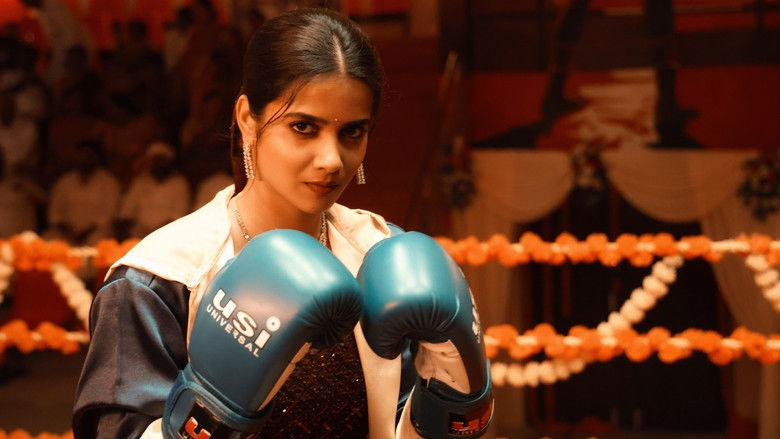
Maria Raja Elanchezian Trusts the Second Half More Than the First
Director-writer Maria Raja Elanchezian makes a puzzling opening gambit, fronting the film with a narrated backstory that essentially tells the audience what to feel rather than letting them discover it. It’s the kind of choice that signals a director not yet fully trusting their own material.
The good news is that Elanchezian clearly does trust comedy. Once the families collide, the film finds genuine momentum. The culture-clash engine between Kathamuthu and Rajiv is wound tightly, and the screenplay stops explaining and starts performing.
The structural imbalance, though, is real. A first half that drags through exposition before Bengaluru cannot be entirely redeemed by a second half that clicks, even when it clicks well.
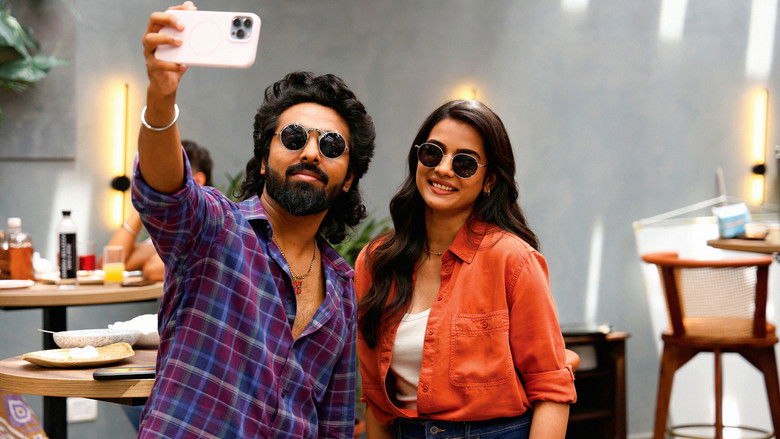
George Maryan Builds Kathamuthu Into the Film’s Moral Center
The best performance in Happy Raj doesn’t belong to its lead. George Maryan plays Kathamuthu with a dignity that cuts against the film’s repeated use of his character as comic fodder. He earns the laughs honestly, without cheapening the man underneath the nickname.
I found myself watching him in scenes where GV Prakash was technically the focus, which says something about the weight Maryan brings to even the film’s lighter register.
His casting signals something deliberate about Elanchezian’s intent: this is a film that wants to rehabilitate the ridiculed, not simply exploit them for laughs. Whether it fully succeeds is another question.
Abbas Returns to Tamil Cinema as the Culture-Clash Counterweight
Abbas, as the NRI father Rajiv, marks a return to Tamil cinema that is functionally important even if the character is lightly sketched. His presence as the city-bred, polished counterpart to Maryan’s Kathamuthu gives the family-collision comedy its necessary friction.
Sri Gouri Priya’s Kavya, meanwhile, is the film’s least developed anchor. She sets the condition for a formal family meeting, which is a structurally useful beat, but the screenplay gives her little else to do. Her chemistry with GV Prakash is warm without being particularly specific.
For Tamil comedy reviews and drama criticism, Tamil Drama reviews cover a wider range of recent releases worth exploring alongside this one.
The Comedy Works When the Film Stops Being Cautious
The collision between Kathamuthu and Rajiv, village father versus NRI father, is where Happy Raj earns its runtime. The second half packs fun moments consecutively, and the chaos of a rural family navigating a city romance has a genuine comic rhythm. Times of India rated the film 3.0 out of 5, a score that feels accurate in its ambivalence.
The genre execution is uneven rather than unsuccessful. The comedy engine is sound; the ignition is slow.
Justin Prabhakaran’s music, including tracks like Aadiney Irupen and Thuru Thuru, sits in the background without particularly distinguishing itself. The film’s tonal warmth owes more to its cast than its score.
The audience reception mirrors the critical split, a film that generates goodwill in the room despite arriving there inefficiently. The IMDb user rating of 3.0 reflects a film that satisfied without surprising.
At 2 hours 36 minutes, Happy Raj is longer than its material demands. A tighter first half would have transformed this from an uneven ride into something genuinely repeatable.
If the warmth of Happy Raj‘s family chaos appeals to you, the tonal ambition in Paharganj to review offers a more formally daring take on similar social-collision comedy.
Watch Happy Raj if you have patience for a slow first half and genuine affection for George Maryan, the second half will reward you, and his performance alone justifies the ticket. Those looking for a sharp, consistently crafted comedy will find the pacing frustrating before the fun kicks in. OTT is probably the right format here, where pausing through the expository opening costs you nothing.
Happy Raj is a warm but structurally soft Tamil comedy that earns its goodwill largely through George Maryan’s dignified performance and a second half that finally trusts its own material, a qualified recommendation at 2.5 out of 5.
The tribal-hero clash in Ustaad Bhagat verdict shares this film’s pattern of a strong central performance propping up uneven craft across two halves.
Ankit Jaiswal is the Chief Author, covering Indian cinema and OTT releases with honest, no-filler criticism. An SEO strategist by background, he brings a research-driven approach to film writing, cutting through hype to tell you exactly what's worth your time.