The Prisoner (2026): Tahar Rahim and Izuka Hoyle Locked Into a Tense Sky Original


A trained killer and the officer meant to deliver him to court, handcuffed, hunted, the only two left alive after an ambush tears their convoy apart. That central image alone, two strangers shackled by circumstance and pointed at by an entire crime syndicate, carries the kind of primal, stripped-down urgency that most action thrillers spend three acts building toward and never quite reach.
Tahar Rahim Carries This Premise On His Back
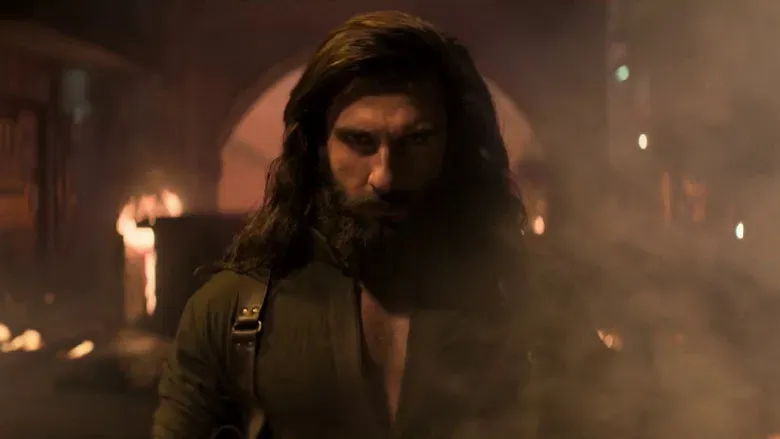
Tahar Rahim’s Tibor is described as a trained killer, and Rahim, who turned in one of European cinema’s most quietly devastating performances in Un Prophète, is exactly the right kind of dangerous for this role. He doesn’t need to shout. His stillness is the threat.
What makes the casting sharp is that Rahim’s history with morally complex, institutionally trapped characters gives Tibor an automatic weight. The question of whether this man is an asset or a predator to Amber is the engine the entire show runs on. I find it genuinely rare that casting alone does this much narrative work before a single frame airs.
Izuka Hoyle’s Amber Is the Real Test of This Show
Izuka Hoyle carries the harder role. Amber, principled, young, suddenly the last line between a high-value witness and the people who want him silent, has to be competent without being invincible. Too capable, and the tension collapses. Too fragile, and the dynamic becomes a rescue operation.
Hoyle’s prior work in Boiling Point and Big Boys suggests a performer with range that extends well beyond surface-level reaction. Her ability to hold a scene in uncomfortable stillness will matter enormously here. The premise lives or dies on whether audiences believe Amber can outthink a man trained to survive exactly this kind of situation.
Otto Bathurst and Matt Charman Build From Solid Ground
Otto Bathurst directed episodes of Peaky Blinders, which means he understands how to make confined, pressure-cooker environments feel cinematic rather than stagey. That skill is precisely what The Prisoner demands. The threat is constant, the geography is hostile, and the pacing has to keep two people handcuffed together from feeling repetitive across six episodes.
Matt Charman’s writing credential on Bridge of Spies is significant context. That screenplay was built on the tension of negotiation, on two people in opposition finding the precise moment to trust. That structural instinct maps cleanly onto what The Prisoner is attempting.
The potential flaw here is formulaic escalation. Six episodes is generous runway for a premise this contained. Without genuine surprise in how Amber and Tibor’s dynamic shifts, beyond the expected beats of reluctant alliance, the show risks mistaking sustained action for sustained tension. Charman’s cleaner thrillers have occasionally been front-loaded with premise and thin on payoff.
For readers who follow English action thriller content closely, Hindi Thriller reviews on this site cover comparable genre territory worth exploring.
The Convoy Ambush Premise Is Both the Strength and the Gamble
The action architecture here is classical in the best sense. An ambush strips away every institutional safety net. Two survivors, handcuffed, must outrun a syndicate that has resources, planning, and patience on its side. That setup demands kinetic, close-quarters action choreography, not spectacle for its own sake.
Bathurst’s instinct will likely keep the action grounded and geography-specific. His best work has always been about making the audience feel the walls closing in. The Prisoner is built for exactly that kind of suffocating spatial tension.
The risk is that a six-part format tempts the production into bloating action sequences to fill runtime. The tightest version of this story probably runs four episodes. Whether the writing discipline holds across six is the central unanswered question before release.
No Controversy, but the Premise Courts Political Subtext
No production controversies or censorship issues have surfaced around The Prisoner. But the premise, a state-sanctioned escort of a syndicate informant collapsing under organised criminal pressure, carries implicit commentary about institutional fragility. Whether Charman and Bathurst pursue that subtext or treat it as backdrop remains to be seen.
The casting of Rahim, a French-Algerian actor, in the role of a high-value “foreign” prisoner being delivered through a British procedural framework does carry a quiet cultural texture. It may mean nothing. Or it may be exactly the kind of casting that retrospectively looks considered.
Sky Original’s track record with prestige thrillers gives this production a credible platform. The question is whether the content matches the pedigree of the people attached to it.
If the show’s premise of moral ambiguity between institution and individual resonates with you, the Nukkad Naatak review in the Nukkad Naatak review offers an interesting counterpoint on how smaller productions handle similar character-driven tension.
The Prisoner arrives with the right bones, a clean, ruthless premise, two genuinely compelling lead actors, and a director who knows how to make danger feel spatial and immediate. Watch it on Sky for the committed central pairing alone; Rahim and Hoyle together is a combination worth six episodes of your time, provided the writing keeps its nerve past episode three.
The Prisoner earns a provisional 3.5 out of 5, a show that deserves its shot based purely on craft pedigree, and one that will either justify that faith or quietly confirm that even the best-assembled thrillers can be undone by a premise stretched too thin.
For more on the year’s contentious thrillers built around difficult subjects, the The Kerala verdict examines how strong material can be undermined by the writing decisions surrounding it.
Ankit Jaiswal is the Chief Author, covering Indian cinema and OTT releases with honest, no-filler criticism. An SEO strategist by background, he brings a research-driven approach to film writing, cutting through hype to tell you exactly what's worth your time.