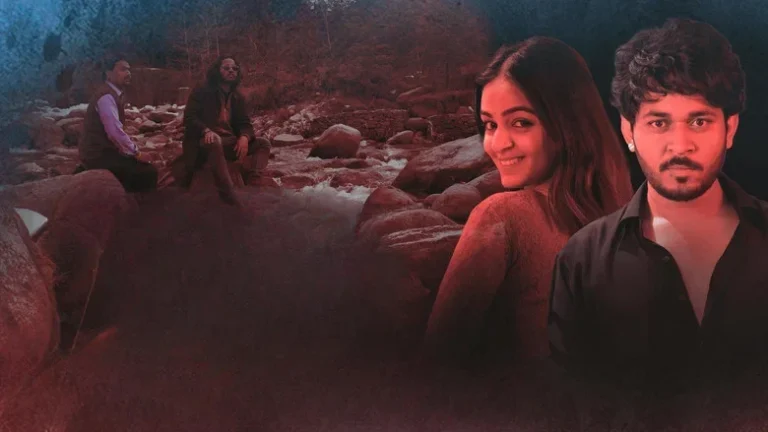
Sethu tends to his bedridden brother Madhu in a secluded Wayanad house, forced to impersonate their deceased uncle Markose whenever Madhu hallucinates. The premise crackles with absurdist potential, but Ratheesh Balakrishnan Poduval’s black comedy stumbles halfway through its own setup.
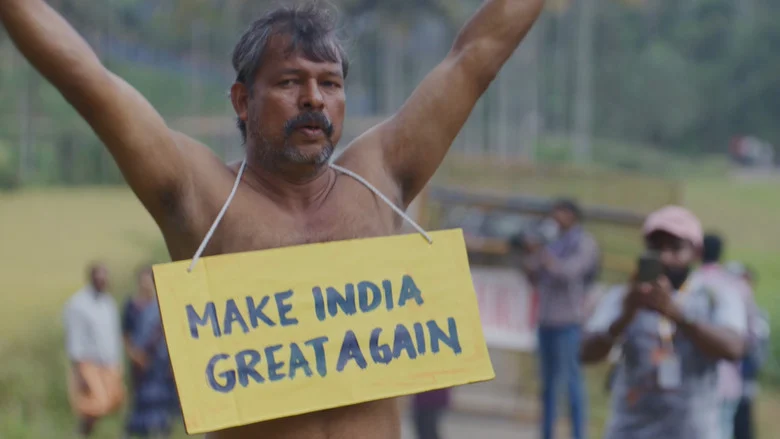
Kunchacko Boban Maps Sethu’s Unraveling With Clinical Precision
Boban captures the timidity first, shoulders hunched, voice barely audible. Then comes the inner torment, visible in how Sethu flinches before answering Madhu’s delirious demands. The gradual emotional unravelling unfolds in micro-gestures: a hand trembling while holding a spoon, eyes darting toward exits he never takes. Boban excels at playing men trapped by circumstance, and Sethu ranks among his more vulnerable turns. He makes the impersonation sequences land not as farce but as quiet tragedy.
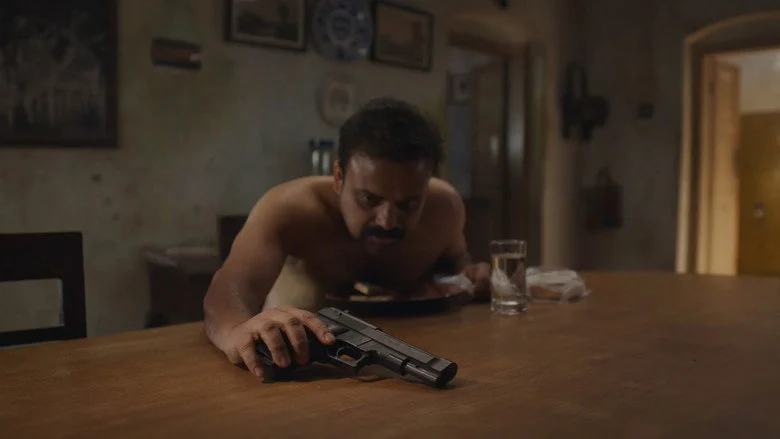
Dileesh Pothan’s Madhu Burns Through Every Frame
Pothan leans into Madhu’s unpredictability with ferocious commitment. One moment he’s docile, the next he’s barking orders at ghosts only he can see. The intensity never wavers, even when the material beneath him does. Pothan and Boban share a lived-in chemistry that suggests years of co-dependency without a single exposition dump. Their dynamic carries the film’s strongest passages, especially before the second half introduces complications the screenplay cannot manage.
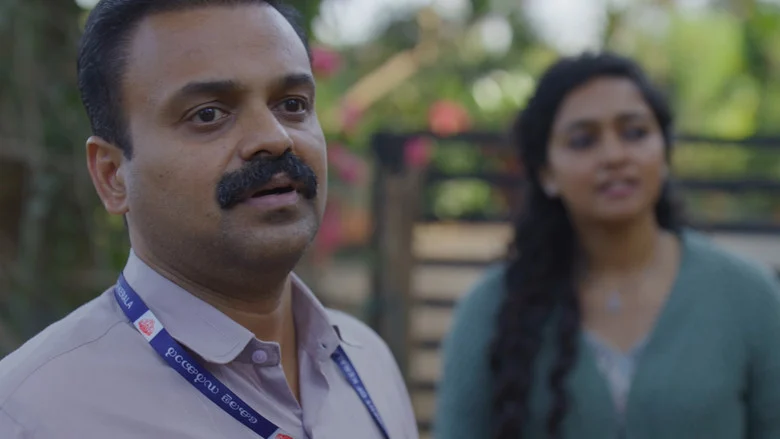
Poduval’s Direction Thrives Until It Overcomplicates Itself
The first half moves with precise comic rhythm. Hallucinations and impersonations stack tension without tipping into chaos. Poduval stages the brothers’ routine as a fragile choreography, one wrong word from Sethu collapses the illusion. The arrival of injured Maoist Rajendra Prasad, pursued by their cousin Aramiyas, should escalate this pressure. Instead, the second half introduces too many threads: political fugitives, police chases, fractured timelines. The screenplay loses its linear grip. What began as contained black comedy sprawls into convoluted tangents.
The editing stumbles hardest. The first half’s pacing is surgical, scenes end exactly when they should. Post-interval, sequences drag or cut abruptly, as if Poduval cannot decide whether to stretch or compress. The third act veers into melodrama the film has not earned. By the time the final confrontation arrives, the absurdist tone has dissolved into generic family drama.
Poduval demonstrated sharper control in his earlier work, where constraints forced discipline. Here, ambition outpaces execution. The film needed a ruthless editor willing to cut subplots that distract from the central sibling dynamic.
Sajin Gopu and Chidambaram Operate at the Margins
Sajin Gopu’s Rajendra Prasad enters as a wild card, a bleeding ideologue whose presence should destabilize Sethu’s fragile caretaking routine. Gopu brings physical exhaustion to the role, his ragged breathing, the way he leans against walls, but the screenplay treats him as a plot device more than a character. Chidambaram’s Aramiyas, their pursuing cousin, barely registers beyond functional antagonism. Sharanya Ramachandran appears in fragments, her purpose unclear. None of these supporting players receive enough material to justify their inclusion. They crowd the frame without deepening the narrative.
Malayalam Black Comedy Deserves Tighter Execution
Malayalam cinema has produced sharper genre hybrids in recent years, films that balance dark humor with narrative clarity. Oru Durooha Saahacharyathil signals Poduval’s willingness to stretch beyond safe territory, but the film’s second-half collapse suggests a writer-director who lost track of his own premise. If you’re drawn to Malayalam Drama reviews, you’ll find more disciplined recent examples elsewhere. The disruption of routine by a stranger fits the black comedy template, but only if the screenplay maintains tonal consistency. Here, it fractures.
Limited theatrical release in April 2026 suggests the producers recognized the film’s niche appeal. At two hours and fifteen minutes, it overstays its welcome. A leaner cut might have salvaged the stronger first half.
Watch for Boban and Pothan’s performances if you’re tracking either actor’s trajectory, but temper expectations. The film works best in stretches, never as a cohesive whole. Streaming will suit it better than theatrical, where the second-half sag becomes harder to forgive.
Ratheesh Balakrishnan Poduval’s black comedy setup deserved a tighter narrative spine, skip it unless you’re committed to Prathichaya review that prioritize ambition over execution.
Oru Durooha Saahacharyathil collapses under its own ideas, earning a generous 2.5 out of 5 only for its committed lead performances and a first half that promised far more than the film could deliver.
For a Malayalam sequel that balances dark humor with structural control, Bharathanatyam 2 verdict offers a more disciplined template.