The Nair family gathers again in Sreekandapuram, still scrubbing old bloodstains while fresh threats circle. Krishnadas Murali’s sequel to his 2024 flop picks up exactly where the first film ended, trading melodrama for a darker comedic register that sharpens the dysfunctional family portrait into something more caustic.
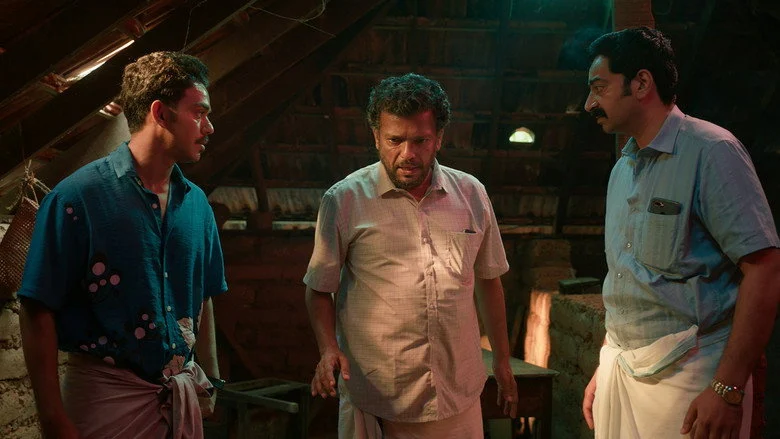
Saiju Kurup Anchors the Family Rot Without Overplaying It
Saiju Kurup, cast as the oldest son, carries the weight of Bharathan Nair’s criminal residue with a controlled weariness. He doesn’t push for sympathy. His performance lands because he understands the material isn’t asking for redemption arcs, just survival instincts wrapped in tired sarcasm.
The screenplay trusts him to hold tension without monologues. That restraint gives the ensemble breathing room.
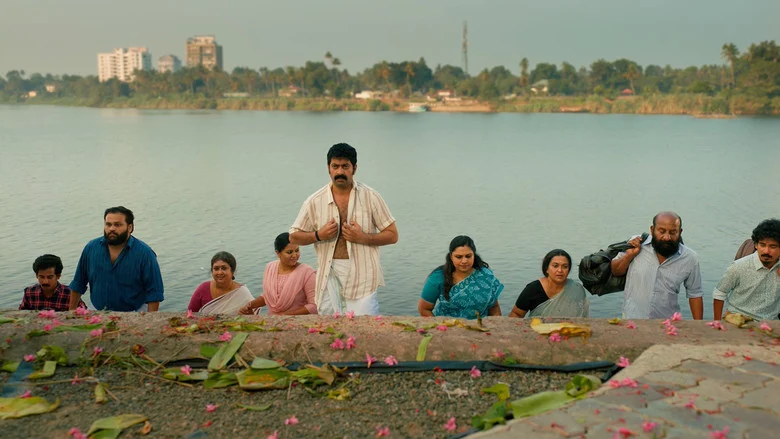
Krishnadas Murali Upgrades the Craft but Stretches the Runtime
Murali’s direction shows technical growth, sharper framing, tighter sound design, a cleaner visual palette than the first film’s uneven aesthetic. He stages the cover-up mechanics with procedural patience, letting dark humour seep through instead of announcing itself.
But at 145 minutes, the screenplay sags. The linear continuation structure, picking up threads from Bharathanatyam’s ending, works for continuity but not pacing. Midpoint lull stretches scenes that could land in half the time.
The ambition to follow a commercial failure with a riskier sequel deserves credit. The execution needed another pass in the edit suite.
Dark Humour Cuts Through Dysfunction Without Forcing Punchlines
The film’s comedic spine works because it doesn’t chase laughs. The Nair family’s attempts to bury old crimes while maintaining domestic normalcy generate absurdist friction organically. Murali lets situations breathe before puncturing them.
Threats from Bharathan’s past accomplices introduce external pressure, but the real comedy emerges from internal collapse. The family doesn’t bond under crisis, they fracture, bicker, recalibrate survival strategies in real time.
This isn’t broad family-entertainer territory. The humour feels inherited from crime-procedural cynicism, filtered through Malayalam cinema’s appetite for middle-class grotesquerie. When it lands, it cuts clean. When it drags, the darkness just sits heavy.
Looking beyond genre convention, Malayalam Drama reviews often spotlight ensemble chemistry as the make-or-break factor, here, the dysfunction itself becomes the chemistry.
Kalaranjini, Jagadish, and Vinay Fort Ground the Ensemble’s Edges
Kalaranjini plays the matriarch with a brittle practicality that never softens into sentimentality. She treats the family’s predicament like household management, another mess requiring cleanup protocol. Her performance doesn’t reach for emotional peaks; it flattens affect into survival mode, which suits the material’s tone.
Jagadish, reliable as ever, delivers measured comic timing without slipping into caricature. Baby Jean surprises in a supporting turn, injecting unpredictability when scenes threaten to calcify into routine exchanges.
Vinay Fort lifts the film’s sagging midsection whenever he appears. He understands the assignment: sell the absurdity without winking at the camera. His scenes carry kinetic energy the broader narrative struggles to sustain.
Suraj Venjaramoodu, billed as a starrer, registers more as ensemble glue than scene-stealer. That’s not a flaw, it’s clarity about what this film requires from its actors.
Audience Reception Will Divide Along Patience Thresholds
The first film flopped commercially. This sequel bets on darker humour and technical polish to rehabilitate the franchise. Early reports suggest the spin keeps audiences engaged, but the 145-minute runtime and linear pacing will test goodwill.
Viewers seeking broad family comedy will find the humour too cynical, the stakes too low-key. Those drawn to dysfunctional ensemble pieces with procedural patience might connect with Murali’s vision, provided they tolerate uneven rhythm.
The film doesn’t pander. That’s admirable. It also doesn’t accelerate when it should.
If you appreciated the first film’s attempt at grounded family pathology but wished for sharper craft, this sequel delivers technical improvement and tonal refinement. The runtime remains a liability, and the lack of standout setpieces will frustrate those expecting escalation. But for viewers willing to sit with slow-burn dysfunction dressed in dark comedy, it’s a worthwhile theatrical watch, especially if you’re invested in seeing Murali grow as a filmmaker. Just don’t expect payoff proportional to patience invested.
Krishnadas Murali’s follow-up to a commercial failure shows real growth in craft and tonal control, even if the stretched runtime and linear structure cap its impact, a modest but technically proficient sequel worth 3 out of 5.
Murali’s command over dysfunctional family mechanics and dark comedic restraint echoes the procedural patience found in Pallichattambi review.
The film’s reliance on ensemble chemistry over individual heroics shares tonal DNA with Thimmarajupalli TV verdict.