Aarav and Chandni meet through circumstance, not fate. Their college romance builds through easy conversation and shared attraction, but adulthood waits with misunderstandings, career pressures, and the quiet distance that replaces infatuation. This is a Hindi romance aimed at class viewers and young adults who have outgrown campus idealism, but the execution leans on familiar beats rather than risk.
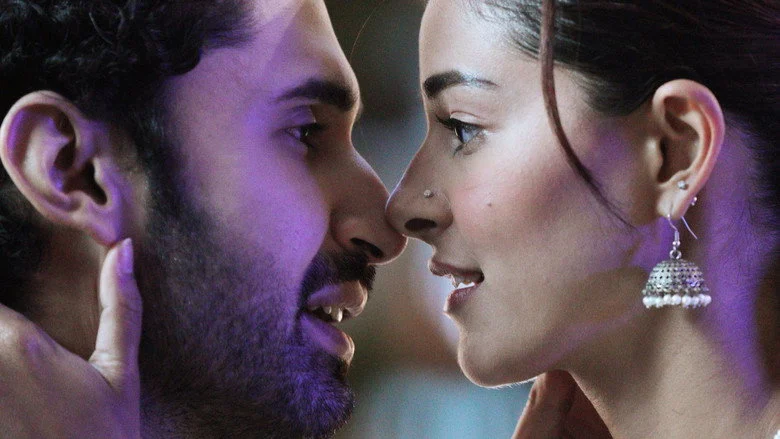
Ananya Panday’s Chandni Anchors the Film’s Ambition-Versus-Love Core
Ananya Panday’s character is written as career-driven and self-defined, which gives her scenes of resistance and independence real weight. She plays Chandni as someone who knows love isn’t enough when life demands more, and that register fits the film’s adult conflict better than melodrama would. The separation phase in the second half depends on her emotional clarity to land, and she delivers it without overplaying the heartbreak.
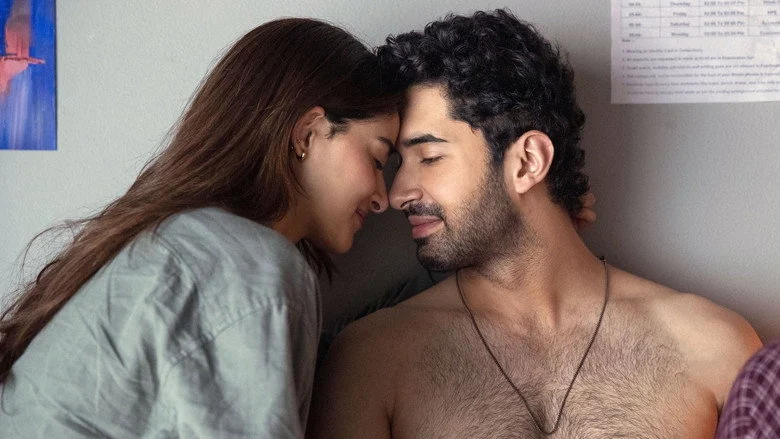
Lakshya’s Aarav Feels Expressive, But the Character Needs Sharper Definition
Lakshya plays Aarav as emotionally forward and attachment-driven, which works in the early bonding phase and the later heartbreak sequences. But the screenplay positions him as more dependent than complex, which leaves his arc feeling reactive rather than self-authored. I wanted scenes that showed his internal conflict, not just his external longing.

Vivek Soni’s Direction Stays Grounded but Lacks a Distinctive Style
Vivek Soni’s direction aims for tonal consistency across romance, conflict, and reflection, and the film maintains a clear emotional throughline from infatuation to separation. The story is linear, the conflict is defined, and the U/A 16+ certification confirms a mature relationship drama rather than a campus fantasy. But there’s no visual or structural choice here that breaks from conventional romance-drama framing.
The screenplay, co-written by Soni, Tushar Paranjape, and Akshat Ghildial, builds the relationship around a simple premise: love changes when responsibility and ambition collide. That works conceptually, but the mid-film escalation relies on misunderstandings and distance beats that feel repetitive. The conflict never surprises because the structure never risks anything unfamiliar.
The climax is described in promotional materials as emotionally grounded and realistic rather than melodramatic, which aligns with the film’s intent. But without critic-verified reception or standout formal choices, the direction reads as competent rather than inventive.
The Romance Relies on Chemistry, Not Chemistry-Defining Scenes
The early meet-cute and bonding phase establish the relationship premise, and the pair’s relational contrast, ambition versus emotional attachment, gives the romance a clear conflict axis. The separation and heartbreak section in the second half shifts the film into a more emotional register, which is where the relationship drama finally feels urgent rather than predictable.
But the film doesn’t offer a single widely discussed scene that audiences point to as proof of chemistry. The trailer’s line, “A love story that’s not perfect, not planned, just a little real, ” positions the romance as grounded, but grounded without memorable execution is just safe. The conflict feels familiar because the film doesn’t build scenes that redefine how young adult romance dramas handle ambition and attachment.
The dialogue stays intimate and contemporary, which suits the tone, but there’s no line that cuts through the genre noise. The promotional materials emphasize emotional realism over fantasy, which is a smart choice for a class audience, but realism without specificity is just under-articulated craft.
Hindi Romance reviews on our site explore how contemporary relationship dramas balance ambition with attachment across different filmmaking voices.
Supporting Cast Exists Without Clear Character Function
Het Thakkar, Pratham Rathod, Aastha Singh, and Elvis Jose are listed in the cast, but the available materials don’t identify their roles or scenes. That’s a structural problem for a romance drama that needs a social world around the leads to show how external pressures intensify internal conflict. Without visible supporting characters, the film risks feeling like a two-hander without a third dimension.
Dharma Productions’ casting here signals familiarity over risk. The supporting names aren’t marquee draws, which suggests the film depends entirely on Ananya and Lakshya’s pairing to carry audience interest. That works if the chemistry is undeniable, but without critic consensus or audience data yet available, it’s an open question.
Chand Mera Dil will work for viewers who want a straightforward, emotionally direct romance about love versus ambition in young adulthood. The performances are solid, the conflict is clearly defined, and the tone stays consistent. But the film never breaks from genre convention, and without a distinctive scene or structural risk, it reads as competent rather than essential. If you’re invested in Ananya or Lakshya, it’s worth a theatrical watch for their pairing. If you’re looking for a romance that redefines how Hindi cinema handles adult relationship conflict, this isn’t it.
Chand Mera Dil is a grounded, class-aimed romance that stays safe inside genre lines, watch it theatrically if you want solid pairing work, but don’t expect it to rewrite the Hindi relationship drama playbook. It’s a careful 3 out of 5.
Chaos Diwali review similarly explores how life pressures and misaligned priorities fracture idealized relationships.
Aadharam verdict also examines emotional detachment under personal conflict, though through a thriller register rather than romance.