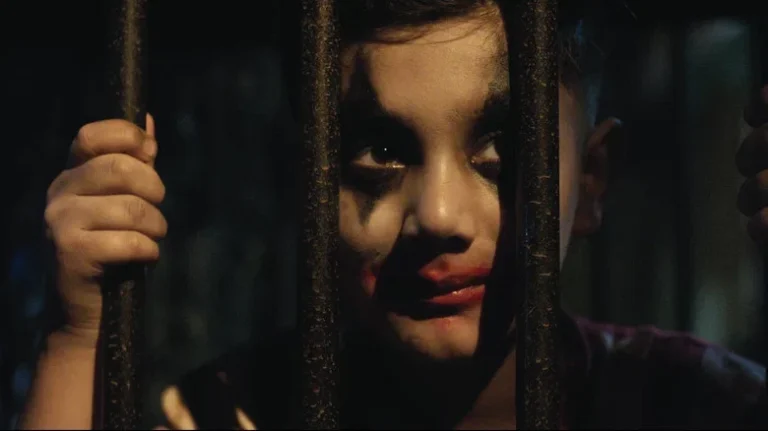
Kali stands on the edge of 1970s Bengaluru’s underworld, caught between his strict brother Dharma and his dangerous admiration for crime lord Dhak Deva. The moment Deva’s violence reaches his family, the film’s emotional backbone snaps under the weight of its own noise.
Director Prem uses that brother-sentiment device as a tether, trying to anchor a naive youth’s fall into the criminal milieu. But the film never trusts its own emotional architecture. Instead of leaning into the tension between family loyalty and criminal drift, it opts for volume.
Dhruva Sarja Carries Mass Appeal, Not Psychological Weight
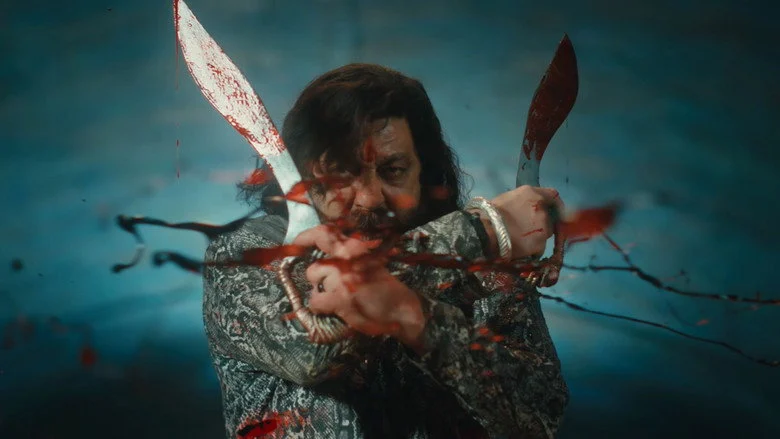
Dhruva Sarja’s Kali is built on energy, not complexity. He moves from cheerful naivety to underworld participant with the enthusiasm of a mass-hero performance, not the internal fracture the character demands. The shift feels like a switch flip, not a descent. When Kali first encounters Dhak Deva, the admiration is visible, but the emotional cost of idolizing violence never registers beyond surface bravado.
The brother dynamic with Ramesh Aravind’s Dharma offers the film its clearest emotional line. That strict elder-brother counterweight gives the narrative a reason to exist beyond formula. But Sarja plays to the gallery more than the conflict, and the performance suffers for it.
Prem’s Direction Chooses Loudness Over Control
Prem stages the brother-sentiment beats with clarity. The family-threat confrontation, where Deva’s violence forces Kali into direct conflict, is framed as an emotional turning point, not just plot escalation. That’s effective.
But the rest of the film drowns in excess. The action passages are repetitive and overlong. The screenplay depends on miscommunication-driven turns that weaken coherence. The director can’t resist adding another loud beat when restraint would serve the story better. The film collapses under its own formula-driven escalation.
Action Choreography Lacks Geography and Threat Logic
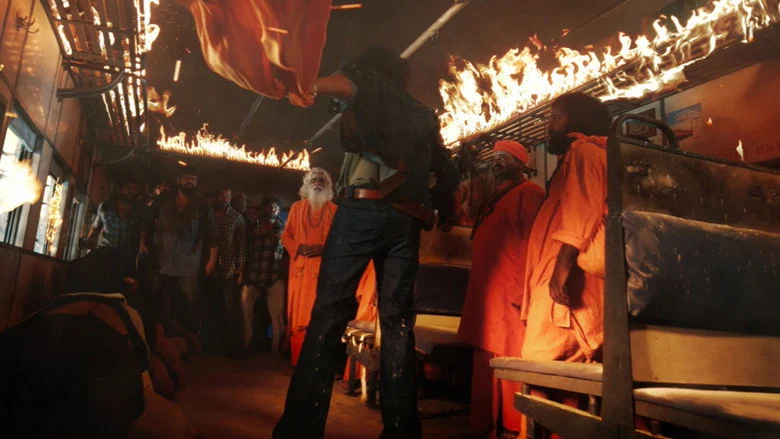
The action in KD: The Devil is loud, but it’s not dynamic. The setpieces lack stunt geography. Bodies fly, blood sprays, but the staging doesn’t give you spatial sense or emotional stakes. The confrontations feel like assembled beats, not rising danger.
The violence is excessive to the point of fatigue. The second half becomes a parade of overloaded action sequences with no breathing room. When the film tries to deliver mass-hero moments, they land as noise, not tension.
The 1970s Bengaluru setting provides period-crime texture, but it’s underused. The film gestures toward a blood-soaked underworld milieu without ever building the world around it. The action overwhelms the craft, and the craft wasn’t strong enough to begin with.
For those seeking more grounded Kannada storytelling, Kannada Action reviews offer sharper alternatives to this overloaded formula.
Ramesh Aravind and Sanjay Dutt Serve Function, Not Character
Ramesh Aravind plays Dharma as the strict elder brother anchoring the family conflict. He provides the main counterweight to Kali’s recklessness. His presence gives the film its only consistent emotional register. The casting signals intent to ground the narrative, but the screenplay doesn’t give him enough room to deepen the friction.
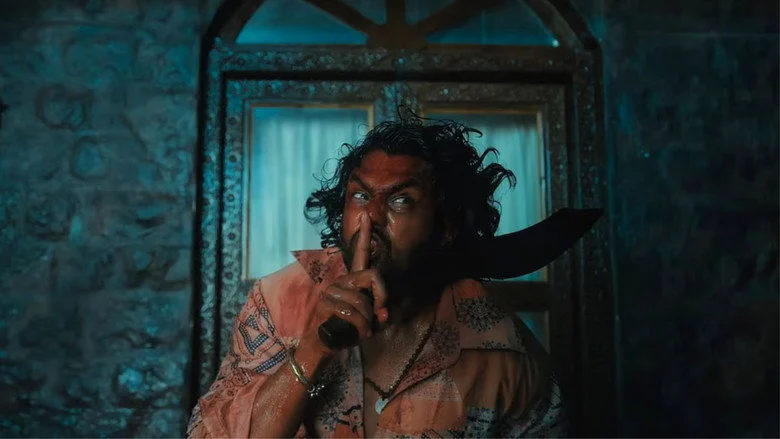
Sanjay Dutt’s Dhak Deva is fearsome in posture, but thin in construction. He functions as a dominant threat and idol figure, not a psychologically detailed antagonist. The character is more symbol than person. Reeshma Nanaiah’s Macchu Lakshmi exists as a romantic catalyst, not a developed presence. Sudeepa’s cameo delivers a mass-appeal moment, as reviewers noted, but it’s a short beat with no narrative weight.
Audience Reception Highlights Excess and Predictability
Audience complaints focused on the overlong runtime and excessive violence. The film’s dependence on formulaic writing and predictable plot turns undercut whatever goodwill the brother-sentiment track built. Viewers appreciated Dhruva Sarja’s mass-oriented performance style and the family dynamic, but the loud treatment and structural messiness pushed the film into exhausting territory rather than engaging drama.
The film positions itself as a gangster rise narrative in the vein of mass-action Kannada cinema, but it lacks the discipline of tighter entries in that space. Where other films use excess as punctuation, KD: The Devil uses it as wallpaper.
KD: The Devil has a functional emotional premise and a committed lead performance, but it drowns both in noise. If you’re looking for a loud, formulaic underworld ride with occasional sentiment beats, this might land. For everyone else, the excess overwhelms the craft. Skip unless you’re a Dhruva Sarja completist.
The film offers glimpses of a tighter gangster drama buried under volume and formula. It earns a restrained 2 out of 5 for effort and brother-sentiment clarity, but loses points for overindulgence and weak action geography.
Drishyam 3 review also struggles with formula-driven excess when emotional clarity would serve better.
Chand Mera verdict similarly leans on family dynamics but can’t escape predictable structure.