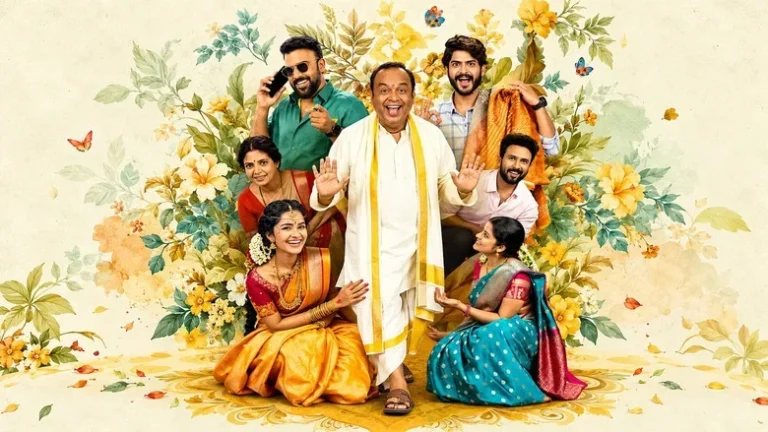
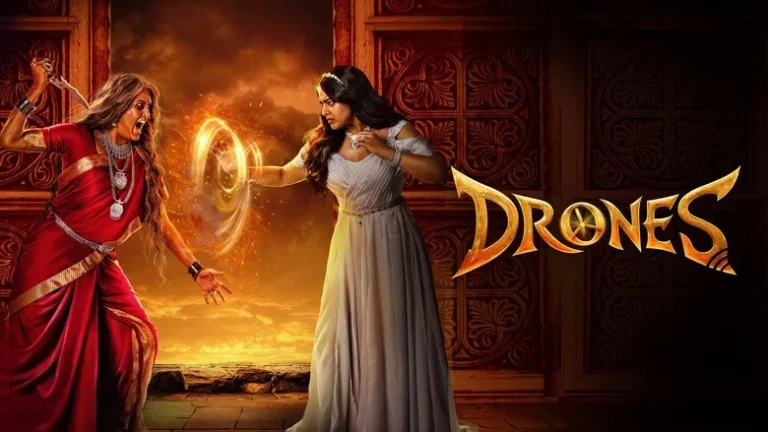
Arjun Acharya inherits an ancestral palace in Mangalpur and decides to host his sister’s wedding there, defying a local legend that no bride survives the ceremony. The premise alone tells you this is Priyadarshan territory – haunted houses, ensemble chaos, and folklore – but with no critical footage or audience pulse available ahead of its 17 April 2026 theatrical release, the film arrives as a question mark rather than a promise.
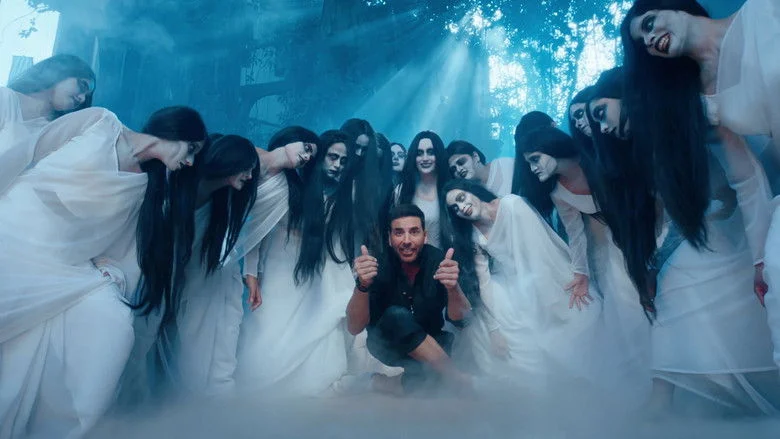
Akshay Kumar Returns to Haunted Territory With Paresh Rawal and Tabu
Kumar plays Arjun Acharya, a character we can only measure against his previous horror-comedy outings with Priyadarshan. The Bhool Bhulaiyaa template – Kumar, Rawal, Rajpal Yadav in tow – suggests familiar comic registers, but whether Kumar modulates his performance or repeats the same beats seventeen years later is impossible to gauge without footage. Tabu’s casting raises the stakes; her presence in a Priyadarshan horror-comedy feels rare and deliberate, yet no scene detail exists to confirm what register she occupies – spectral menace or grounded foil.
The ensemble includes Jisshu Sengupta, Wamiqa Gabbi, Mithila Palkar, Asrani, and Rajesh Sharma. Sengupta’s involvement hints at a Bengali connection to the Mangalpur folklore, while Gabbi and Palkar suggest romantic or familial subplots. Without performance footage, these remain casting signals rather than acting assessments.
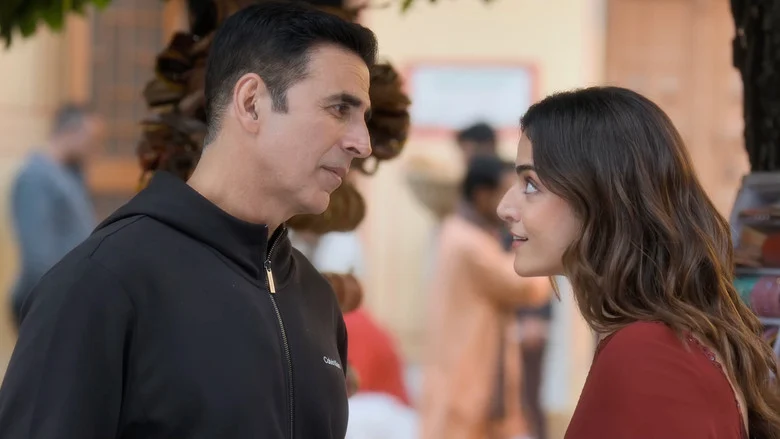
Priyadarshan Directs From a Three-Writer Screenplay Built on Aakash Kaushik’s Story
The screenplay credits list Priyadarshan alongside Rohan Shankar and Abilash Nair, working from Aakash Kaushik’s story. This collaborative approach could mean either disciplined structure or competing tonal voices. Priyadarshan’s horror-comedies thrive on rhythm – the ability to pivot from slapstick to dread within a single scene – but his post-2010 Hindi work has struggled with bloat. The 164-minute runtime, down from an original 174 minutes after voluntary cuts approved on 11 April 2026, suggests tonal sprawl. A UA 16+ certificate points to restraint in gore or sexual content, but without critic access, we cannot verify whether the cuts tightened the film or simply truncated it.
The dialogue fragments available – “We’ll host the wedding here. It is confirmed” and “No one gets married in Mangalpur. Vadhusur will come. With his army of bats. He will kill people” – sketch a straight line between defiant protagonist and folkloric antagonist. The writing feels declarative rather than layered, but one line cannot measure a screenplay.
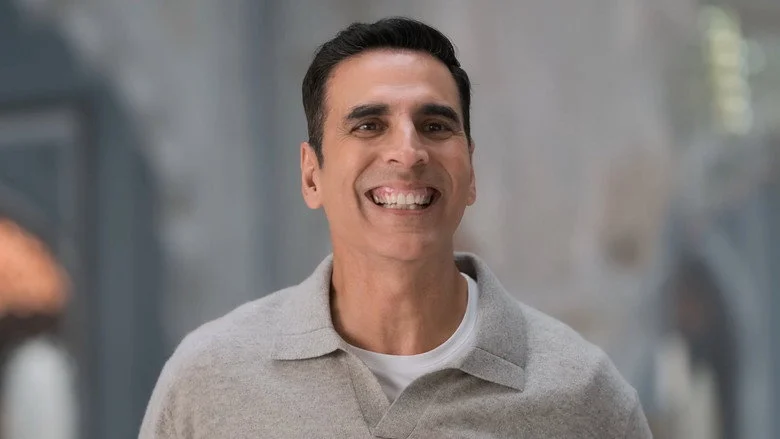
Horror Comedy Execution Hinges on Setpiece Geography and Ensemble Choreography
The genre demands specific craft: spatial clarity during chaos, comic timing that respects dread, and setpieces that escalate without collapsing into noise. Priyadarshan built Bhool Bhulaiyaa on architectural disorientation – the haveli became a character. Whether Divakar Mani’s cinematography here captures that same spatial menace or defaults to flat coverage is unknowable without scene access. The legend of Vadhusur and his army of bats suggests creature-driven setpieces, but whether these are practical effects or VFX-heavy remains unconfirmed.
The wedding backdrop offers structural potential – parallel tracks of ceremony prep and supernatural interference – but horror-comedies live or die on rhythm, not premise. If the screenplay front-loads comedy and backloads horror, the film risks tonal whiplash. If it intercuts both modes throughout, it risks neither landing cleanly. Priyadarshan’s best work in this genre balanced both instincts within single sequences.
The 164-minute runtime is a red flag. Hindi horror-comedies rarely justify that length; the genre thrives on momentum, and Priyadarshan’s recent work has shown a reluctance to cut. The voluntary reduction of 10 minutes suggests the original assembly struggled with pacing, but whether the final cut breathes or drags cannot be verified pre-release.
Rajpal Yadav and Asrani Anchor the Comic Spine
Yadav’s casting is Priyadarshan shorthand for manic physical comedy, but his presence also signals repetition risk – the same stuttering, wide-eyed panic beats he delivered in Bhool Bhulaiyaa. Whether the screenplay gives him new material or recycles old rhythms will determine if his performance feels fresh or autopilot. Asrani, another Priyadarshan regular, often occupies the exasperated elder role; his comic timing is reliable, but the character function matters more than the casting pedigree.
Manoj Joshi’s inclusion suggests bureaucratic or local authority roles, often Priyadarshan’s way of threading satirical commentary into genre frameworks. Without scene context, it is impossible to know if Joshi is used sharply or wasted on exposition. The supporting cast density suggests ensemble rhythm rather than solo star turns, but ensemble comedy depends on screenplay architecture – how characters collide, not just how many appear.
No Controversies, But Censorship Cuts and a Paid Preview Strategy Signal Commercial Caution
The film avoided political or social backlash, but the April 2026 release – months after its completion – and the paid preview strategy on 16 April suggest distributor uncertainty. Balaji Motion Pictures and Cape of Good Films are banking on nostalgia for Priyadarshan-Akshay horror-comedies, but the market has shifted since 2007. The UA 16+ certificate avoids adult restrictions while keeping families in play, yet the 164-minute runtime challenges multiplex turnover logic. Commercial caution reads louder than creative confidence.
The wedding-ceremony-at-haunted-palace setup is archetypal Priyadarshan, but archetypes only work when execution sharpens them. Without critical consensus, audience scores, or even a trailer analysis available in the research, the film exists in a pre-release vacuum. Hindi Horror reviews often hinge on whether the ensemble chemistry justifies the runtime, and here, that chemistry remains hypothetical until theaters open.
If you have patience for 164 minutes of ensemble chaos and trust Priyadarshan’s instincts despite recent misfires, theatrical remains the intended format. If you want proof before committing, wait for critic consensus and audience word-of-mouth to surface post-release.
Bhooth Bangla arrives with a strong cast and a proven director-actor pairing, but the bloated runtime and pre-release silence suggest a film that gambles on nostalgia without earning trust – a cautious 2.5 out of 5 until proven otherwise on screen. Raakaasa review remind us that ensemble potential alone cannot rescue structural sprawl.
Both films prove that star casting and genre ambition falter when screenplay discipline collapses under runtime bloat. Band Melam verdict offers a tighter alternative if you value economy over spectacle.