A husband’s distorted belief about honesty and the birth of girls spirals into marital chaos and social reckoning, all framed as comedy. The film’s entire architecture hinges on a single high-concept reversal: the title itself, which inverts “Satyameva Jayate” to explore what happens when dishonesty reigns instead.
Karthik Konda’s directorial choice to build around consequence-based escalation rather than sketch-comedy gags signals an ambitious wager. Whether that wager pays off depends entirely on how precisely the film executes its tonal tightrope, and how willing audiences are to sit with discomfort wrapped in laughter.

**Karthik Konda’s Premise-First Direction Bets Everything on One Idea**
The director frames his entire narrative around a single comedic axiom: a man’s belief in a false truth creates cascading, irreversible consequences across his personal and social world. This is high-concept territory, the kind of structural gamble that either crystallizes into sharp social satire or collapses under its own conceptual weight.
Interview material reveals Konda prioritizes character-driven dramatic objectives within every scene rather than loose, improvised humor. That disciplined approach to comedy construction is rare in Telugu cinema. Yet without independent critical verification, it remains unclear whether the execution matches the ambition.
**The Marriage-Setup Sequences Anchor the Emotional Stakes**
The film’s marital-predicament sequences serve as the emotional spine, a protagonist repeatedly confronted by social pressure and his own compounding mistakes tied to gender and deception. These moments are designed to oscillate between comedic release and genuine dramatic consequence, a register that demands precise tonal control from both direction and performance.
The strength here lies in the setup’s clarity: audiences understand immediately what the character stands to lose and why his choices matter. Whether the payoff sustains that tension across 139 minutes remains unverified by published critical voices.
**Comedy Built on Social Belief Systems Rather Than Gag Setups**
The film abandons the sketch-comedy template in favor of a consequence-escalation structure, where comedy emerges from the logical (and illogical) outcomes of the protagonist’s harmful belief system. This approach mirrors premise-driven satire more than commercial stand-and-deliver humor, which narrows but potentially deepens its appeal.
The title-reveal sequence, where “Abadameva Jayathe” is explicitly tied to the consequences of lying, functions as the film’s thematic anchor. It’s a moment designed to make audiences recalibrate their expectations and recognize that laughter here serves a commentary rather than pure entertainment. That’s structurally sound satire design, assuming the scenes that follow justify the conceptual weight.
The 2 hour 19 minute runtime signals a full narrative arc rather than padding around a single joke. The film commits to character development, emotional shifts, and what interview participants described as “every scene” built with deliberate objective. Whether that discipline translates to coherent dramatic momentum depends on screenplay execution beyond what’s publicly verifiable.
Telugu comedy reviews often capture the nuances of village-ensemble dynamics and social satire that escape mainstream critical attention.
**Babu Mohan and Sudhakar Reddy Ground the Village Comedy Framework**
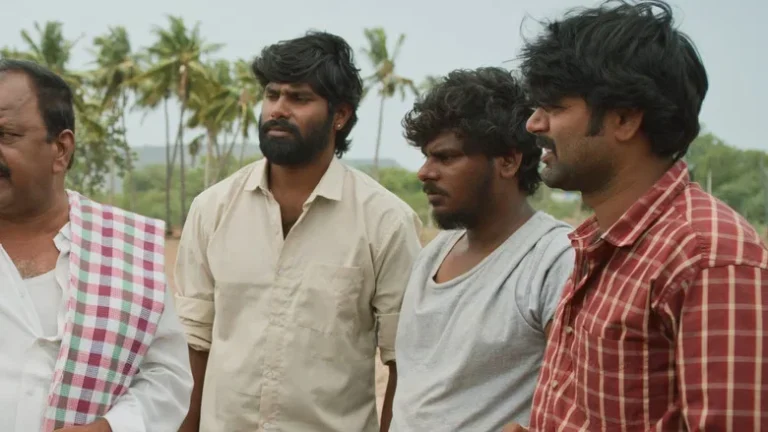
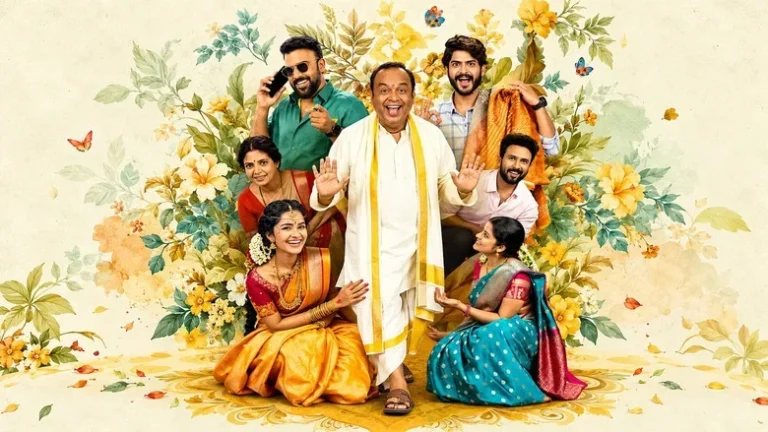
Babu Mohan’s role as Patela positions him as a key figure in the film’s social-comedy architecture, likely serving as either a comedic foil or a representative of village authority. His presence signals that the film leans into ensemble dynamics rather than isolation.
Sudhakar Reddy as Mama Patela suggests family-centered comedy, the kind of relative character whose reactions and interventions create secondary comic and emotional layers. Together, these two actors anchor the social structure through which the protagonist’s chaos reverberates.
**No Verified Controversy, But the Premise Itself Carries Ideological Risk**
A premise centered on harmful beliefs about truth, gender, and honesty inherently courts controversy in contemporary Telugu cinema. The fact that no censorship issues have emerged in available sources suggests either deft handling or minimal engagement from cultural watchdog groups, neither outcome is guaranteed until release.
What matters is whether the film critiques or amplifies these beliefs through its satirical framing. Interview material implies critique through consequence, but that distinction is precisely the kind of nuance that ignites backlash rather than defusing it.
If you’re drawn to Telugu comedies willing to interrogate social superstition through laughter rather than lecture, this film’s conceptual audacity justifies a theatrical visit. It’s precisely the kind of risky premise that separates memorable cinema from forgettable crowd-pleasers. Watch it in regular theatrical format to catch the full widescreen scope presentation and the tonal precision this kind of high-concept comedy demands.
*Abadameva Jayathe* frames its entire ambition around a single reversal, whether that audacious simplicity generates genuine insight or merely gimmickry remains its untested gamble, warranting a measured 3/5.
Karthik Konda’s social-comedy wager resembles the character-focused satire that drove Parimala Co review.
The film’s exploration of fractured belief systems echoes the psychological unraveling at the heart of Rao Bahadur verdict.