A 13-year-old girl, home from a party with a fresh tattoo, stands in her mother’s kitchen while a physician’s eyes go wide with a fear that has nothing to do with teenage rebellion. In the suspicion of a contaminated needle, Alpha locates its central horror, not the virus itself, but how quickly a terrified community turns a child into a leper.
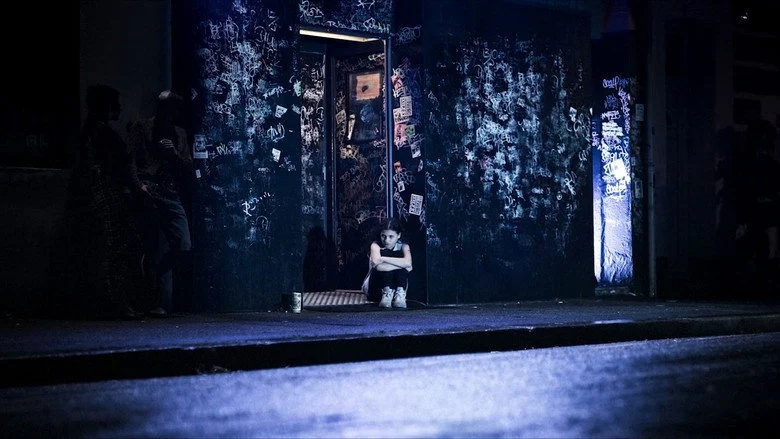
Mélissa Boros carries the weight of a body that betrays her
Boros, a young performer with almost no filmography, holds this film together through sheer presence. In the pool scene, where she bleeds into chlorinated water while classmates flee like she’s a monster, she makes us feel every inch of that isolation.
Her face registers confusion before shame, and that split-second delay is where Ducournau’s directorial instinct lives. The actor never reaches for melodrama, even when the script hands her plenty.
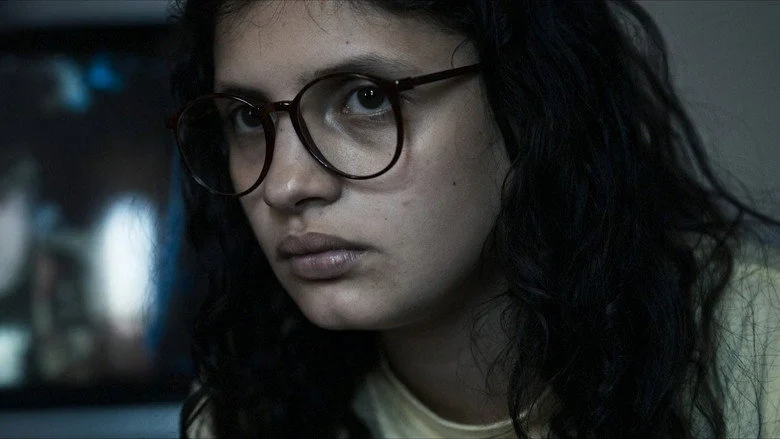
Ducournau’s direction: ferocious framing, shaky emotional tuning
Ducournau brings the same sensory pressure-cooker intensity she applied to Raw and Titane. The claustrophobic framing in the mother’s apartment, all tight two-shots and shadowed doorways, tells us there is no escape from this household’s mutual dread.
But the screenplay stumbles into broadness. The arrival of Amin plays as so emotionally pitched that it undercuts the subtle body horror the first act worked so hard to build.

The body horror works because it stays small and specific
Ducournau understands that real horror lives in close-ups, a needle puncturing skin, blood clouding water, the slow decay of a man whose flesh visibly gives up. The school pool sequence achieves a rare thing: visceral disgust that lands as social metaphor without losing its literal punch.
The film refuses to explain the virus, and that silence is strategic. We never learn how it spreads, who patient zero is, or whether Alpha is actually infected. That ambiguity mirrors real-world fear of contagion, where science often gets drowned by panic.
Where the genre execution wavers is in the third act’s drift toward broader family drama. I wish the camera had stayed closer to Boros’s face instead of cutting to Amin’s suffering, which belongs in a different, less interesting movie.
Golshifteh Farahani and Tahar Rahim: two registers, one fractured household
Farahani plays the mother with a coiled intensity that nearly justifies every panicked reaction. Her best moment comes silently, when she inspects the tattoo, her hands trembling while her face stays professionally neutral, the terror of a woman whose job has made her all too aware of what a needle can carry.
Rahim, given less to work with, sells Amin’s physical deterioration convincingly. His coughing fits and labored breathing are technically precise, but the script forces him to carry an emotional weight the film hasn’t fully earned, making his scenes feel like they belong to a different movie’s climax.
Emma Mackey and Finnegan Oldfield, as classmates, register in sharp, cruel bursts, a whispered rumor here, a turned back there, exactly as the story needs: not characters, but instruments of social cruelty. If you’re in the mood for similarly uncompromising coverage, browse more French body horror reviews on our site.
Audience fit: brilliant for some, punishing for others
This is not a film for people who need closure. The ending refuses to resolve whether Alpha lives, dies, or becomes a carrier, and that ambiguity has split viewers sharply, some praise it as faithful to the chaos of real disease, others call it a narrative cop-out. The R rating, for language, drug content, and underage drinking, should be taken seriously: this is a tough watch, not a casual one.
Alpha is best experienced in a regular theater or on a dark OTT screen where the grain of 1980s Le Havre can swallow you whole. Go if you can stomach the viscera and the unresolved ending, if you loved Ducournau’s earlier work and want to see her push body horror toward social critique. Skip it if you need your horror tidy, your metaphors less explicit, your protagonists older than thirteen.
For a similar trick of adolescent alienation wrapped in uncomfortable physicality, read our review of Alpha review.
Julia Ducournau’s Alpha earns a cautious 3.5 out of 5, technically ferocious, thematically brave, and held back only by its own uneven emotional register.
For a more uneven but similarly ambitious dark drama, check out our take on Bhaskara Bharanam verdict.