The radio jockey’s voice arrives before the image does, a familiar Telugu cadence narrating the small indignities of an Indian student in America, as if the microphone itself were a life raft. That framing device is the most distinctive thing about Udbhav’s debut, a coming-of-age romance that treats the US campus as both playground and pressure cooker.
Whether that narrator’s voice can sustain a feature-length film is the question the promotional material leaves stubbornly unanswered.

A Radio Jockey’s Voice Cannot Substitute For A Screenplay’s Spine
The premise is deceptively simple: Telugu students navigating friendship, romance, academic strain, and the quiet humiliations of cultural displacement. Ashok Galla’s protagonist anchors this world through observational narration, offering commentary on everything from cafeteria food to visa anxieties.
It’s a canny structural choice on paper, the radio jockey becomes our tour guide through a diaspora experience that many younger Telugu viewers will recognize intimately. But narration is a crutch when the drama cannot stand on its own legs.
The teaser suggests a film that trusts its voice-over more than its scenes, using the RJ’s patter to paper over what might otherwise be thin connective tissue between romantic beats and comedic set pieces.
Ashok Galla’s Charm Is Real, But Chemistry Needs A Conflict To Survive
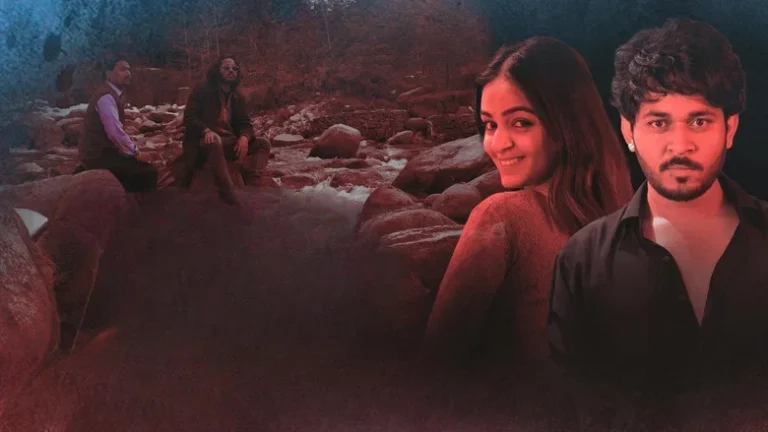
The promotional song “Anaga Anaga America” reveals Galla and Sri Gouri Priya in easy romantic rhythm, their interactions carrying the loose, unforced quality of people who actually enjoy each other’s company. That naturalism is valuable, it recalls the grounded performances Anupama Parameswaran brought to the uneven family dynamics of Crazy Kalyanam, where authentic screen presence occasionally outran the material surrounding it.
Galla’s previous two films reportedly stumbled at the box office, which makes this third outing a quiet referendum on his commercial viability. His work here leans heavily on likability rather than range, the raised eyebrow, the sheepish grin, the mock-serious deadpan into the microphone.
Those tools work in isolation. Whether they can carry emotional weight when the story demands genuine fracture remains unproven.
The Supporting Ensemble Exists, But The Promotional Material Refuses To Define Them
Rahul Vijay and Shivathmika Rajashekar occupy key roles within the student circle, yet the available material offers no window into their specific conflicts or relational stakes. They appear in the frame; they do not yet exist as dramatic agents.
Harsha Chemudu’s presence signals the comedy lane, but without a verified set piece to evaluate, his contribution remains a casting announcement rather than a performance. The same applies to the broader supporting roster, names without scenes, faces without function.
This is not necessarily a flaw in the finished film. It is, however, a flaw in how the film has been presented to audiences thus far.
The Overseas Student Genre Has A Ceiling, And This Film May Be Bumping Against It
Telugu cinema has cycled through the US-student narrative with increasing frequency, each iteration promising authenticity while delivering variations on the same homesickness-and-hookups template. The genre’s emotional vocabulary, the late-night calls home, the part-time job humiliations, the visa queue anxiety, has become almost liturgical.
Udbhav’s approach seems to lean into that familiarity rather than challenge it. The radio jockey device offers a modest formal innovation, but the underlying structure appears content to hit the expected beats.
The comparison to Sanjeev is instructive here: that film attempted to fuse genre pleasure with emotional seriousness and found its footing only intermittently. VISA may face a similar reckoning between crowd-pleasing rhythm and genuine dramatic depth.
Vijai Bulganin’s Music Carries The Emotional Weight The Screenplay May Not
“Anaga Anaga America” has been positioned as the film’s romantic signature, and the song’s visual treatment emphasizes the lead pair’s physical ease with one another. If the film’s emotional architecture rests on similar musical scaffolding, the composer’s work will do significant narrative labor.
That’s a precarious arrangement. Songs can illuminate feeling; they cannot manufacture it from nothing. When a film relies on its soundtrack to supply the emotional logic its scenes fail to build, the result is a sequence of pleasant interludes strung together by obligation rather than momentum.
The background score’s role becomes even more critical in a film where the protagonist’s inner life is mediated through broadcast narration, music must fill the gaps that dialogue cannot reach.
A Debut Director’s Ambition Meets The Limits Of A Crowded Release Calendar
Udbhav arrives without a filmography to contextualize his choices, which makes every decision feel simultaneously fresh and untested. His instinct to ground the overseas experience in observational comedy rather than spectacle is welcome, this is not a film that treats America as a green-screen backdrop for dance numbers.
But the shift from the original July release date to October raises questions about the film’s readiness. Was the delay strategic, positioning the film away from a crowded summer corridor? Or did post-production require additional attention?
The promotional material offers no answer, only a release date and a promise.
Sithara Entertainments And Fortune Four Cinemas Are Betting On A Familiar Formula
Naga Vamsi S and Sai Soujanya have assembled a production slate that leans heavily on youth-oriented content, and VISA fits comfortably within that brand identity. The film’s commercial prospects depend on whether the overseas Telugu audience, the same demographic the story depicts, will turn out for a narrative that mirrors their own experience.
That’s a narrower audience than a mass action entertainer would command, but it’s also a more loyal one. The student diaspora has consistently supported films that speak to their specific anxieties, from visa precarity to the quiet loneliness of American suburbia.
What remains uncertain is whether VISA can transcend its niche and reach the broader family audience that typically determines a film’s theatrical lifespan. The comedy-romance framing suggests ambition beyond the student corridor, but the certification and final content will determine whether that ambition is realized.
The film’s box-office leverage also rests on Galla’s ability to convert goodwill into ticket sales. Two prior underperformers do not disqualify him, but they do raise the stakes for this third attempt.
The Verdict Hangs On Whether Nostalgia Can Be Enough
The overseas student comedy has become a genre of recognition rather than revelation, films that ask audiences to nod at familiar frustrations rather than discover new ones. VISA appears content to work within that contract, offering the comfort of shared experience rather than the challenge of unfamiliar insight.
That may be sufficient for its target audience. It may even be enough to sustain a modest theatrical run in the diaspora circuit and among younger viewers seeking validation of their own American adventures.
But the radio jockey’s voice, however warm, cannot answer the question the film’s own premise raises: what happens when the dream abroad becomes ordinary? The answer, if the promotional material is any indication, is a film that treats the ordinary with affection but never quite finds the extraordinary within it.
Audiences seeking a gentle, recognizable romance will find their footing here. Those hoping for a coming-of-age story that pushes past the familiar contours of the genre may leave the theater humming the song but forgetting the film.