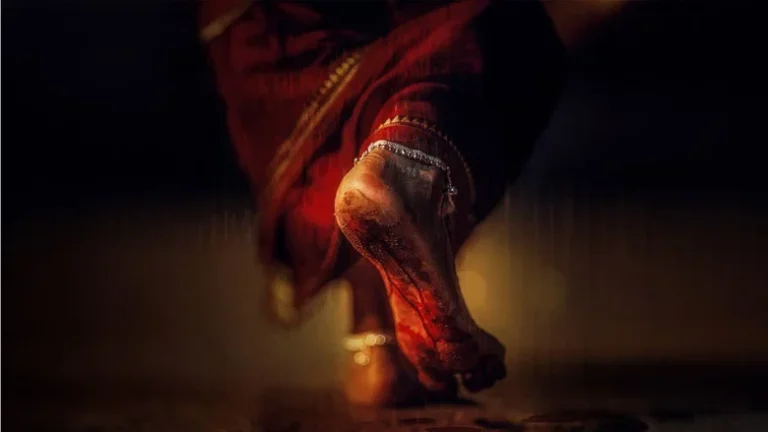
The foot inspection arrives barely twenty minutes in, and it tells you everything about Balaji Mohan’s comic instincts. A brother-in-law asks his brother’s new bride to lift her heel so the family can check for the reversed footprint of a daayan, and the film treats this folk ritual as a punchline rather than a threat.
That is the central gamble of Nayyi Navelli: it wants you to laugh at superstition while still flinching at it. The result is a Hindi fantasy comedy that understands its premise better than it understands its own pacing.
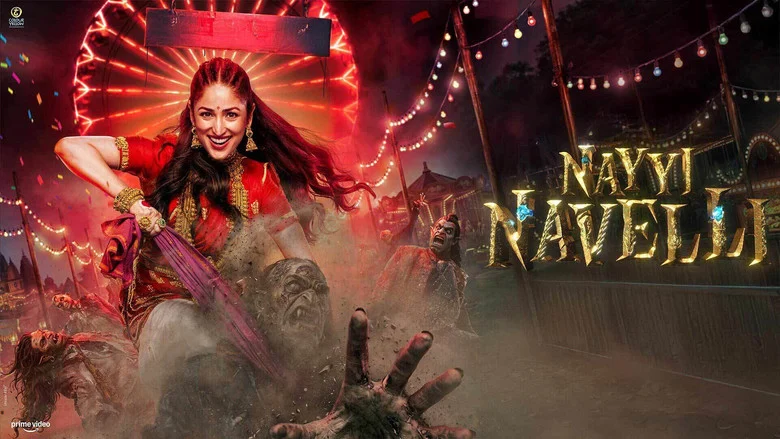
A Perfect Bride Is A Suspicious Bride, And The Film Knows It
Yami Gautam Dhar’s Mohini walks into a Meerut household that is already collapsing under its own noise. Within days she has reordered the kitchen, silenced the arguments, and turned domestic chaos into something resembling harmony.
The screenplay, credited to Himanshu Sharma and Divy Nidhi Sharma, makes a smart structural choice here: it never lets the audience enjoy the improvement without also noticing how unnatural it looks. Every swept floor and perfectly timed meal becomes evidence in a case the family has not yet opened.
What the film grasps, and what the recent spate of dual-identity Hindi fantasies has often fumbled, is that the horror does not need a haunted haveli. It needs a dining table where everyone is suddenly, suspiciously happy.
The Investigation Engine Runs On Domestic Intimacy, Not Paranormal Spectacle
Once the brother-in-law decides his bhabhi might be a daayan, the film shifts into an escalating series of domestic tests. He watches her hands, her habits, her appetite. He studies her feet.
This is where Mohan’s direction is at its most disciplined. He stages the suspicion inside ordinary routines, so the tension comes from who is watching whom across a kitchen counter rather than from jump scares or shadowy corridors.
The comedy and the dread share the same physical space, and for a while that dual register holds. The trouble is that the screenplay keeps repeating the same beat: Mohini does something perfect, the brother-in-law narrows his eyes, the family shrugs it off.
Where a sharper draft would escalate the stakes with each pass, this one mostly resets them. The middle stretch starts to feel like a loop, and the film’s running time, inconsistently reported but clearly substantial, begins to press down on material that cannot sustain the weight.
Yami Gautam Dhar Plays Two Women In One Body, And Only One Of Them Has Room To Breathe
Gautam Dhar’s performance rests on a single, demanding transition: the flawless daughter-in-law who gradually lets the mask slip. In the early scenes she plays competence as a kind of stillness, her voice low and level, her movements economical, her smile arriving half a beat too precisely.
It is a controlled piece of work, and the film’s best moments belong to her. When the reveal finally comes, she shifts her physical register entirely, dropping the domestic softness for something harder and more watchful in the eyes.
But the screenplay gives her very little to play between those two poles. The woman underneath the performance, the one who might have a motive or a wound or a hunger, never quite materialises. She is a mystery the film is content to leave as a mystery, which is not the same thing as a character.
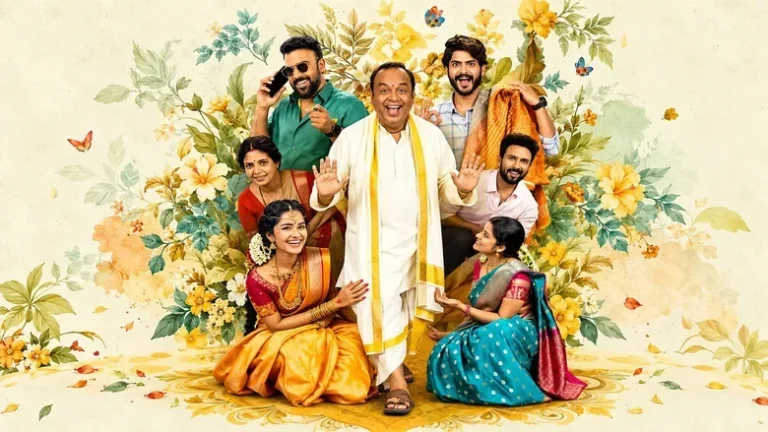
The ensemble around her is populated by recognisable comic performers, including Mita Vashisht and Sunita Rajwar, who bring texture to the extended-family chatter. But most of them function as reactions rather than agents, registering shock or approval without ever shaping the story themselves.
Balaji Mohan Builds A Clean Setup And Then Lets It Idle
The promotional structure of the film is unusually legible: harmony first, suspicion second, public transformation third. Mohan executes the first two movements with real craft, using the contrast between the family’s disorder and Mohini’s order as both comedy and unease.
The staging of the foot-inspection scene is a good example of his instincts. He keeps the camera at a low, intimate angle, close enough that the ritual feels absurd and invasive at the same time.
Where the film stumbles is in trusting that structure to carry the full runtime. The tonal balance between slapstick family comedy and supernatural dread is never fully resolved, and the back half leans harder on the reveal than on the build.
There is a version of this film that operates with the tighter spatial discipline seen in Kalpana Aur Yatharth, where every frame of domestic space is doing investigative work. Nayyi Navelli gets close to that idea without committing to it.
The musical numbers, including the boisterous “Bhabhi Tabaahi” and “Phata Patakha, ” are staged with energy but sit awkwardly against the film’s more restrained suspense passages. They feel like guests arriving at the wrong dinner party.
The Daayan As A Cultural Figure Deserves Sharper Teeth
Folk horror built on the daayan has a long and rich tradition in North Indian storytelling, and the film’s decision to root its supernatural threat in a recognisable cultural belief is genuinely promising. The reversed footprint is a specific, unsettling image, and the film uses it well in the trailer’s most memorable beat.
But specificity of detail is not the same as depth of treatment. The film gestures at the idea that a woman’s perfection can be read as a threat, then declines to push that idea anywhere uncomfortable.
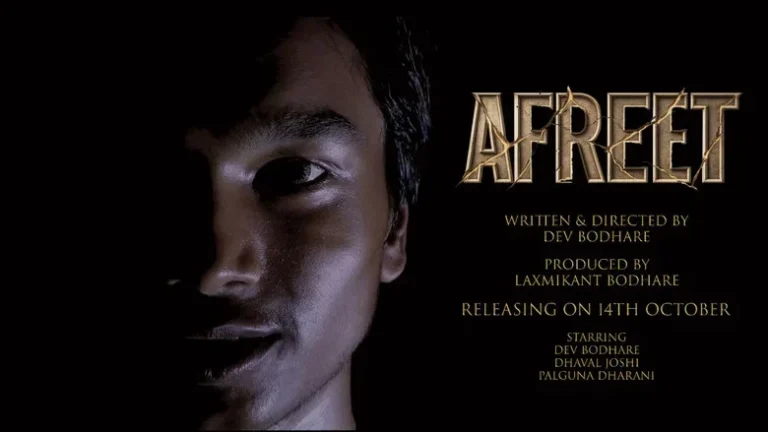
The same critique applies to the tonal ambition. The restrained dread that anchors Afreet – A Never comes from committing fully to its atmosphere, and Nayyi Navelli could use a measure of that conviction. Instead it keeps one foot in the family comedy and one in the supernatural thriller, and the split weakens both.
The film’s real subject, the way a household’s sudden order can feel like a violation of its natural state, is genuinely interesting. It just never gets the room to breathe that it deserves.
Amazon MGM And Colour Yellow Bet On Familiar Comfort Over Formal Risk
For Amazon MGM Studios and Colour Yellow Productions, this is a calculated swing at the theatrical family-entertainer market, and the calculation is legible. Cast a recognisable lead, wrap her in a culturally familiar supernatural hook, and aim squarely at the festive-season audience that wants comedy first and scares second.
The commercial logic is sound on paper. Yami Gautam Dhar has built real theatrical credibility with audiences who trust her in grounded, character-driven roles, and pairing her with a folk-horror premise gives the film a distinct identity in a crowded release window.
But the film’s structural caution is also its commercial risk. Audiences who arrive expecting either a genuinely frightening daayan story or a genuinely sharp family comedy will leave with only half of what they wanted, and word of mouth in this segment is unforgiving.
The recent Hindi fantasy pipeline has shown that mythological ambition without disciplined storytelling tends to buckle under its own weight, as the muddled dual-role mechanics of Toxic demonstrated. Nayyi Navelli avoids that specific trap by keeping its scale domestic, but it inherits a different problem: it never quite decides what kind of film it wants to be.
For a market increasingly saturated with folk-horror and supernatural comedy hybrids, the film’s ability to stand apart will depend less on its premise and more on whether audiences connect with Gautam Dhar’s performance strongly enough to forgive the uneven execution around her.
The Ending Resolves The Mystery Without Resolving The Woman
When Mohini finally drops the mask in front of the assembled family, the film delivers the confrontation its entire structure has been building toward. It is a well-staged moment, and Gautam Dhar seizes it with a physical transformation that is genuinely arresting.
But the reveal raises more questions than it answers, and not in the productive way. The film wants the audience to walk out unsettled, but it has not done the character work required to make that unease land as anything more than a shrug.
The family’s reaction, too, is curiously muted for a household that has just discovered its ideal bride might be something else entirely. The ending resolves the plot without resolving the people in it.
What lingers is not the twist but the missed opportunity: a film that had a genuinely interesting idea about domestic perfection and female performance, and chose to treat both as a genre exercise rather than a subject worth interrogating.
Nayyi Navelli is a competent, occasionally charming Hindi fantasy comedy with a lead performance that deserves a sharper film around it. It is not a failure of ambition so much as a failure of nerve, and in a market finally willing to take folk horror seriously, that timidity costs more than it used to.