R. Raghav Mirdath’s Drones opens on a hijacked quadcopter hovering outside a mansion window, and within minutes establishes its real subject: the male gaze as a surveillance technology. The film then spends two hours trying to decide whether that’s a joke, a thesis, or a horror premise.
When A Voyeur’s Toy Becomes The Villain
Dravid Selvam plays Kish, an astrophysics student suspended from college and hiding out in a reclusive scientist’s fortified house nicknamed the Black Hole. Bored, he commandeers the household drone, Sampangi, and points it across town at an old mansion where Siddhi Idnani’s Prakruthi sits at a window like a painting.
The staging here is genuinely clever. Mirdath frames Prakruthi through the drone’s lens rather than the human eye, which turns Kish’s romantic awakening into an act of remote surveillance. It’s the film’s sharpest formal idea, and it never quite gets the follow-through it deserves.
A Repetition Gag That Wears Out Its Welcome
Every man who meets Prakruthi performs the same ritual: a poem, a doll, a ring, and a vow to love her when her hair turns white. The first time, it’s funny. The second time, it’s a pattern. By the fifth, you’re checking your watch and wondering whether the film has anything else in its pocket.
The Inspector subplot, built around a palmist’s warning that any woman he sincerely tells “I love you” will die, is a fine comic conceit stranded in a movie that doesn’t know how to braid it into the main thread. Cinemawala Sathish plays the role with a hangdog desperation that lands, but the screenplay leaves him orbiting the plot rather than driving it.
Where the film’s structural ambition becomes legible is in its refusal to settle on a single register. This is a movie that wants to be science fiction, romance, social satire, and witch horror at once, and the tonal collisions are the point. The approach recalls the tonal restlessness of Prahaar, which similarly trusted a single lead performance to hold together a script with more ideas than discipline.
The Witch Confrontation Is Where The Film Finally Breathes
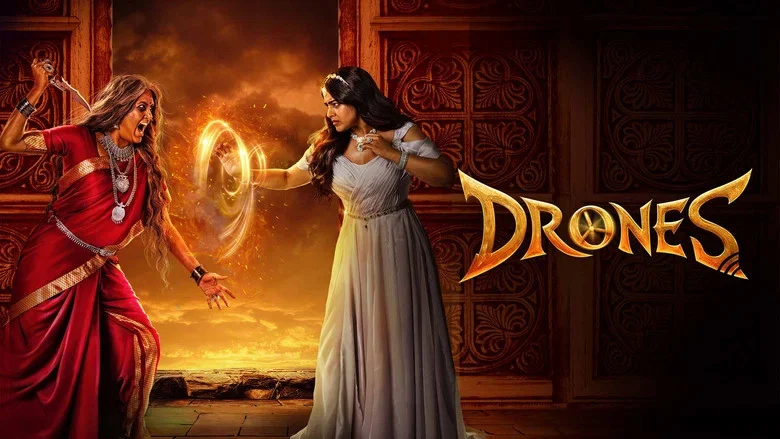
The best sequence arrives late, when Anjali Nair’s Rush confronts Devadarshini’s witch and articulates what the film has been dancing around: that beauty standards do measurable emotional damage. Nair plays the moment with a still, unshowy fury, refusing the theatricality the scene invites.
Devadarshini, for her part, is the film’s most reliable asset. She shifts between menace and comic timing without ever signaling which mode she’s in, and her physical stillness in the mansion scenes gives the supernatural threat a weight the rest of the film struggles to match. The confrontation works because both performers understand that the real horror is social, not spectral.
What’s frustrating is that this clarity arrives so late. The Rush-Kish emotional triangle, which should be the film’s spine, is undernourished for most of the runtime. Kish notices Prakruthi’s conventional beauty and overlooks Rush’s devotion, but the screenplay treats this blindness as a plot fact rather than a psychological condition worth exploring.
Where The Middle Section Loses Its Nerve
Mohamed Kuraishi’s Padmanaban, the scientist who builds a made-to-order girlfriend, is a wonderful absurdist creation in theory. In practice, his scenes function as comic detours that stall the forward momentum rather than deepening the world. The film keeps adding eccentric characters without asking what any of them want.
The doll transformations, the sleepwalking student, the bride-hunting Inspector, the witch’s mansion: these are all promising ingredients. But a movie with this many moving parts needs a clearer sense of destination, and Mirdath’s screenplay doesn’t provide one until the final act. The middle stretch feels less like escalation and more like accumulation.
Idnani’s Prakruthi is the weakest link by design. The role asks her primarily to appear angelic, and she does so capably, but there’s no interiority to play. The film’s thesis about appearance-based judgment would land harder if Prakruthi were allowed a single moment of resentment, boredom, or self-awareness about the circus she inspires.
The Commercial Gamble Behind A Genre Hybrid
GM Morgan Films is betting that Tamil audiences want their horror with a side of social commentary and a heavy dose of absurdist comedy. That’s a reasonable wager in a market that has rewarded tonal experimentation, but the film’s refusal to commit to a single lane makes its theatrical prospects harder to read.
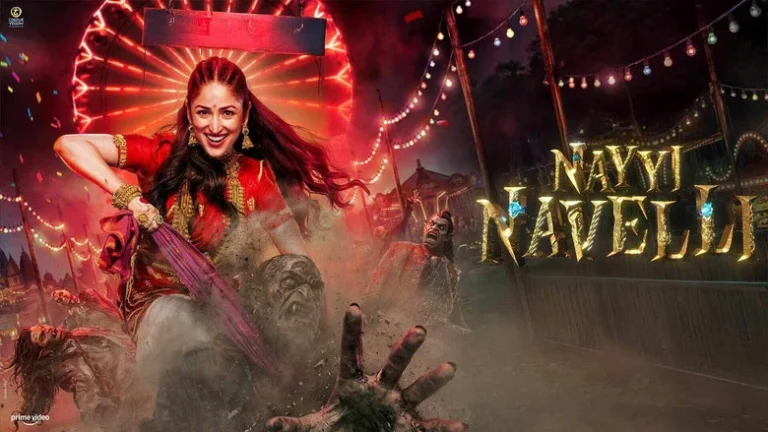
Dravid Selvam’s box-office leverage is the wild card here. He’s a rising name without a proven solo opening, and Drones asks him to carry a film that keeps shifting genre ground beneath his feet. The comparison to the performance-led anchoring in Nayyi Navelli is instructive: both films lean on a lead to unify scattered tonal registers, and both risk losing the audience when the script wanders.
The supernatural horror space in Tamil cinema is crowded right now, and Drones enters it with a premise that’s more original than most. Whether that originality translates to sustained theatrical interest depends on word-of-mouth surviving the film’s saggy middle stretch. The thematic ambition visible in Dark Giant suggests an audience hungry for horror with something on its mind, and Drones qualifies, even if it stumbles getting there.
For a film industry increasingly willing to let genre hybrids breathe, this one signals both the promise and the peril of that freedom. The appetite for contemporary Tamil horrors has never been broader, but broader appetite also means less patience for a movie that takes ninety minutes to find its point.
The Verdict: A Messy, Memorable Swing
Drones is the kind of film that’s easier to admire in retrospect than to enjoy in the moment. Its central argument about beauty, recognition, and the violence of the male gaze is worth making, and when Rush finally speaks it aloud, the film briefly becomes the movie it could have been throughout.
But the journey there is cluttered. Mirdath has a genuine visual imagination and a gift for staging absurdity, yet he hasn’t learned to trust his own best ideas enough to build the film around them. The witch, the drone, the mansion, the palmist’s curse: any one of these could have anchored a tighter, stranger, more confident movie.
What remains is a film that’s half social critique and half sketch comedy, never quite committing to either. It’s a swing worth taking, and Selvam and Devadarshini make it worth watching. But the movie leaves you with the nagging feeling that its sharpest scene arrived too late to save the ninety minutes that preceded it.