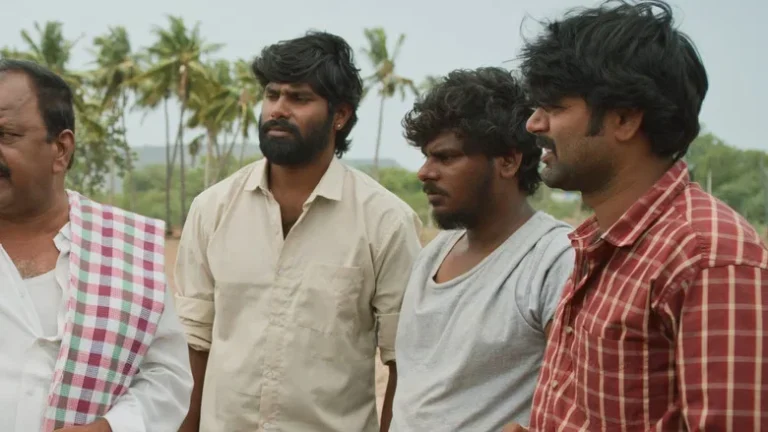
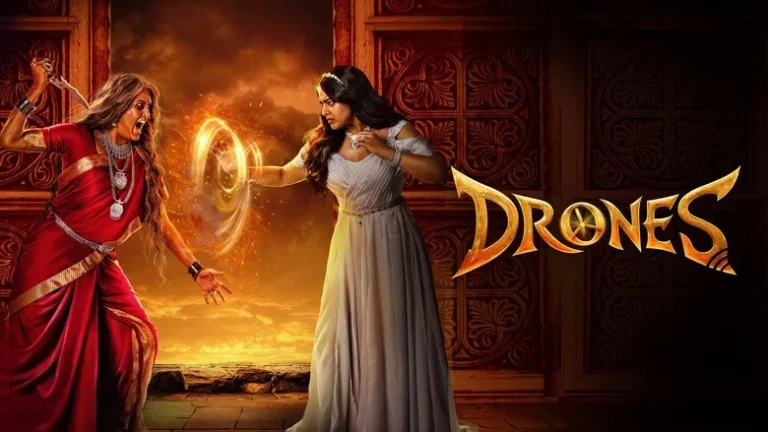
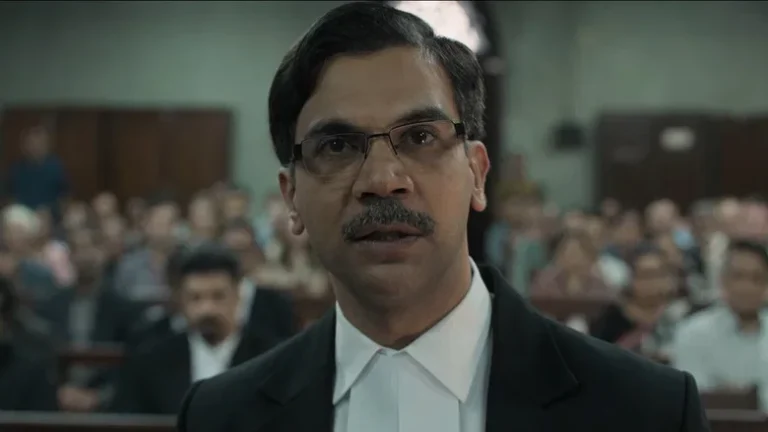
“Greed, guilt, and generational trauma can manifest as a literal curse.” That line, paraphrased from the film’s core theme, isn’t just a tagline, it’ss the architectural blueprint of Dark Giant. A family’s survival depends on confronting a growing threat that refuses to stay hidden, and the film wastes no time plunging them into a dark world where fear is the only constant.
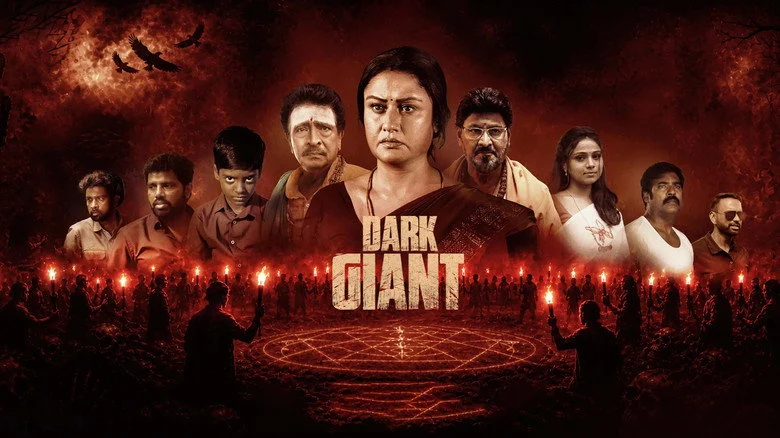
Bhagyaraj: The Voice of Confrontation
K. Bhagyaraj carries the weight of this supernatural horror with a performance that feels lived-in. In the moment generational trauma manifests as a literal curse, the film’s most praised scene, he doesn’t overplay the terror.
Instead, he sells the psychological collapse of a patriarch forced to admit that the family’s sins have become tangible. His final confrontation with the curse is a masterclass in restraint, letting silence and a trembling jaw do more than any dialogue could.
Kishaan’s World: Atmosphere Over Antagonism
Director KS Kishaan builds an oppressive atmosphere from the first frame. The initial appearance of the powerful force disrupting the family’s life is handled with dread, not jump scares. But his screenplay’s vagueness around the curse’s origin weakens the tension.
The lack of a specific antagonist leaves the threat feeling abstract when it should feel personal. I found myself wishing the script had given Bhagyaraj a clearer adversary to spar against, instead of just a cloudy force.
The Genre-Core: Trauma Made Visible
As a supernatural horror, Dark Giant succeeds most when it treats the curse as a metaphor. The visual execution of the curse’s manifestation, a swirl of shadow and sound, is effective because it mirrors the family’s buried guilt.
The psychological family drama beats are where the film earns its keep. Scenes of the family dining, arguing, and ignoring each other feel true, grounded in the messy rhythms of a clan that has too many secrets. Kishaan integrates the horror into these domestic moments, making the threat feel inevitable rather than arbitrary.
The climax confronts the curse head-on, and the final resolution, the family surviving from the inside out, is a neat thematic bow. But the journey there lacks the sharpest edges; more detail on how the curse feeds on specific guilt would have elevated the third act from satisfying to devastating.
Supporting Cast: Tension Multipliers
Sonia Agarwal, as a matriarch figure, intensifies the family’s conflict with a single, silent stare in the trauma-manifestation scene. She doesn’t shout; she simply looks, and the room tightens.
Livingston and Aadharsh Madhikaandham amplify the psychological tension through their body language during the curse’s growth. Livingston, in particular, plays a scene of quiet panic, fingers gripping a table edge, eyes darting, with real precision. Their casting signals a film that values ensemble weight over star power, and it pays off in every shared frame.
Audience Reception: A Quiet Build
Early audience responses praise the psychological horror elements and the visual execution of the curse, though some complain about the lack of a clear antagonist. There are no publicly available controversies or political reactions, which suggests the film stays focused on its domestic horror without stepping into real-world parallels.
For those who want their horror threaded through family drama, this is a welcome change. And if this style of genre storytelling appeals, browse more Tamil Horror reviews to see how other films handle similar themes.
Dark Giant works best when it trusts its lead to carry the emotional weight and its director to build an atmosphere of slow dread. It isn’t a film for viewers who demand a loud monster or a tidy enemy. But for the class and family audiences who appreciate psychological depth, this is a rare find. The best format to catch it is IMAX, where the curse’s visual swirl gains an almost tactile texture.
Dark Giant earns a careful 3 out of 5, a solid watch for its ambition, even if its vagueness keeps it from greatness.
For a similar ensemble dynamic where vulnerability anchors a family-action gambit, read the review of Maa Inti verdict.
And for a chaotic ensemble romance that loses its fizz, check the full Cocktail 2 review.