Raghav Juyal steps into his first major solo lead, and the role of Ajay Singh is built around comic escalation rather than dramatic weight. His scenes of verbal bravado – boasting about a role in “Kisi Ka Bhai, Kisi Ki Behen” – and panicked improvisation demand rhythmic timing that he handles with evident ease. The character’s delusion is the film’s engine, and Juyal keeps it running even when the material threatens to stall.

Vivek B. Agrawal’s Chaotic Canvas
Director Vivek B. Agrawal and co-writer Sudipto Sarkar choose a contained one-night structure, which supports rhythmic escalation and situational farce. The screenplay is linear but leans hard into misunderstandings – a money-for-abortion scheme being a key example of how family emotion is twisted into comedy. The weakness lies in tonal consistency: the premise demands sharp satire throughout, but the available material suggests the script sometimes defaults to broad chaos when the satire should sting.
The Comedy of Compressed Calamities
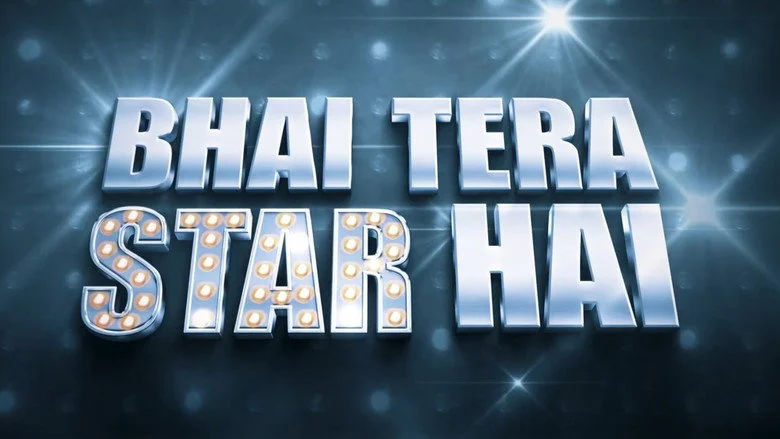
The film operates as a pressure-cooker farce set in a single London night. The widescreen 2.39:1 aspect ratio signals a theatrical intent, but the comedy here is primarily driven by dialogue and reaction rather than visual gags. The self-aware industry satire – like the audition boast referencing Salman Khan’s film – lands because it trusts the audience to recognise the joke.
The primary comic device is the delusional protagonist: Ajay believes his own lies so completely that every interaction becomes a trap. The abortion-fund dialogue sample – “Abey, meri girlfriend ne apne bhai ko bola hai ki woh pregnant hai… bhai ke emotion mein khel ke abortion ke liye paise jugaad rahe hain” – demonstrates escalation through unethical miscommunication, not slapstick. That choice keeps the humour character-rooted.
Yet the reliance on misunderstanding chains also limits dramatic depth. The synopsis promises no significant turn beyond the night’s chaos, and without a stronger dramatic counterweight, the comedy risks feeling like a single note stretched across two hours. The ensemble structure helps – multiple characters create fresh collisions – but the film never seems to want to be anything other than a well-oiled farce machine.
For more such tightly wound comedies in Hindi cinema, browse our full collection of Hindi Comedy reviews.

Ensemble Roots in Sanjay Kapoor’s Fatty and Beyond
Sanjay Kapoor, as Fatty, functions as a pressure point in Ajay’s crisis chain – a comic foil whose stone-faced reactions provide necessary contrast to Juyal’s frantic energy. His casting signals that the film understands the value of experienced straight-men in a comedy built on exaggeration.
Niharika NM and Barkha Singh anchor the relationship and social-comedy portions, bringing youthful energy that the scenes between men might otherwise lack. Niharika’s role as Roshini, presumably the girlfriend caught in the lie, requires her to toggle between anger and complicity; Barkha’s Laila appears to be a wildcard in the night’s events. Chandan Roy Sanyal’s Officer Ham is the closest the film gets to an antagonist, and his presence adds an authority figure to push the farce further into absurdity. Tina Desai, in a smaller role as Chandani, adds to the ensemble’s recognisable depth – the casting choices collectively suggest the filmmakers valued actor alertness over star charisma.
A Premise That Courts Its Own Audience
The film’s satirical target – the gap between self-image and reality in an era of viral clout – is timely, but the available material gives no evidence of how sharply it lands. The premise of a delusional would-be star will attract viewers who enjoy character-driven comedy and rapid-fire misunderstandings. I suspect the film’s appeal will depend heavily on how well the one-night structure masks the thin narrative arc; those who prefer restrained realism may find the exaggeration wearying. The U/A certificate and youth-centric casting point toward multiplex screens, where the film’s energy could play well in a crowd.
Bhai Tera Star Hai is a gamble on timing, ensemble chemistry, and the audience’s appetite for self-aware silliness. It isn’t aiming for depth, but within its farcical lane, it might just hit the right notes – especially if you catch it with a willing crowd and a projection screen.
For a similar chaotic single-night comedy, check out Spider Man review, which also uses compressed time to build comic tension.