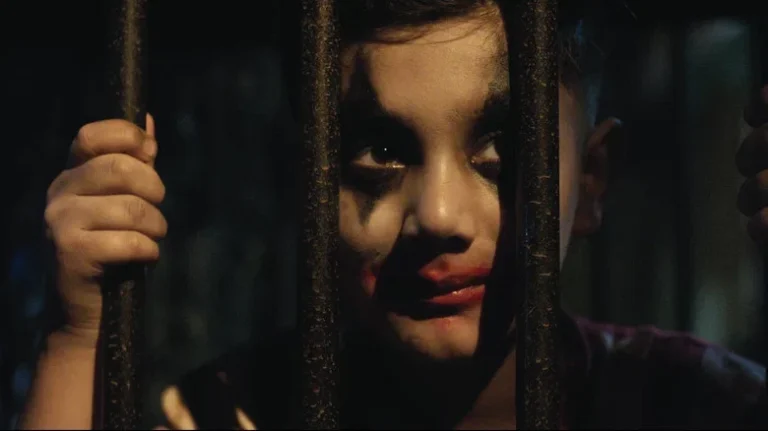
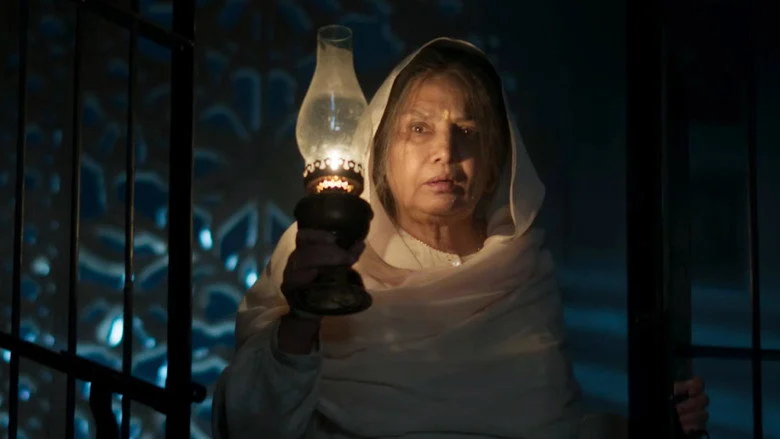
The trailer’s central confrontation lands with a quiet thud, a refugee family arrives in Lahore, and Mai refuses to leave the ancestral home they’ve been allotted. Shabana Azmi holds that frame with the weight of someone who knows displacement is not just physical, it’s spiritual. This is a film that understands the Partition wasn’t only borders being drawn; it was rooms being emptied.
The casting of Azmi as the moral anchor is the film’s sharpest decision. She doesn’t play resistance as stubbornness; she plays it as memory. Her presence signals that this drama intends to be about dignity, not just survival.
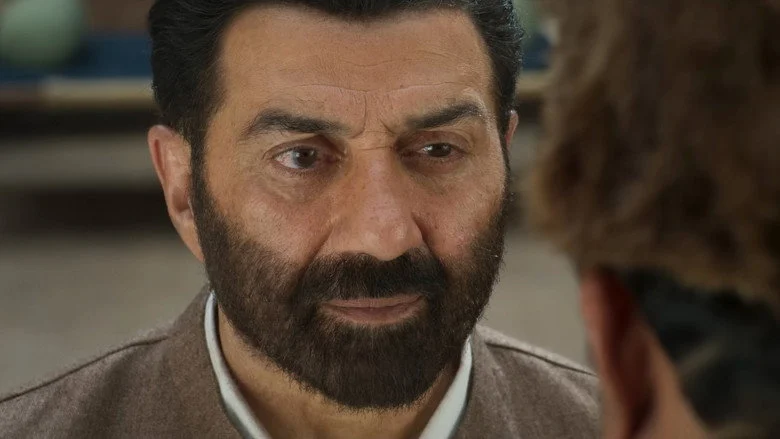
Sunny Deol’s Sikander Mirza Is Restraint, Not Rage
Sunny Deol, known for his explosive screen persona, is positioned here as Sikander Mirza, a man whose courage is measured in protection, not destruction. The available materials suggest a performance built on quiet resolve rather than the trademark Deol aggression.
That’s a calculated risk for a star whose box office identity is built on physicality. But the role demands a different register, and the film’s humanist framing suggests Deol is being asked to channel vulnerability alongside strength. Whether he sustains that balance across 2h 25m is the film’s central performance question.
Santoshi’s Direction Finds Drama in Domestic Space, Not Battlefields
Rajkumar Santoshi, who also co-wrote the screenplay with Asghar Wajahat, makes a deliberate choice to keep the conflict inside four walls. The house becomes a microcosm of Partition, ownership, belonging, and the impossibility of shared history. Santoshi’s strength has always been in staging ideological clashes through character, and the setup here is pure writer-director logic.
But the screenplay’s linear structure risks monotony. The middle section, which develops the uneasy coexistence between the families, needs escalating tension to sustain its runtime. The outside violence, while present, is framed as contrast rather than propulsion, a choice that may frustrate viewers expecting a broader canvas.
The film’s A certificate and its refusal to romanticize communal upheaval suggest Santoshi is aiming for historical gravity over entertainment. The title change from Lahore 1947 to Batwara 1947, reportedly for wider appeal, signals an attempt to broaden its commercial reach without softening its themes.
Preity Zinta and Ali Fazal Carry the Emotional and Political Axis
Preity Zinta’s Hamida is described as part of the displaced family, likely carrying the domestic and emotional core of the story. Her casting, after a long absence from screens, is itself a draw, she brings a warmth that can humanize the political backdrop. The chemistry between her and Deol will be crucial in grounding the family’s stakes.
Ali Fazal, playing Habeeb/Nasir Kazmi, represents the film’s literary ambition, the adaptation source, Jis Lahore Nai Vekhya, O Jamya E Nai, is widely recognized in coverage as the narrative base. Fazal’s casting signals a shift toward a younger, more contemporary audience familiar with his range in both Hindi and international projects.
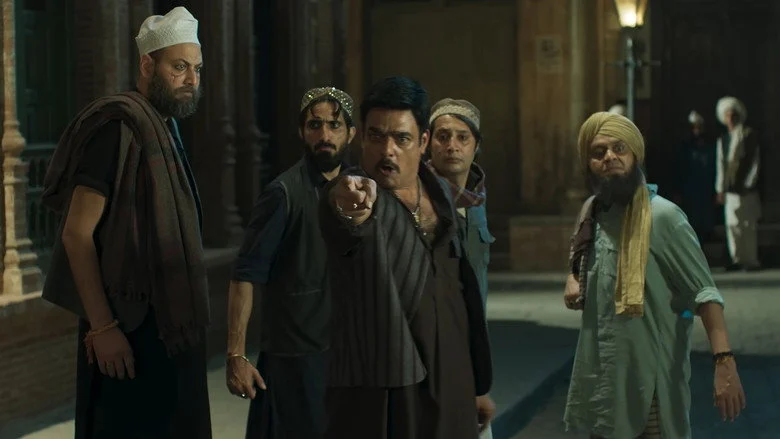
Abhimanyu Singh’s Yakub Khan, the listed antagonist, is described as a physically assertive opposing force. His role appears designed to embody the communal violence that presses against the domestic standoff. Karan Deol’s Javed Mirza and Khushi Hajare’s Tanno round out the family unit, though their specific beats remain unverified in pre-release materials.
Anticipation, Not Verdict: The Politics of a Partition Drama in 2026
The film was cleared by the CBFC without cuts, which is notable for a project dealing with communal violence and displacement. The reported ₹150 crore budget, per Wikipedia, indicates a significant commercial bet on a period drama with heavy themes. For audiences, this is a test of whether Partition narratives still hold box office pull, especially with an A certificate limiting family accessibility.
There’s no verified critical or audience consensus yet, this is a pre-release assessment based on available materials. What’s clear is the intent: a human-centered framing that prioritizes moral choice over spectacle. That’s a gamble in an era where period dramas often lean on scale to justify their budgets. Whether Santoshi’s restraint pays off commercially remains the open question.
This is the kind of film that could go either way, a thoughtful, actor-driven drama that finds its audience in the long run, or a well-intentioned project that gets lost in the noise of bigger releases. If you’re drawn to Partition dramas like Gadar: Ek Prem Katha, this offers a more contained, morally complex counterpoint.
For those who prefer their historical conflicts through a domestic lens, Hindi Action reviews will have more on this space.
At its core, Batwara 1947 is a gamble on restraint, a big-budget period film that wants to be felt in silences, not explosions. The trailer promises a moral confrontation anchored by Shabana Azmi’s formidable presence, and Santoshi’s track record with actor-driven conflict suggests he can deliver. But the linear structure and the absence of a verified standout scene beyond the house confrontation leave room for doubt. Watch it for the performances and the craft, preferably in a regular cinema where the period atmosphere can breathe. I’m cautiously optimistic, but the film needs to earn its 2h 25m runtime.
Batwara 1947 is a thoughtful, well-intentioned Partition drama that earns a 3 out of 5 on promise alone, but it needs to convert its humanist ambitions into actual dramatic momentum to justify the hype.
For a closer look at how another film handles confined tension, see Photographer review.
If you prefer survival dramas with a similar moral weight, Thudakkam verdict offers a different kind of pressure.