Madhuvidhu (2026): Sharaf U Dheen stands out while the narrative loses grip
The opening passages of Vishnu Aravind’s Madhuvidhu introduce us to Ammu, a café owner in Adoor, navigating a household made up entirely of men, a widower father and a bachelor uncle included. It’s a promising setup for a family entertainer, one that leans on the comic friction of bachelor culture before a romantic conflict begins to take shape.
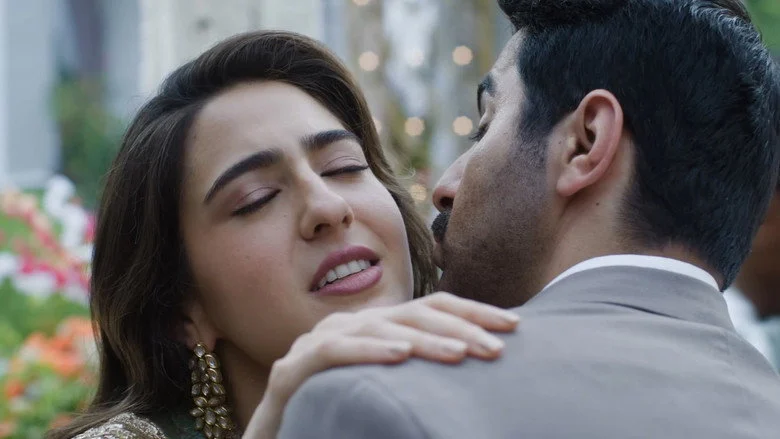
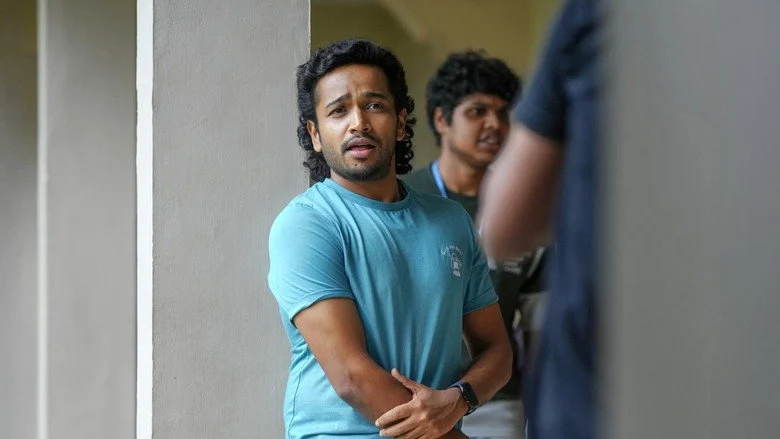
Sharaf U Dheen, as the straight man in these absurd circumstances, carries the film’s early stretches with an ease that feels entirely natural to him. His chemistry with Kalyani Panicker’s Sneha is the engine that keeps the lighter passages alive, even when the writing around them begins to sputter.
Sharaf U Dheen’s Straight-Man Act Is The Film’s Strongest Suit
Sharaf U Dheen has built a career on this exact register, the calm center in a storm of eccentricity, and Madhuvidhu plays squarely to those strengths. He manages the all-male household with a weariness that reads as comic rather than frustrated, and his scenes with Kalyani Panicker carry a warmth that the film’s later drama never quite matches.
His performance alone justifies the first half’s momentum. When the film shifts toward emotional conflict, however, the material stops giving him anything to work with, and the ease curdles into something thinner.
Aravind’s Direction Handles Setup Better Than Payoff
Vishnu Aravind demonstrates a competent grasp of small-town comic rhythms, keeping the early tone light and character-driven. The café-and-household introduction is handled with a breeziness that suggests a filmmaker comfortable with situational humor.
But the screenplay’s structure is mostly linear, and the emotional escalation in the second half is weaker than the premise promises. The direction does not sustain the conflict, and the climax loses impact as a result, a structural flaw that no amount of performance polish can fully mask.

The Romantic Comedy Works In Parts, But The Family Drama Falters
As a romantic comedy, Madhuvidhu functions on character chemistry rather than plot invention. The lead pair’s interactions are the primary comic engine, and the household setting generates enough friction to keep the early stretches engaging. Sharaf U Dheen’s straight-man positioning allows the situational humor to breathe, and the film’s best moments arrive when the café and the family dynamics collide.
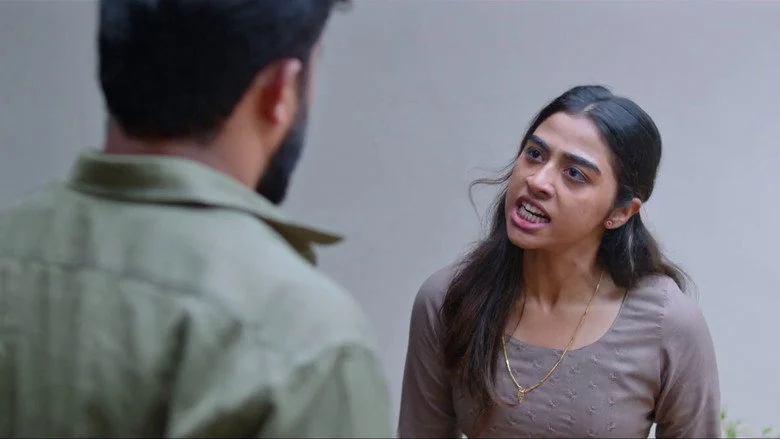
The shift from comedy to drama is the film’s main structural risk, and it does not land. The New Indian Express called it “a fun romantic comedy short on emotional weight, ” which captures the imbalance precisely. The Hindu noted that it “squanders a promising conflict, ” and Rediff observed that it “works in parts but falters when its drama turns unconvincing.”
The family-drama sections in the second half turn toward emotional conflict without earning it. The writing becomes thin, the pacing loses momentum, and the resolution feels rushed, a disappointing turn for a film that opened with such a clear comic vision.
Jagadish And Azees Nedumangad Anchor The Ensemble
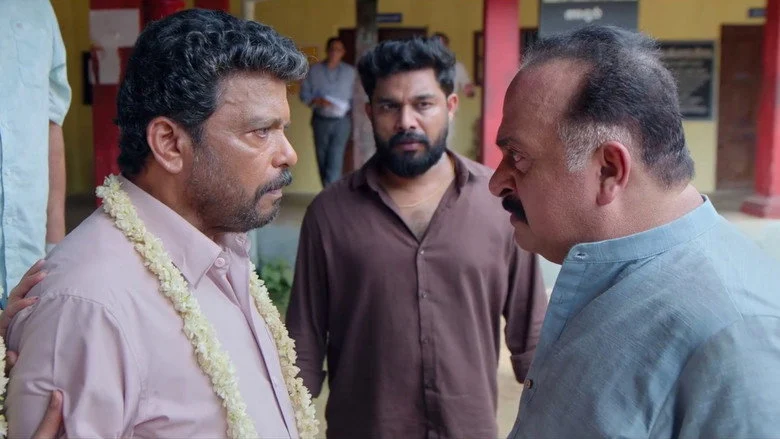
Jagadish delivers the veteran’s ease that only decades of comedy can produce, his presence lending the family scenes a credibility the script can’t always provide on its own. Azees Nedumangad balances playfulness and maturity in a way that contributes effectively to the household dynamic, a supporting turn that understands the film’s tonal ambitions better than the screenplay does.
Sai Kumar and Sreejaya Nair round out a reliable ensemble, though neither is given material substantial enough to leave a distinct mark. The casting signals a film comfortable with its Malayalam family-entertainer lineage, even when the writing fails those actors.
For more on how Malayalam cinema handles these family dynamics, browse our Malayalam Drama reviews.
A Hit That Leaves You Wanting More
The box office tells a story the reviews complicate. Sacnilk reported an India net of ₹3.98 crore, with a worldwide gross of ₹4.45 crore by the end of May, figures that trade reports described as a commercial success. Reporter TV and Asianet News noted a worldwide gross of around ₹4.3 crore within the first four days, confirming the film’s early momentum.
Audience sentiment mirrors the critical response: praise for Sharaf U Dheen, Jagadish, and the lead chemistry, complaints about the uneven second half and weak emotional drama. The film works best as a light entertainer, and it works worst when it reaches for weight it cannot carry.
Madhuvidhu is a watch for Sharaf U Dheen completists and fans of undemanding family comedy, best enjoyed on streaming where the pacing issues feel less punishing. It’s the kind of film that makes you wish the writers had trusted their comic instincts instead of forcing a drama they couldn’t sustain.
If you’re drawn to Sharaf U Dheen’s comic register, his work in Rock review offers a similar performance anchored to a stronger narrative frame.
Madhuvidhu earns a modest 2.5 out of 5, a pleasant first half undone by a second that forgets what made it charming.
For another take on Malayalam cinema’s uneven family dramas, see how System verdict handles its own tonal shifts.