Pati Patni Aur Woh Do (2026): A Familiar Lie, Retold With Better Company
The lie lands early: Prajapati Pandey, a married man in Prayagraj, volunteers to pose as his old college friend’s boyfriend so she can elope with the man she actually loves. From that single act of misplaced helpfulness, Mudassar Aziz’s film spins a web of suspicion where the wife suspects the colleague, the colleague suspects the friend, and the audience suspects the screenplay has nowhere new to go.
Ayushmann Khurrana’s Cover Story Is The Film’s Engine, For Better Or Worse
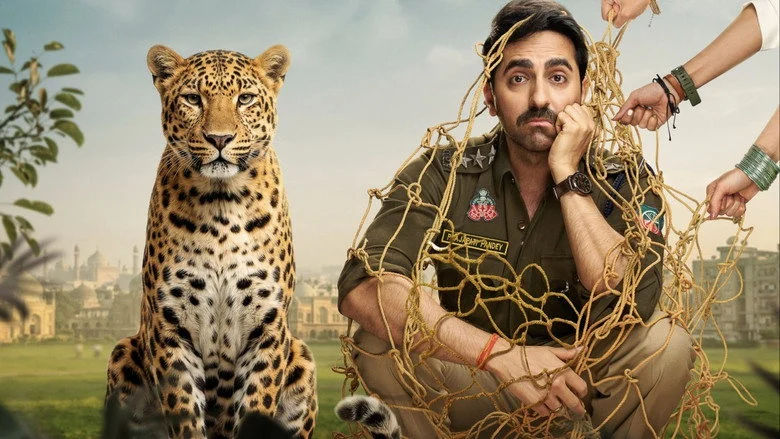
Khurrana plays Prajapati as a man perpetually one excuse away from disaster. His comic timing in the cover-story scenes, particularly when he must switch personas mid-conversation, carries the film’s early momentum.
But the actor is working with material that asks him to repeat the same panicked beat. The performance is consistent, yet the character arc barely moves beyond damage control.
Mudassar Aziz Directs The Ensemble Better Than The Jokes
Aziz’s strength is evident in how he manages the overlapping misunderstandings between three women and one hapless man. The setup is clean, and the first half builds its confusion chain with clarity.
The weakness is structural: the later sections recycle the same affair-suspicion gags rather than escalating them. What begins as sharp farce settles into a loop.
Romantic Comedy Mechanics: Identity, Confusion, And A Caste-Shaped Obstacle
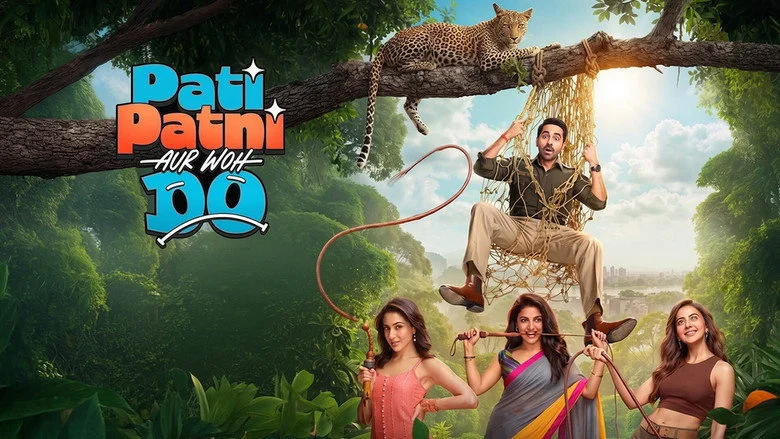
The film operates on classic rom-com machinery, hidden truths, mistaken readings, and a protagonist who digs his own hole deeper with every clarification. Prajapati pretending to be Chanchal’s boyfriend is the fulcrum, and the scene where he commits to the ruse carries genuine comic tension.
What elevates the genre play is the social layer: Gajraj Tiwari’s opposition to the elopement is rooted in caste difference, giving the comedy a sharper edge than pure farce. That dimension keeps the domestic confusion from feeling weightless.
The repetition is the cost. Aparna and Nilofer separately misreading Prajapati’s behavior works twice, then thrice, then becomes a predictable rhythm. The film trusts its premise more than it develops it.
Wamiqa Gabbi And The Women Who Drive The Chaos
Gabbi’s Aparna anchors the marital tension with a suspicion that feels earned rather than shrill. She gives the wife’s paranoia a quiet dignity, which makes the comedy land harder when her assumptions spiral.
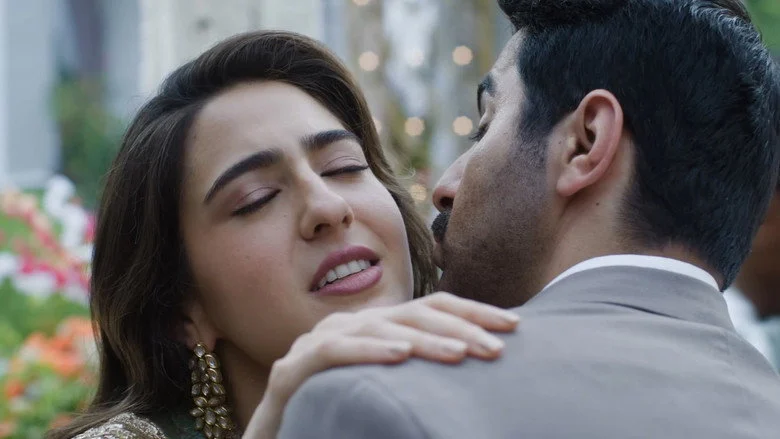
Sara Ali Khan’s Chanchal is the catalyst, and her breezy presence justifies the fake-boyfriend setup. Rakul Preet Singh’s Nilofer adds a second layer of doubt, and the film wisely gives all three women active roles in the confusion rather than reducing them to pawns.
Tigmanshu Dhulia’s Gajraj Tiwari is a functional obstacle, but his presence signals the film’s ambition to blend social commentary with slapstick, an ambition the script only partially honors.
The Caste Question, The Delay, And A Divided Audience
The caste-based opposition to Chanchal and Sunny’s relationship is the film’s most politically pointed choice, though it remains a subplot rather than a central critique. The production also shifted from an earlier Holi release to May 15, which trade watchers read as a confidence issue.
The opening day netted Rs 4.38 crore domestically and Rs 5.62 crore worldwide, per India Today citing Sacnilk, a modest start that reflects the divided response. Sacnilk’s reporting noted the subdued worldwide collections, and the final trade verdict landed at “average.”
Audiences praised the cast’s timing but complained about repetitive jokes and a predictable conflict pattern. The film is a watch for Khurrana completists and fans of light domestic comedy, but those seeking freshness in the deception arc will find the 2019 predecessor tighter.
For more Hindi comedy-drama reviews, browse our Hindi Drama reviews.
It is a film that works in stretches, the ensemble interactions are consistently strong, and Khurrana’s panic is reliably funny, but the repetition dulls the edge. Watch it for the cast’s timing, not for the plotting. Regular format is fine; no theatrical spectacle demands a big screen.
Pati Patni Aur Woh Do is a passable timepass that never escapes the shadow of its own premise, earning a 2.5 out of 5 for its performances and its inability to move past them.
For a sharper single-hero performance in a flawed film, see how Athiradi review handles its lead.
If you prefer a film where one actor’s energy compensates for weak payoffs, Karuppu verdict makes for a telling comparison.