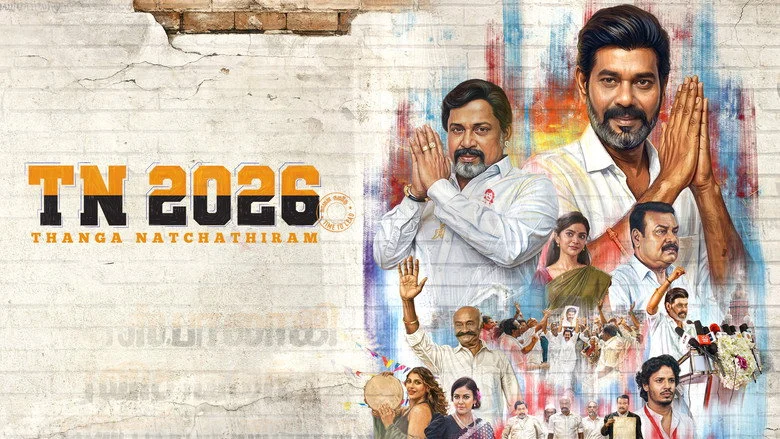
TN 2026 (2026): A Political Satire That Rises on Natty’s Shoulders
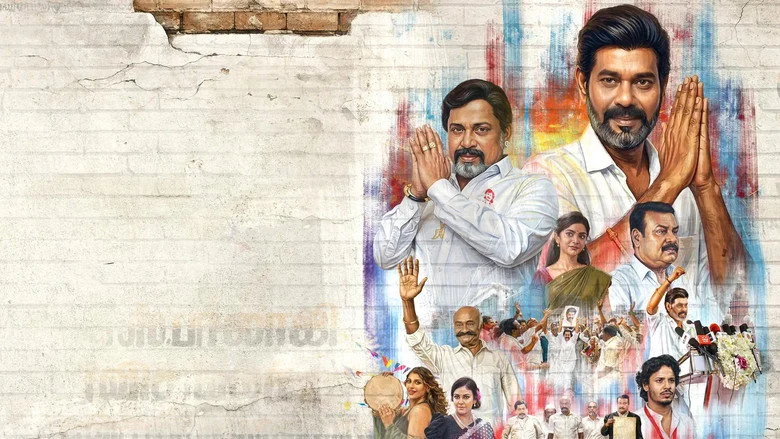
The film opens with Kulkanth Kumar rolling beeda leaves for a living, hands moving with the muscle memory of a man who has known poverty longer than ambition. His transition from that cramped shop floor to the blinding glare of cinema publicity is where TN 2026 finds its one genuine dramatic current.
Natty Subramaniam carries that arc with a physicality that suggests he understands the weight of every step upward. The struggle sequences land because he never plays them as melodrama, he plays them as survival, which makes the satire that follows feel earned, at least initially.
Umapathy Ramaiah’s Script Confuses Trends With Truth
The director assembles a recognizable social-ascent structure and peppers it with political commentary, but the observations rarely cut deeper than a headline. The New Indian Express called it “a shallow satire that conflates trends with truth, ” and that assessment holds through most of the second half.
What saves the enterprise is the sheer conviction of the lead performance. Ramaiah’s direction works best when it simply points the camera at Natty and lets the actor’s gravity do the heavy lifting.
The Genre-Core Execution: Where Satire Meets Commercial Necessity
TN 2026 operates as an action-drama with satirical ambitions, and that hybrid identity creates constant tonal friction. The underdog-rise structure gives the film its spine, but the political material around it never sharpens into actual critique. The film gestures at institutional rot without ever naming its mechanics, which leaves the satire feeling decorative rather than dangerous.
The beeda-seller opening establishes a grounded base that the rest of the film struggles to maintain. Once Kulkanth enters the film industry, the storytelling shifts into a broader register where public figures become caricatures and social commentary becomes a series of gestures. The pacing suffers in these stretches, with the drama losing momentum whenever the satire takes center stage.
What holds the film together is Natty’s ability to modulate between these registers. He sells the earnest rise and the cynical public life with equal commitment, and his presence gives the uneven material a center of gravity. The action elements are functional rather than spectacular, serving the narrative rather than defining it.
Thambi Ramaiah and the Ensemble Build the Satirical Architecture
Thambi Ramaiah appears as Sivalinga Mandradiyar, and his casting signals the film’s intent to ground its political commentary in recognizable Tamil archetypes. His presence adds generational weight to the story’s origin setup, even when the script doesn’t give him enough to work with.
M. S. Bhaskar’s General Secretary and Ilavarasu’s Treasurer complete the institutional triangle, and their casting gives the film its organizational texture. These are actors who understand how to play bureaucratic absurdity without winking at the audience, and their scenes carry a credibility the writing doesn’t always match. Shrrita Rao’s Madhavi Devanand provides the romantic counterpoint, though the role remains underwritten in the available material.
The Critical Divide and What Audiences Should Expect
Times of India’s assessment that “Natty lights up a sprawling political satire” captures the film’s core tension, the performance elevates material that never quite matches its ambition. ETimes settled on a 3.0 rating, which feels generous for the writing but fair for the overall execution.
The film’s audience reception mirrors this split, with praise for Natty’s screen presence and the political humor’s commercial packaging, while complaints center on the satire’s unevenness. This is a film that will satisfy viewers who accept commercial drama with social commentary, but those expecting tightly written political observation will leave frustrated.
For more on how Tamil cinema handles institutional satire and underdog narratives, browse our Tamil Drama reviews.
The Verdict: A Star Turn in Search of a Sharper Script
TN 2026 is the kind of film where the lead performance deserves a better vehicle than the one it gets. The political satire never sharpens into genuine critique, and the tonal shifts between drama and commentary create an unevenness that no amount of actorly conviction can fully smooth over.
Natty Subramaniam proves he can anchor a commercial drama with real presence, but the material around him keeps pulling toward broad gestures instead of precise observation. Fans of the actor will find plenty to appreciate; viewers hoping for incisive political writing should look elsewhere.
Watch it for Natty’s rise-from-struggle sequences, which carry genuine emotional weight, and accept the satirical stretches as the cost of that investment. A regular theatrical viewing serves the film fine, though it’s hardly demanding of the big screen.
TN 2026 earns a middling 2.5 out of 5, a performance worth watching trapped inside a satire that never finds its nerve.
For a sharper take on institutional power structures, check Manithan Deivamagalam review.
If you prefer rural drama with clearer thematic focus, Krishnavataram Part verdict offers a different kind of political landscape.