Manithan Deivamagalam (2026): Selvaraghavan’s Rural Drama Walks a Familiar, Weighted Path
The trailer paints a village simmering with resentment, where K. Selvaraghavan’s Raghavan is a man pushed toward a political game of no return. This is not a story about explosive action; it is a slow-burning drama about financial exploitation and the quiet fury that builds when power structures crush ordinary men.
Selvaraghavan Anchors the Film with a Brooding, Internalized Presence
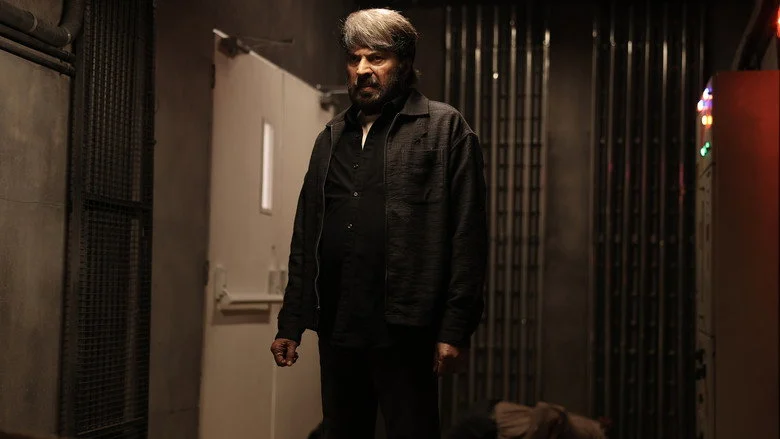
K. Selvaraghavan, returning as an actor, carries the weight of the film’s central conflict on his shoulders. His casting signals an intent to ground the drama in a believable, lived-in performance rather than star-driven theatrics.
The limited promotional material suggests a man who internalizes his anger, letting the tension in his posture do the talking. This is a role that demands restraint, and Selvaraghavan’s filmography suggests he understands the value of stillness in a storm.

Dennis Manjunath’s Direction Finds a Familiar Groove in Rural Turmoil
Director Dennis Manjunath, who previously helmed Trip and Thookudurai, returns to a canvas he knows well. The strength here is the clear positioning of the rural setting as a character itself, a pressure cooker of social dynamics and economic desperation.
The primary flaw, however, appears to be a reliance on a linear, predictable structure. The premise of a villager fighting exploitation is a well-worn path in Tamil cinema, and the trailer does little to suggest a fresh narrative twist on the formula.

The Genre Core: A Drama of Resistance, Not a Spectacle of Violence
The film’s classification as a drama first, with action and crime as secondary colors, is crucial to managing expectations. The conflict is rooted in financial exploitation and political maneuvering, which suggests the tension will come from confrontations and strategic plays rather than choreographed setpieces.
This approach is a double-edged sword. It allows for a more grounded, character-driven narrative that could resonate with audiences tired of formulaic masala films. Yet, it risks becoming a slow, talky affair if the screenplay doesn’t maintain a steady pulse between its dramatic peaks.
The political game, described as having “no return, ” is the film’s most intriguing hook. If Manjunath can sustain that sense of escalating stakes, the drama will thrive; if not, the middle act could easily sag under the weight of its own seriousness.
The Supporting Cast Brings Credibility to the Village Canvas
Veteran actress Kausalya, playing Raghavan’s relative, is a welcome addition. Her presence typically signals a narrative rooted in family bonds and emotional stakes, and her casting suggests the interpersonal drama will be as important as the public conflict.
Y. G. Mahendran as the MLA and Mime Gopi as Inbharaj provide the film with its institutional and antagonistic forces. Mahendran’s comedic-turned-serious gravitas and Gopi’s intense screen presence are reliable assets in Tamil cinema, and their casting hints at a layered power struggle rather than a simple good-versus-evil binary. R. S. Sathish’s inclusion rounds out a cast that prioritizes experience over glamour, which bodes well for the film’s authenticity.
A Familiar Political Playbook with No Clear Controversy
Since there is no reported controversy or political backlash, the film’s reception will hinge entirely on its execution. The audience profile is clearly defined: fans of Selvaraghavan and viewers of rural dramas will find this squarely in their wheelhouse.
However, those expecting a purely commercial action film or light entertainment will likely be disappointed. This is a film that appears to demand patience and an appetite for social realism, with its intensity derived from dialogue and circumstance.
For those who appreciate this space, it is worth exploring more Tamil Drama reviews to see how it stacks up against its contemporaries.
There is no box office data available yet to gauge its commercial fate, but the film’s modest, actor-driven appeal suggests it will rely on strong word-of-mouth rather than a blockbuster opening. The success will depend on whether the audience embraces its slow-burn nature.
Ultimately, Manithan Deivamagalam is a film for a specific palate, one that values mood and moral conflict over rapid-fire entertainment. It is a watch for those who appreciate Selvaraghavan’s intense screen presence and the grounded storytelling of rural Tamil dramas, best experienced in a regular theatre setting where its somber tone can be fully absorbed.
Manithan Deivamagalam is a sincere but deliberately paced drama that earns a 2.5 out of 5 for its committed performances, even if its narrative lacks the spark to fully ignite.
For a similar exploration of a director wrestling with a heavy premise, see Krishnavataram Part review.
If you prefer a lighter take on family dynamics, Daadi Ki verdict offers a contrasting tone.