Dug Dug (2026): A Raw Rural Satire That Bites Harder Than It Entertains
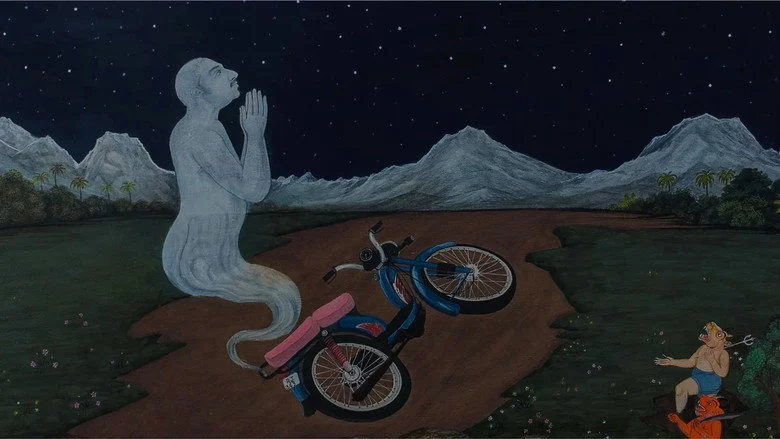
In a dusty Rajasthan village, a rumor spreads that a motorbike linked to a recent death can grant wishes, provided you offer it alcohol. What begins as a joke-like superstition quickly hardens into a local cult, and Ritwik Pareek’s camera watches the transformation with unsettling patience.
This is satire with a specific target: not religion itself, but the machinery of manufactured belief. The premise is original, rooted in a lived-in rural setting that feels observed rather than staged.
Altaf Khan’s Thakur Sa Is the Village’s Moral Weathervane
Altaf Khan doesn’t dominate scenes; he anchors them. As Thakur Sa, he functions less as a traditionally forceful lead and more as a social compass, his reactions calibrating how the village absorbs the myth.
His performance is adequate rather than magnetic, but that restraint suits the film’s observational tone. Khan is placed in scenes that depend on status and local belief, and he carries that weight without theatrical excess.

Direction and Screenplay: Sharp Intent, Uneven Execution
Pareek’s direction succeeds in creating a lived-in village environment that supports the central myth. The opening setup is efficient, the rumor establishes itself within minutes, and the social hierarchy snaps into focus.
But the middle section loses momentum. The tonal register wobbles between comedy, satire, and mystery, and not every shift lands with control. The screenplay is premise-driven and largely linear, yet the myth logic occasionally feels stretched for dramatic effect.
Genre-Core Execution: Satire That Targets the System, Not the Sinner
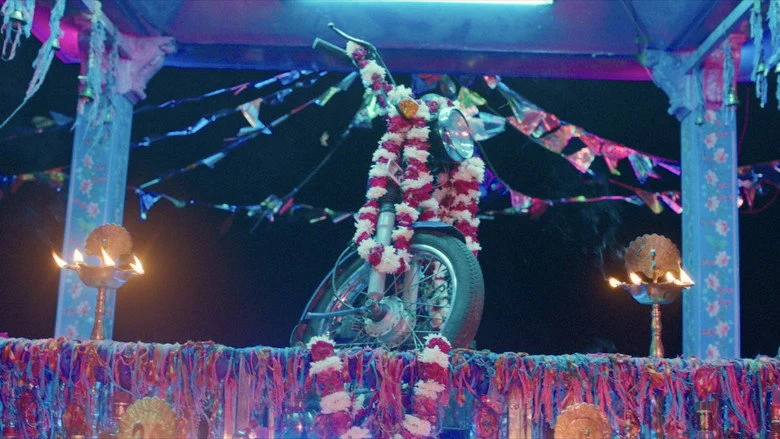
The film’s satirical engine is the motorbike itself, a mundane object transformed into a wish-fulfillment shrine. Villagers offer alcohol, pursue personal gains, and the joke curdles into something darker: a social system built on fear, desire, and opportunism.
Pareek wisely avoids a single villain. The opposing force is superstition itself, sustained collectively by the village’s complicity. That choice keeps the satire pointed at structures rather than individuals, which gives the film its critical edge.
The tonal design mixes humor with discomfort, and when it works, particularly in the communal gatherings around the bike, the film achieves a raw, unsettling power. When it doesn’t, the pacing drags and the satire softens into something merely quirky.
Supporting Cast: An Ensemble That Serves the Myth
Gaurav Soni’s Pyare Lal is reviewed as average, but his role matters: he represents the ordinary villager who oscillates between skepticism and participation. Soni doesn’t elevate the material, yet he grounds it in recognizable human hesitation.
Yogendra Singh’s Badri is described as so-so, while Durga Lal Saini’s Manphool is called ordinary. Neither performance stands out, but together they build the film’s social texture, a chorus of believers, opportunists, and doubters whose collective behavior becomes the real subject.
The Audience Has Spoken: Direction and Music Win the Day
On BookMyShow, the film holds an 8.2/10 audience score from 75+ votes. Audience tags such as #SuperDirection and #WowMusic suggest that Pareek’s handling of the premise and the film’s musical texture resonated strongly with viewers.
Critics have been more divided, describing the film as a mixed bag rather than fully cohesive. The satire is widely praised as sharp and socially pointed, but pacing and tonal balance have drawn consistent criticism. I found myself agreeing with both camps, the premise is genuinely distinctive, yet the execution doesn’t always match its ambition.
The box office picture is modest: an India net of ₹18, 679 was recorded at BoxOffice India’s now-playing listing dated 14 May 2026. This is a small film with a small footprint, and its value lies less in commercial scale than in its satirical nerve.
For those interested in how Indian cinema tackles superstition and rural belief systems, there’s more to explore in our Hindi Satire reviews.
A Raw Film With a Real Point, If You Can Sit Through the Lulls
Dug Dug is not a polished experience, and that’s partly the point. Its raw, observational style suits the material, but the uneven middle section tests patience.
If you value satire that targets blind faith with genuine social commentary, this is worth your time. If you need consistent momentum, you may find yourself checking the runtime.
Watch it for the premise, stay for the uncomfortable questions about how easily belief can be manufactured, sold, and performed. The film’s final act ties the myth to the village’s own complicity, and that resolution lands with more weight than the journey to it.
Dug Dug earns a 2.5/5, a sharp idea in search of steadier hands, but a debut that signals real directorial intent. For another look at rural belief systems, check out 29 review.
And if you’re in the mood for a romance that leans on chemistry rather than conflict, Ek Din verdict offers a different kind of regional storytelling.