Battle (2026): Arjun Anbudan’s Rap Drama Loses Its Rhythm Midway
A boy who cannot speak until age ten finds his voice not in conversation but in the violent, rhythmic release of rap. That is the arresting opening image of Battle, Narayanan’s Tamil drama that tracks a mute child’s transformation into a performer named Mani, played by Arjun Anbudan.
The premise is distinctive enough to demand attention, but the film’s real battle is with its own uneven script.
Arjun Anbudan’s Silence-to-Stage Arc Carries the Film’s Weight
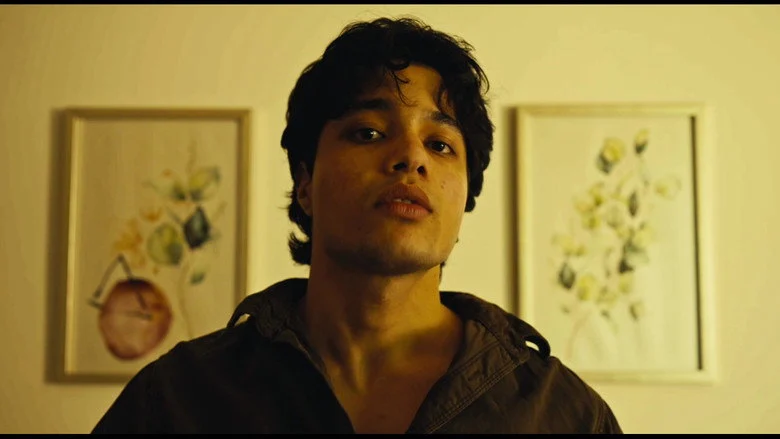
Anbudan’s performance rests on a demanding physical and emotional transition. Early scenes require him to communicate through restraint, his silence becoming a container for everything he cannot yet say.
When Mani finally erupts into performance, the shift feels earned. The actor commits fully to the crisis of purpose that follows his rise, grounding the film’s central question: what does art mean when it stops being personal?
Narayanan’s Direction Finds Flashes, Not Flow
Director Narayanan builds a clear linear structure: limitation, fame, collapse, and rediscovery. The endpoint is simple and accessible, and the childhood-to-performance transition is handled with genuine care.
But the screenplay loses its footing in the middle stretch. The romantic and social conflicts slow momentum without adding sharpness, leaving the film working in isolated flashes rather than sustained rhythm.
The Genre Core: A Drama That Stumbles Between Love and Music
The transformation premise is the film’s clearest genre-defining asset. Mani’s journey from silence to rap stardom gives the drama a built-in engine, and the concluding self-realization scene frames the entire narrative as a character-resolution piece rather than a celebrity story.
Where the film falters is in balancing its dual tracks. The romance between Mani and Madhi, played by Aradhya Krishna, is repeatedly referenced as part of the emotional arc, but it never achieves the same depth as the music-driven conflict. The social pressure that pushes Mani toward his breaking point reads more as plot machinery than lived experience.
The final segment, in which Mani reconnects with the soul of his art after being pushed to the edge, is the most praised stretch. It lands because it returns the film to its core thesis: music is not output for applause but a response to identity and pressure.
Supporting Cast Anchors a Thinly Drawn World
Aradhya Krishna functions as the emotional counterweight to Mani’s ambition, and her presence gives the romantic track whatever gravity it possesses. Subramaniam Siva, cast as Krishna, likely anchors the family or social context, though the available material offers limited scene-level detail about his contribution.
Munishkanth appears among the principal cast, but his specific role remains frustratingly undocumented. The antagonist function is similarly diffuse, reading more as a social and situational force than a sharply outlined villain. That choice weakens the drama’s conflict economy, leaving Mani to battle abstractions rather than a tangible opposition.
Uriyadi Suruli is listed as an antagonist in one source, but the character’s presence is not consistently verified across reviews. I suspect the film would have benefited from a more defined opposing force, if only to sharpen the stakes in the middle act.
Audience Fit: A Purpose-Driven Drama for Patient Viewers
Battle is aimed squarely at viewers who enjoy music-driven dramas about identity and purpose. The transformation-and-return story is easy to follow, and the UA certificate suggests a mature treatment of its themes.
Those seeking tightly plotted commercial action or fast-paced scripts should look elsewhere. The pacing between the first and second halves is noticeably uneven, and the romance may feel underdeveloped relative to the music arc. The film’s 125-minute runtime works in its favor, but only if you accept its episodic rhythm.
Critics have noted the film only finds its rhythm in stretches, and the middle section is where most of the goodwill evaporates. For a movie built on a rapper’s journey, the beat drops are too inconsistent.
For more on Tamil cinema’s quieter character studies, browse our Tamil Drama reviews.
Battle is best watched on a regular screen or OTT platform, where its intimate stretches can breathe without the pressure of theatrical expectation. It is a film of genuine ideas and a committed lead performance, but one that never quite harmonizes its love story with its musical soul. Go for Anbudan’s transformation arc, stay for the final act’s clarity, and forgive the sagging middle.
Arjun Anbudan’s performance deserves a sharper script, and Battle settles at a 2.5 out of 5 for its uneven execution and unfulfilled romantic track.
If you appreciated this film’s focus on artistic purpose, 8th Street review for another meditation on isolation and meaning.
For a contrasting take on performance-driven Tamil storytelling, Lechindi Mahila verdict of a louder, less disciplined outing.