Lee Cronin’s The Mummy (2026): Lee Cronin’s Horror Reboot Buried Under Its Own Ambition
The first sign of trouble arrives early, when Detective Dalia Zaki (May Calamawy) steps into a crime scene that reeks of something older than the building itself. Sand spills from a ceiling crack like hourglass blood, and the air thickens with a supernatural dread that Cronin’s camera knows how to frame but not sustain. This is a horror film that understands its ingredients yet never quite manages the recipe.
Produced by the unholy alliance of Blumhouse, Atomic Monster, and New Line, this 2026 reboot arrives with the weight of three horror powerhouses behind it. The pedigree is impeccable; the execution, regrettably, is not.
Jack Reynor Gives the Film Its Only Pulse
Reynor’s Charlie Cannon is the anchor, and he carries the family drama with a weary physicality that feels lived-in rather than performed. His scenes with Laia Costa’s Larissa crackle with the friction of a marriage strained by something neither can name.
When Charlie faces the first supernatural manifestation, Reynor’s instinct is to run, and that fear reads honest. He’s the rare horror lead who understands that cowardice is more relatable than heroism, even when the script keeps pushing him toward action-hero postures.
Cronin’s Direction Knows the Grammar but Forgets the Language
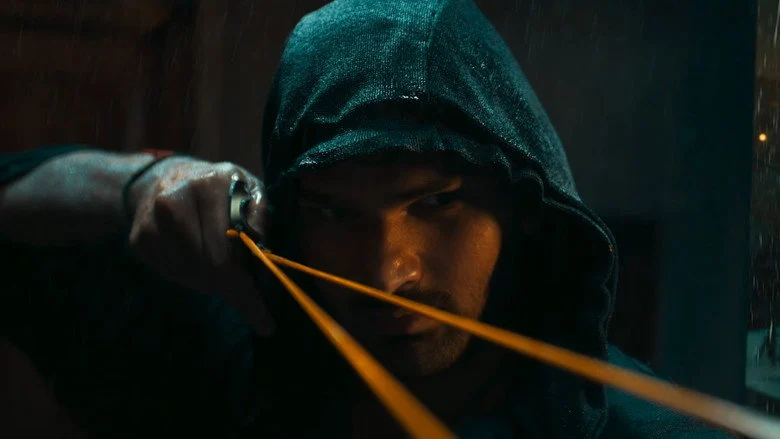
Lee Cronin’s visual instincts remain sharp, his compositions evoke the dread-soaked frames of his earlier work, with shadows that breathe and corridors that stretch beyond reason. But his screenplay betrays him, stacking mysteries without the connective tissue that made his previous genre exercises feel inevitable rather than arbitrary.
The film’s central flaw is its refusal to commit to a single tone, lurching between family melodrama, detective procedural, and supernatural spectacle. That said, I found myself genuinely curious about where the plot was heading, even when the path made little sense.
What Cronin does well is atmosphere; what he fumbles is rhythm. The scares arrive in clusters, then vanish for stretches that test patience rather than build tension.
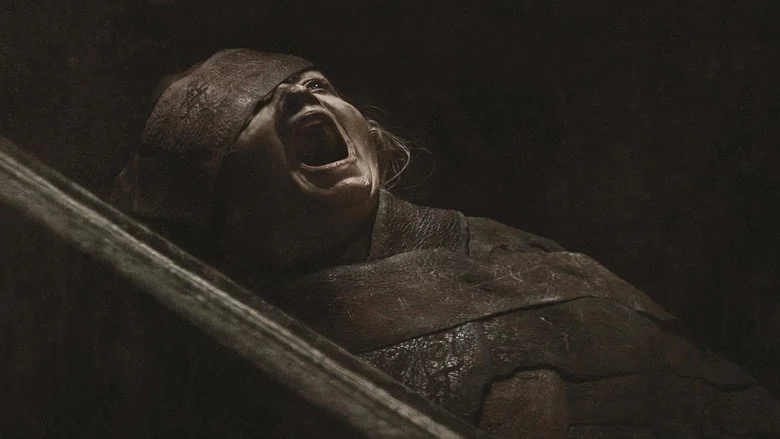
The Horror Setpieces Promise More Than They Deliver
The genre-core execution hinges on a single question: does the Mummy terrify? The answer is a qualified yes, with one standout sequence involving a flooded basement where the waterline rises in impossible increments. Cronin stages this with genuine craft, using reflection and refraction to disorient before the reveal lands.
But the setpieces feel isolated, each one a self-contained experiment rather than a rising tide of dread. The action-adventure elements clash with the horror grammar, and the supernatural rules shift conveniently to serve whatever scene is playing out.
There’s ambition here, a desire to make the Mummy mythos feel ancient and unknowable again. That ambition is visible in every frame, even when the execution falls short of the vision.
If you’re in the mood for more genre deep-dives, our English Mystery reviews cover the spectrum from elevated terror to pure schlock.
The Supporting Cast Deserves Better Material
Calamawy’s Detective Zaki brings a procedural sharpness that the film desperately needs, but she’s given little to investigate beyond exposition. Her scene with the Magician, Hayat Kamille’s antagonist, hints at a richer dynamic that never materializes.
Natalie Grace as Katie Cannon channels teenage defiance with credible rage, while Shylo Molina’s Sebastián and Billie Roy’s Maud fill out the family unit with professional efficiency. Verónica Falcón’s Carmen Santiago arrives late and leaves little impression, a waste of an actress who usually commands attention.
Kamille’s Magician is the film’s most intriguing element, a villain who operates in silence and suggestion rather than monologue. But the script gives her too few moments to truly haunt the proceedings.
Audience Reception and the Elephant in the Room
With no verified critical consensus or audience scores available, the film enters a crowded 2026 landscape as something of a question mark. The production pedigree suggests a certain baseline of craft, but the lack of early buzz from festival circuits or preview screenings is itself telling.
Box Office Mojo tracked the film’s opening worldwide gross, though specific figures remain unverified. What’s clear is that this reboot faces an uphill battle against both franchise fatigue and the shadow of the 1999 Brendan Fraser classic that still defines the property for most audiences.
The absence of controversy, no casting debates, no political backlash, means the film will live or die purely on its merits. That’s a refreshing change for a genre property, even if it also signals a lack of cultural footprint.
For those who prefer their horror with more restraint and a quieter lead performance, our look at Toaster verdict offers a different kind of genre exercise.
The Verdict: A Curious Artifact, Not a Resurrection
Go in with tempered expectations and you’ll find moments of genuine craft buried beneath the rubble. The best way to watch is on a large screen with good sound, where Cronin’s audio design can work its subtle magic. But don’t expect the mummy to rise to the occasion, it’s more of a shambling walk than a triumphant return.
The Mummy (2026) is a flawed but earnest attempt that horror completists may appreciate for its ambition, though it earns a modest 2.5 out of 5, a film that knows what it wants to be but can’t quite escape its own wrappings.
For a tighter take on family dynamics under supernatural pressure, Itllu Arjuna review delivers with more focus and fewer loose threads.