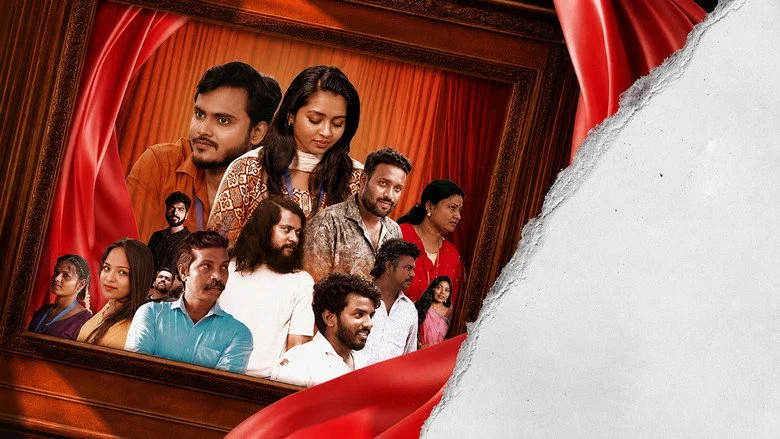
Paavakoothu (2026): The Book That keeps the film tense but uneven overall
Amudha Mozhi doesn’t say yes when Rajesh confesses his love. She hands him a book called Paavakoothu and tells him to read it first. That single gesture is the entire engine of AR Rajesh’s compact 85-minute Tamil drama, a romance that refuses to move until its protagonist learns how to read the story he’s inside of.
It’s a clever hook, and for a while, the film trusts it completely. The question isn’t whether Rajesh will win her over, but whether he’ll understand what she’s actually asking of him. The premise promises more introspection than your average college romance, and that’s worth paying attention to.
Pradeep Selvaraj Carries a Quiet Arc of Emotional Growth
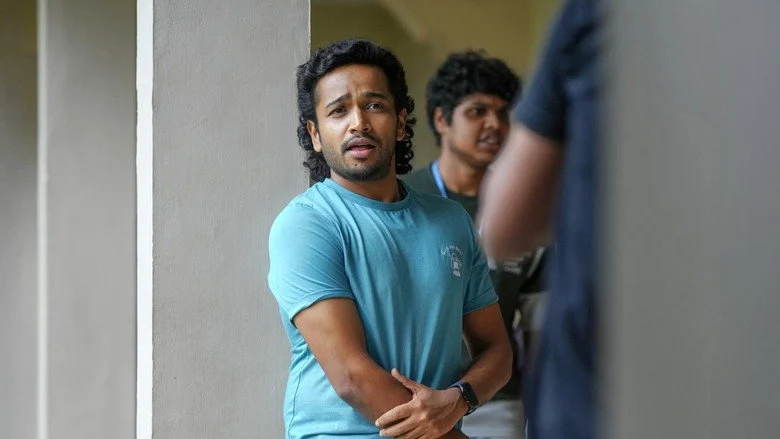
Selvaraj’s Rajesh begins as a standard-issue impulsive lover, eager, earnest, and entirely convinced his feelings are enough. The role demands a visible shift from that youthful urgency into something more reflective, and the film’s structure gives him room to breathe through that transformation.
His best moments come in the book-reading passages, where his reactions to the shifting stories mirror his internal reassessment. It’s not flashy work, but it’s the kind of restrained performance that keeps a concept-driven film anchored. Without a villain or external conflict, Selvaraj has to hold the screen with his own growing awareness, and he manages it without overplaying the epiphany.
The Multi-Story Device Is the Film’s Boldest Gamble
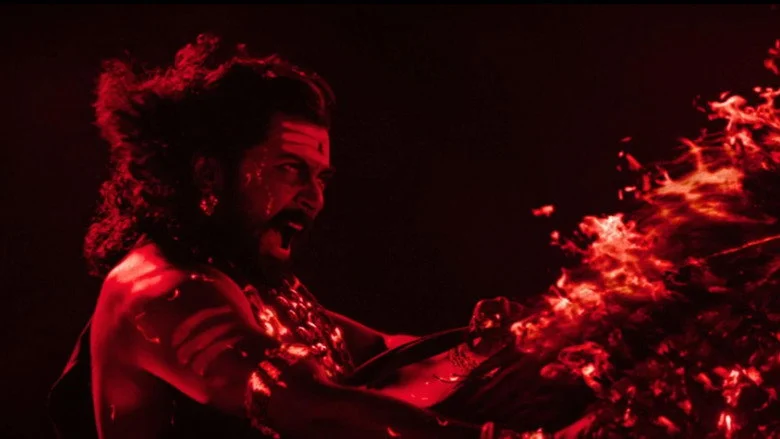
This is where Paavakoothu either wins you over or loses you. The book sequence shifts between Theru koothu, stage play, and cinema, and each mode carries a different emotional register. The folk theatre passages feel alive with tradition, while the stage-play sections lean into theatrical artifice, a deliberate contrast that keeps the storytelling fresh.
It’s a formally ambitious choice for a debut-scale production, and it’s also where the film’s identity truly lives. The romance is just the frame; the real subject is how stories reshape us depending on the form they take. That’s a mature idea for a college-set drama, and the film deserves credit for committing to it so fully.
The risk is that the device outshines the payoff. The premise builds more interest than the final return-to-confession stretch can satisfy, and the resolution feels conventional compared to the experimental middle. It’s a structural imbalance, the journey is richer than the destination.
Ranjana Thiyagarajan and the Supporting Cast Anchor the Premise
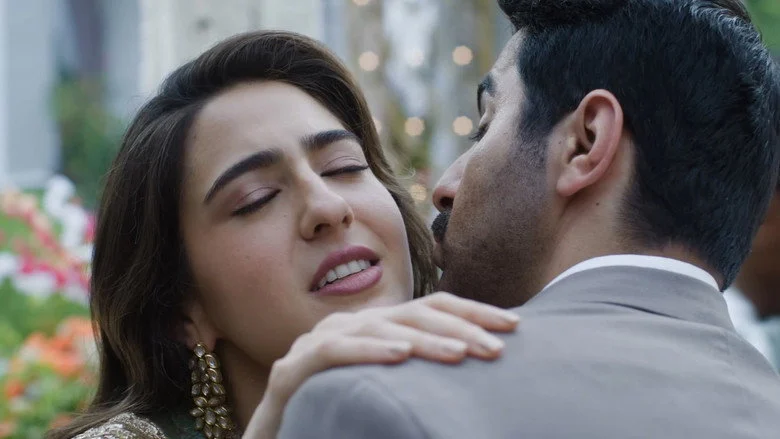
Thiyagarajan’s Amudha Mozhi is less a love interest than a narrative gatekeeper. Her condition, read the book before you speak, sets the entire plot in motion, and she plays it with a calm certainty that suggests she already knows what Rajesh will find. It’s a performance built on restraint rather than outburst, and it makes her character feel smarter than the typical romance lead.
Saraswathi Ramesh appears as Nasrin, and while the available material offers little detail on her role, her presence signals a wider social circle around the central pair. The supporting cast, including Cyril Saga Johny and Karthik Shiva, fills out the college environment without pulling focus. This is a film that trusts its leads and its concept, and the ensemble respects that trust by staying in service of the premise.
A Quiet Release With a Clear Audience in Mind
There’s no controversy here, no censorship battle, and no political subtext fighting for attention. What Paavakoothu offers instead is a targeted appeal: viewers who want a compact, idea-driven romance with a literary spine. The U-certificate and short runtime make it an easy recommendation for families and class audiences looking for something gentle.
That said, the film’s lack of critical visibility is itself a talking point. With no major review scores indexed and no box office reporting available, this is a release that will live or die by word of mouth. It’s a film that asks its audience to show up for an experiment, not a spectacle, and for viewers tired of formulaic romantic dramas, that’s exactly the point.
For more thoughtful takes on unconventional storytelling, browse more Tamil Drama reviews.
What Works, What Doesn’t, and Where It Lands
Director AR Rajesh deserves credit for a high-concept structure that most debut filmmakers would soften into a gimmick. The screenplay’s linear framing with a story-within-a-story device is disciplined, and the editing keeps the first half lean. But the second half struggles to match the middle’s inventiveness, settling for a resolution that feels safer than the questions it raised.
Cinematographer Aldrin Maekado Nixon’s work isn’t described in available critical detail, which is a shame, the shift between performance traditions must have demanded visual flexibility. The film’s strength remains its concept, and its weakness is the gap between that concept and its conventional close.
If you’re drawn to films where a character’s growth is triggered by the stories they consume, Paavakoothu is worth your time. Watch it for the middle section, where the Theru koothu and stage-play passages create something genuinely distinctive. Skip it if you need a villain, a spectacle, or a heavily reviewed release to justify your ticket. This is a film for viewers who trust a premise over a poster.
Paavakoothu is a brave, uneven experiment that earns a 3 out of 5 for its formal ambition, even as its resolution plays it safe, a film more interesting in its questions than its answers.
For a deeper look at how sequels handle narrative expectations, see how Drishyam 3 review plays with familiarity.
For a contrast in how compact revenge narratives execute their craft, check out this take on Gladiators verdict.