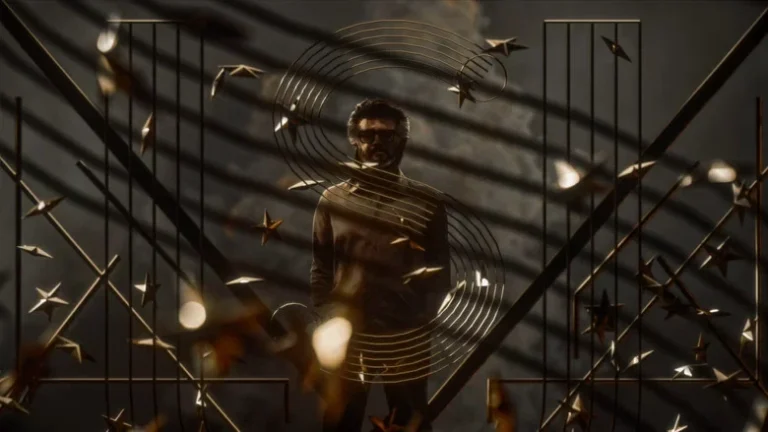
The opening image is a man alone in a Manali frame that refuses to explain itself. What follows is ninety-eight minutes of a husband chasing a wife who may be a ghost, a memory, or a screenwriting convenience.

When The Filmmaker Casts Himself As The Question And The Answer
Salil Singh writes, directs, and plays Yatharth, the abandoned husband whose search for Kalpana becomes the film’s only engine. It is a gamble that collapses the critical distance between creator and creation, there is no outside eye to interrogate the material.
Where a sharper structural hand might have used that fusion productively, the film treats its own ambiguity as a destination rather than a mechanism. The real-versus-fictional premise is stated, not dramatized.
That refusal to commit is the film’s defining posture, and it grows exhausting well before the final reel. The unreal world Yatharth wanders into never acquires rules, only atmosphere.
A Missing Wife Who Never Becomes A Person
Isha Singh Chauhan’s Kalpana exists almost entirely as an absence, which is the point, and also the problem. She is a photograph, a name, a wound, but never a woman with a specific way of holding a cup or cutting a sentence short.
Compare that vacancy to the way a dual-role performance can generate genuine psychological friction, as attempted in Toxic, where the doubling at least forces the actor to negotiate two distinct physical registers. Here, Kalpana’s absence is asserted rather than felt.
Mohit GGupta’s Dinesh drifts through a handful of scenes with no discernible function beyond filling a frame. Govind Bajpai’s Mr. Bhatia registers as a suit and a tone of voice, nothing more.
The supporting ensemble is credited but dramatically inert. No one pushes against Yatharth’s perception, which means there is no friction to test whether his reality is reliable.
The Stillness That Should Manufacture Pressure But Doesn’t
Singh’s performance leans heavily on stillness, long takes of him standing at windows, sitting on beds, walking without destination. The intent is clearly interiority, but the execution reads as vacancy.
His vocal register stays in a single narrow band, a low murmur that neither cracks with grief nor sharpens with obsession. Without modulation, the search loses its escalating stakes.
There is one stretch, Yatharth alone in a room, staring at a door that may or may not open, where the film briefly achieves the suffocating dread it seems to want. Then it cuts away.
That cut is emblematic. Every time the film approaches genuine psychological pressure, it retreats into another ambiguous landscape shot or another scene of Yatharth walking.
Manali As Mood, Not Meaning
The Himachal locations are shot with a flat, documentary neutrality that never distinguishes between the real world and the unreal one. If the film’s thesis is that the boundary has dissolved, the camera should show us that dissolution.
Instead, both registers look identical, same lens, same light, same rhythm. The audience is told the worlds are different but given no visual evidence.
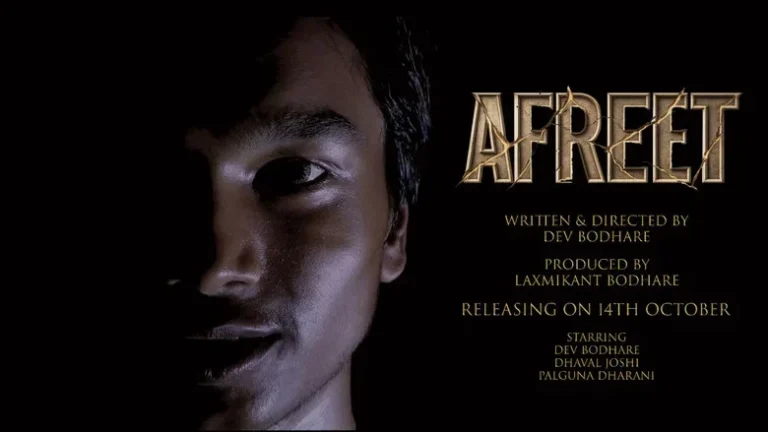
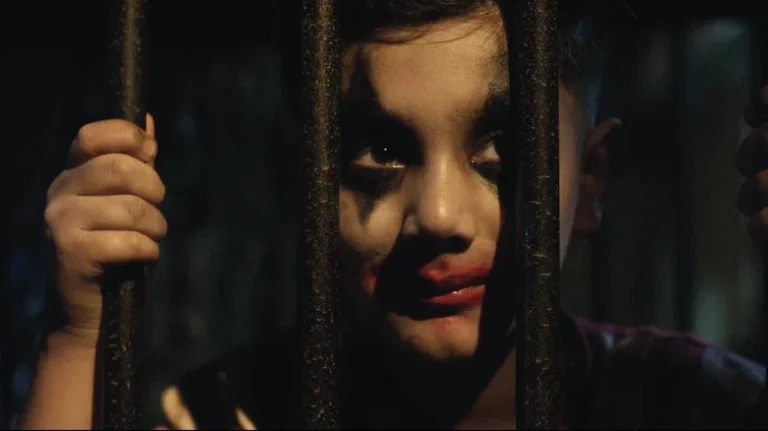
Compare this to the way a compact horror like Afreet – A Never uses spatial restriction to generate unease, even when its narrative logic is thin. Restriction creates pressure. Kalpana Aur Yatharth offers no such container.
The score, where it appears, is sparse to the point of absence. Silence can be a weapon, but here it reads as indecision, the film doesn’t know what to underscore because it doesn’t know what it’s saying.
A Mystery That Refuses To Solve Itself
By the final act, the film has accumulated a series of images and encounters that never cohere into a revelation. The question of whether Yatharth finds Kalpana is left genuinely open, but not in a way that feels earned.
Ambiguity is a legitimate ending. But it must be constructed from specific, contradictory evidence that the audience can hold in tension. This film offers only vagueness.
The result is not a puzzle to be solved but a shrug to be absorbed. The emotional weight of a man losing his wife, the actual human stakes, gets buried under layers of narrative coyness.
That tonal confusion puts it in uncomfortable company with other recent Hindi thrillers that mistake obscurity for depth, a pattern visible across Haiwaan, which similarly lets its central mystery dissolve into atmosphere.
The Commercial Reality Of A Film Without A Market
There is no verified production banner, no trade reporting, no box-office figure, and no confirmed theatrical release date for this title. In the current exhibition landscape, that absence is itself the story.
Independent Hindi cinema without a studio partner or a recognizable star anchor faces near-impossible odds. Salil Singh’s dual role as director and lead offers no marquee value to exhibitors deciding screen allocation.
The regional remake pipeline and franchise IP continue to dominate theatrical real estate. An original psychological mystery with no marketing infrastructure is functionally invisible, regardless of its artistic intentions.
Without a verified release strategy, the film’s commercial fate is not a question of performance but of access. Most audiences will never have the chance to form an opinion.
The Uncomfortable Residue Of A Film That Doesn’t Know What It Wants
Kalpana Aur Yatharth wants to be a meditation on grief, memory, and the instability of perception. What it actually is, on screen, is a filmmaker working without a collaborator strong enough to tell him when a scene is finished.
The real-versus-fictional framework is a legitimate idea. But ideas are not films. Films are choices, about what to show, what to withhold, and when to let the audience feel the floor disappear.
This one never lets the floor disappear. It just keeps walking, room to room, frame to frame, hoping the ambiguity will eventually become meaning.
It doesn’t. And the silence that follows the final cut is not the silence of resonance. It is the silence of a question that was never really asked.