The opening image is a wedding invitation card being smoothed flat by a father’s thumb, and in that small gesture Badrappa Gajula announces his entire thesis. What follows is a rural Telangana family drama that wants to argue about a daughter’s education but keeps getting distracted by a drunk son-in-law.
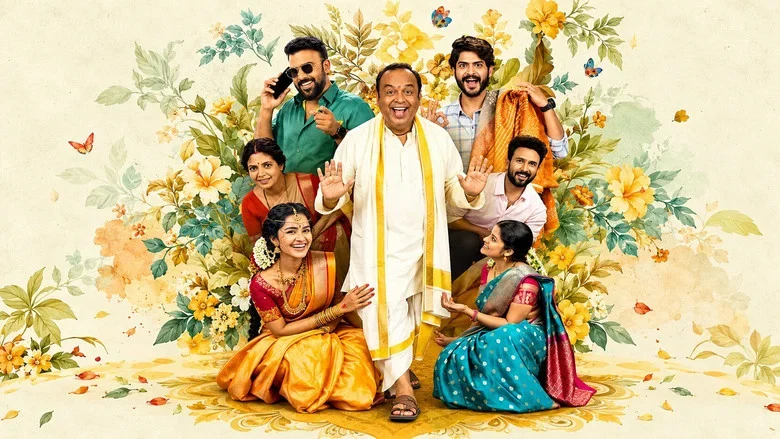
A Father’s Reputation Is the Only Engine in the Room
V. K. Naresh plays Parvathalu with a stiff-backed rigidity that reads as caste-and-community anxiety rather than villainy. His opposition to Keerthi’s ambitions is not malicious; it is administrative, a man sorting his household into columns of respectability and expenditure. The film’s smartest move is refusing him a mustache-twirling antagonist, letting the pressure come from relatives, neighbors and the wedding market itself.
But the screenplay treats that pressure as a single note. Parvathalu’s obsession with status is established in the first ten minutes, then restated in every domestic argument until the climax. Where a sharper film would complicate his logic, Gajula simply repeats it, trusting volume over variation. The result is a character who never surprises us, only confirms.
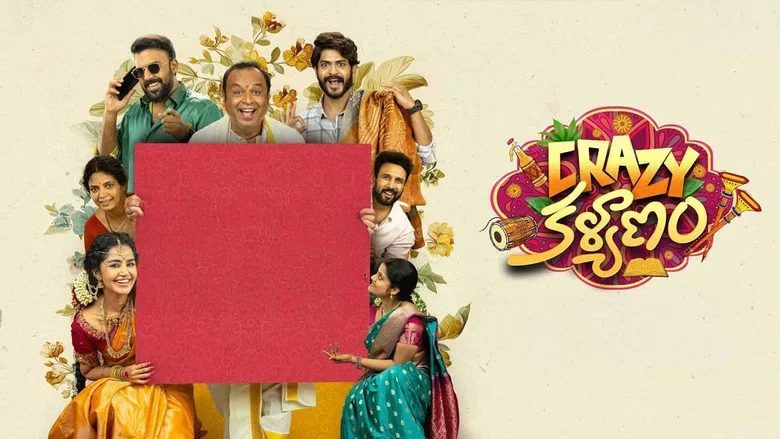
Anupama Parameswaran Holds the Frame While the Plot Idles
Keerthi is the film’s moral center, and Parameswaran plays her with a quiet, deliberate stillness that refuses to beg. Watch her in the confrontation scene where her father lectures about marriage: she does not cry, does not raise her voice, just folds her hands and lets her eyes settle on a fixed point past his shoulder. It is a performance built on withholding, and it makes the film’s loudest moments feel earned.
The romantic track with Uday, however, gives her nothing to push against. Akhil Raj Uddemari is pleasant and entirely forgettable, and their scenes together play like a checklist of montage beats. The restrained exhaustion Parameswaran brings to the final act recalls the psychological weight of her turn in Prahaar, but here the script never gives her a worthy adversary in her own scenes.
Tharun Bhascker’s Drunk Son-in-Law Is the Only Character Who Moves
Balraju is the film’s comic engine, and Bhascker plays him with a loose-limbed physicality that makes every entrance feel like a small event. His drunken returns home are staged with real domestic detail: a shoe kicked off at the wrong angle, a glass set down too hard, the way he leans against a doorframe as if the house itself is tilting. These are the only scenes where the film’s pacing feels alive.
Yet the comedy sits awkwardly against the education message. Gajula wants us to laugh at Balraju’s disorder and then take seriously the household that produces it, but the tonal gearshift in the second half is abrupt. The film does not build toward its emotional climax so much as announce it, and the supporting relatives blur into a chorus of reaction shots without individual dramatic function.
The Climax Arrives Because the Runtime Is Up, Not Because the Story Earned It
Parvathalu’s final change of heart is the film’s weakest link. He accepts Keerthi’s education and employment in a scene that is staged with genuine sincerity but zero preparation, as if the character read the film’s own marketing materials. The resolution is predictable and, worse, unearned. A father who spent two hours equating marriage with security does not reverse course because a single conversation goes well.
This is where the screenplay’s linear structure betrays it. The redirected marriage proposal is a strong plot mechanism, but it is introduced too late and resolved too quickly. The screenplay resists the kinetic sensationalism that overtook Sanjeev, opting instead for a deliberate, suffocating domesticity, but that patience only works if the payoff is prepared. Here, it is not.
Direction That Trusts the Village but Not the Camera
Gajula’s staging of the rural Telangana household is grounded and specific: the courtyard, the veranda, the way relatives cluster in doorways. Shyam Dupati’s cinematography favors natural light and mid-range compositions that let the family occupy space together. There is no showy camera movement, no attempt to aestheticize the village. That restraint is welcome.
But restraint becomes inertia in the dialogue scenes. The camera plants itself and waits, and the editing holds shots a beat past their emotional usefulness. The comparison to the more disciplined spatial work in Drones is instructive: that film knew when to cut, while this one mistakes duration for depth. Suresh Bobbili’s score is functional but rarely rises to meet the material.
A One-Crore Budget and a Crowded Release Calendar
The film’s commercial reality is modest and precarious. With an estimated budget of roughly one crore, the stakes are not catastrophic, but the release window is brutal. Opening against larger titles like Jailer 2 and Ranabali means Crazy Kalyanam is fighting for screens and showtimes in a market that rewards spectacle. Producer Boosam Jagan Mohan Reddy is not betting on a blockbuster; he is betting on a niche family audience that still shows up for message-driven dramas.
That bet may pay off on television and OTT, where the film’s slow-burn domesticity and education message can find a patient audience. Theatrically, it is a harder sell. The film’s lack of a conventional villain and its refusal to escalate beyond household arguments make it a tough proposition for viewers trained on mass-entertainer rhythms. The rural family drama is a durable genre across contemporary Telugu dramas, but durability does not guarantee urgency.
The Message Is Clear; the Film Around It Is Not
Crazy Kalyanam wants to say something important about how families spend on weddings instead of educations, and that argument is worth making. Parameswaran and Naresh give the film a beating heart, and Bhascker provides the only unpredictable energy in the frame. But the screenplay mistakes repetition for development and sincerity for structure.
The final scene, in which Parvathalu watches his daughter leave for a job interview, is shot with a stillness that almost redeems the film. His face does not break into a smile; it just loosens, the way a man’s face does when he realizes he has been wrong for a long time. It is a good moment. It is also the only moment where the film’s thesis feels like a discovery rather than a lecture.