Abhinay Deo opens on a 1990s montage that braids economic liberalisation, political churn and grainy cricket footage into a single national pulse. It is an audacious first breath for a film that runs barely eighty minutes.
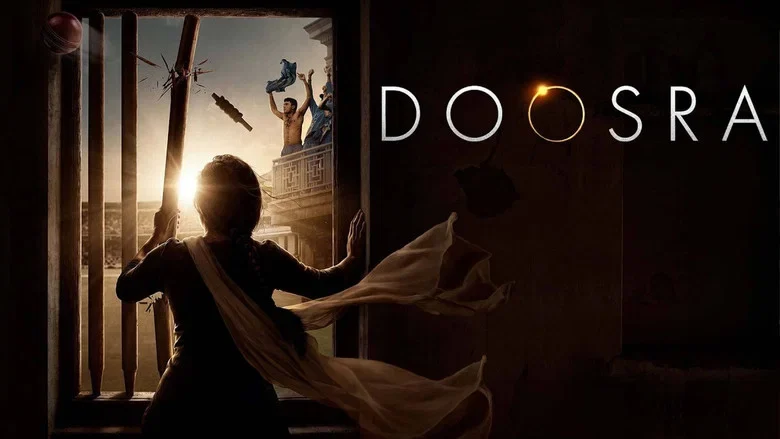
A Domestic Prison Framed By A Nation’s Awakening
Inside a conservative Rajasthani household, Tara moves through rooms that function as checkpoints. Her father’s authority is enforced not through violence but through the quiet expectation of obedience.
The film’s central gamble is structural: it treats the 2002 NatWest final as an emotional Rosetta Stone for a young woman’s private rebellion. Whether that translation holds is the question the entire runtime hangs on.
Plabita Borthakur plays Tara with a watchful stillness, her face registering each domestic transgression as a small calculation of risk. The performance refuses the easy release of tears, which makes the character’s eventual assertion feel like pressure finally finding a crack.
When Cricket Nostalgia Displaces The Story It Was Meant To Serve
Here is where the film’s architecture begins to wobble. The archival and recreated cricket passages carry a documentary authority that the fictional domestic scenes struggle to match.
Just as the filmmaker of Pehla Pyaar Doosri Baar leaned on familiar romantic rhythms that undercut its own freshness, Deo leans on cricket’s built-in emotional shorthand to do work the screenplay should be doing itself.
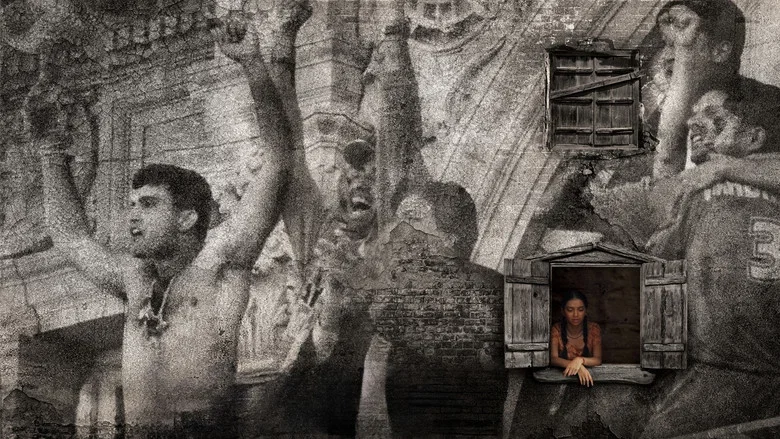
The Ganguly shirt-waving image at Lord’s is undeniably potent. But potency is not the same as earned catharsis, and the film sometimes confuses the two.
Ankur Vikal Turns Ordinary Domestic Spaces Into Surveillance Zones
Ankur Vikal’s father figure is the film’s most effective antagonist precisely because he never raises his voice. His authority lives in the pause before he speaks, the way he occupies doorways, the flat register of his disapproval.
Samidha Guru’s mother offers a generational counterpoint through accommodation rather than confrontation. Her compliance is not weakness but a survival strategy that Tara must consciously reject.
The older brother, played by Navin Ratwa, embodies the gendered privilege that makes the household’s rules legible as a system rather than a series of isolated cruelties.
A Performance Foil That Illuminates What This Film Gets Right
The restraint Borthakur brings to Tara’s final confrontation recalls the kind of quiet emotional arithmetic seen in Haiku, where internal conflict is played rather than announced.
Both films understand that a young woman’s assertion of self does not require a monologue. It requires a camera willing to hold on a face that has spent years learning not to reveal itself.
Ram Sampath’s Score Bridges Period And Interiority With Uneven Success
Ram Sampath’s music carries the period texture capably, threading 1990s sonic cues through the cricketing momentum. But the score occasionally over-narrates emotional beats that the performances have already landed.
The cinematography establishes a clear spatial grammar: the enclosed Rajasthan household is shot in compressed frames and warm shadow, while the Lord’s spectacle opens into wide, bright public space. Television becomes the visual bridge between the two worlds.
The editing’s first half moves briskly through a decade of context, efficient but thin. The second half leans harder on cricket, and reviewers have rightly noted that Tara’s emotional progression feels abbreviated as a result.
The Thematic Sibling That Shares This Film’s Structural Problem
Like Sumo Didi, this film sets up a compelling personal struggle and then sometimes lets its genre framework crowd out the intimacy it promised. Both are sincere; both are soft-edged where they needed to be sharp.
Panorama-Style Independent Ambition Meets A Crowded Exhibition Calendar
The producing team of Masha Sajdeh and Rohan Sajdeh has backed a formally experimental piece in a market that rewards familiarity. That is a genuine risk, and the film’s modest scale reflects it.
The regional remake pipeline and cricket-nostalgia cycle have trained audiences to expect a certain template. A seventy-eight-minute docu-fiction hybrid about a girl watching a cricket match will not easily find that audience in a theatrical window.
Across contemporary Hindi dramas, this kind of formal ambition is increasingly rare. But ambition without sustained dramatic development remains a promise half-kept.
The Uncomfortable Resolution Of A Film That Almost Earns Its Parallel
The closing movement connects Tara’s assertion of identity to a national moment of public defiance, and the parallel is intellectually elegant. What it is not, quite, is emotionally inevitable.
A young woman finding her voice against a household that has spent years teaching her silence deserves more scene-level room than this film gives her. The cricket, for all its nostalgic power, keeps taking the microphone back.
Doosra is a genuine experiment, and experiments that half-succeed are more interesting than formulas that fully work. But interest is not the same as arrival, and this film stops short of the destination its best instincts point toward.