The house lights dim on a 23-minute Tamil short that wants to be a character study, and Pugazh wants to be taken seriously. Both ambitions are visible on screen. Neither is fully earned.
A Comedy Star Walks Into A Dark Room And Leaves His Timing At The Door
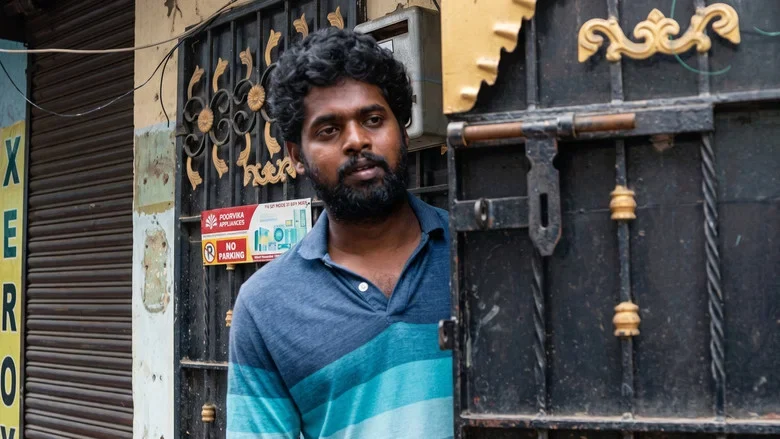
Pugazh plays Vinith, a man ground down by cumulative rejection until he reaches a breaking point. The casting is the film’s most interesting gamble: a performer known for broad comic rhythm asked to hold stillness, silence, and despair.
What registers first is the physical withholding. His shoulders stay set, his gaze drops before the other character finishes a sentence, and his voice sits in a low, flattened register that refuses the easy crack of melodrama.
That restraint is disciplined, but it also flattens the arc. Vinith’s slide from hurt to crisis needs a visible internal escalation, and Pugazh gives us a single sustained note rather than a scale.
The tonal contrast the film is selling only lands if the performance finds gradations inside the gloom. Instead, the gloom becomes the performance, and the character’s movement toward recovery feels like a script instruction rather than a witnessed transformation.
A Short Film That Confuses Brevity With Compression
Manoj Sivakumar writes and directs, and he also steps in front of the camera as Barani. That unified control should produce a tight, single-minded emotional trajectory. Instead, the 23-minute runtime becomes an alibi for thinness.
Rejection is the antagonist here, abstract and omnipresent, which means the screenplay has to do the work of dramatizing it through specific scenes. We get the broad beats, collapse, companionship, a pull back toward the light, but the connective tissue is missing.
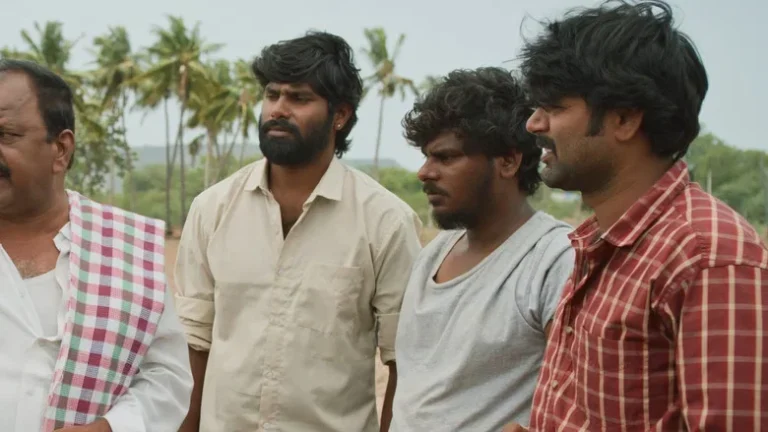
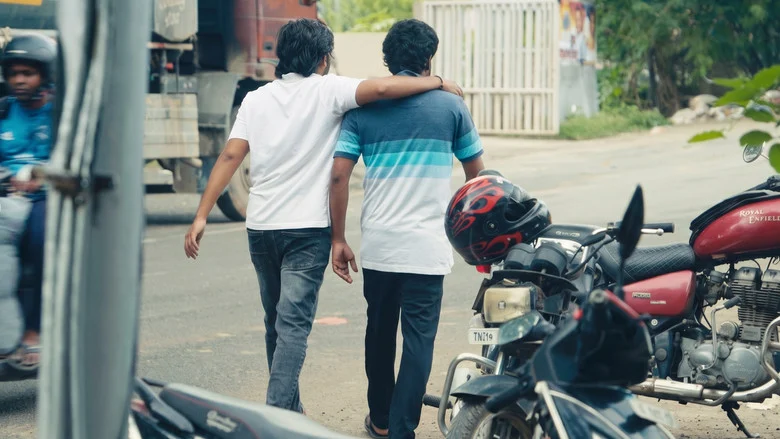
The supporting figures exist as functions rather than people. Roshan’s Kavin is positioned as the emotional anchor, and the performance has a warm, steady presence in the quieter two-handers, but the screenplay never lets us see the history that makes his loyalty feel earned.
Senthil’s Appa carries a generational weight in his posture and the way he occupies a room, the set jaw, the careful distance, but the father-son friction is gestured at rather than excavated.
Barani, played by the director himself, remains the film’s most undernourished figure; whether he is ally, obstacle, or witness is never clear, and that ambiguity reads as omission rather than design.
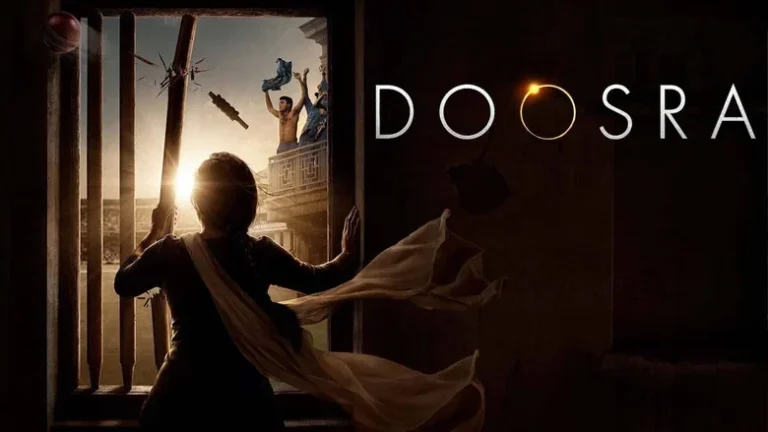
The comparison to other compact, emotionally driven Indian shorts is instructive. Where Doosra at least committed to a formal idea, this film settles for a mood and hopes the runtime will do the rest.
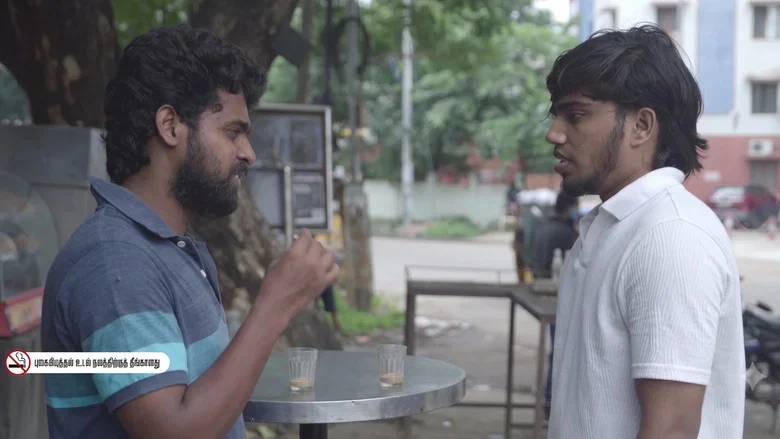
The Camera Keeps Its Distance When The Story Needs It Close
The visual grammar leans on the title’s darkness-to-light motif, but the execution is inconsistent. Exteriors are shot in a washed, overcast palette that reads as indifference rather than atmosphere.
Interiors fare better. A few frames hold Vinith in the corner of the composition, negative space pressing in on him, and those moments suggest a director who understands spatial loneliness even if he doesn’t always trust it.
The score is sparse to the point of absence, which suits the material’s intimacy but leaves certain transitions feeling abrupt. When the film cuts from crisis to recovery, the emotional bridge is carried entirely by Pugazh’s face, and that’s a heavy load for a single close-up.
The editing reflects the runtime’s constraints. The first half races to establish rejection and breakdown; the second half asks us to believe in a recovery that hasn’t been dramatized with equal care. The result is a film that feels rushed toward hope.
There’s a version of this story, the one that trusts silence, that lets a single unbroken take carry the weight of a man’s collapse, that would have been devastating. This isn’t it. The film keeps reaching for that version and pulling back.
The Supporting Cast Is A Set Of Placeholders With Good Bone Structure
Roshan’s Kavin is the film’s emotional center of gravity, and the actor brings a quiet steadiness to the role. In one early exchange, he doesn’t argue with Vinith’s despair; he simply stays in the frame, refusing to leave. It’s the film’s best-observed moment.
But the screenplay never gives Kavin a life outside his function. He exists to pull Vinith back, and that instrumental quality makes the recovery feel mechanical rather than earned. The performance is doing more work than the writing deserves.
Senthil’s Appa has a similar problem. The veteran actor’s presence carries an implicit history, the way he sits, the way he avoids his son’s eyes, but the film never lets that history surface into a scene. He’s a silhouette of a father, not a father.
The film’s treatment of its female characters is even more threadbare. They exist as background presences, their reactions to Vinith’s crisis left largely unexamined. For a story about rejection and recovery, the absence of a fuller social world is a significant limitation.
Comparisons to other recent Tamil dramas are inevitable. Where Haiku at least tried to build a coherent emotional thesis, this film settles for a premise and hopes the performances will fill in the gaps.
A Familiar Story Of Redemption That Never Earns Its Light
The film’s central thesis, that connection can pull a person back from the edge, is a worthy one. But worthiness isn’t the same as dramatization, and the film’s final movement toward hope feels unearned.
We watch Vinith move from despair toward something like recovery, but the film never shows us the specific moment of change. The turn happens off-screen, in the gaps between scenes, and we’re asked to accept it on faith.
That’s a significant structural failure. The film’s title promises a journey from darkness to light, but the journey is asserted rather than witnessed. The light arrives because the runtime demands it, not because the character has earned it.
There’s a version of this film that would have been quietly devastating, one that trusted its actors, its silences, and its audience enough to let the recovery unfold in real time. This isn’t that film. It’s a sketch of one.
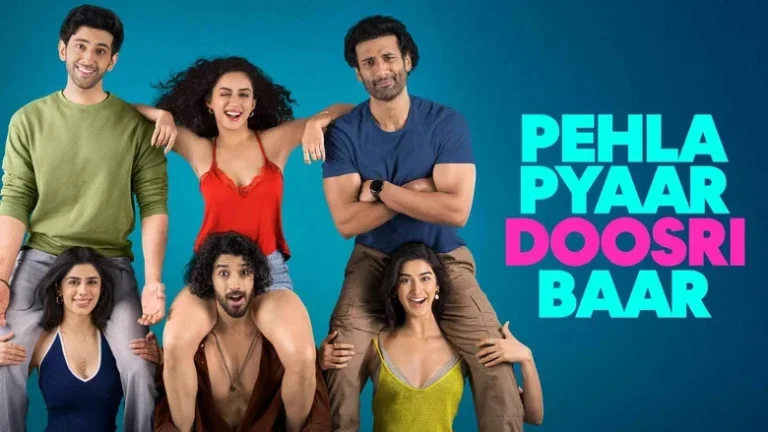
The comparison to other recent performance-driven Indian releases is telling. Where Pehla Pyaar Doosri Baar at least had the courage of its lightweight convictions, this film seems uncertain whether it’s a mood piece or a message movie.
The Commercial Reality Of A 23-Minute Film In A Feature-Length Market
70mmScreenProduction is releasing this as an independent Tamil short, and the commercial math is unforgiving. A 23-minute runtime limits theatrical exhibition windows and forces the film into festival or digital-first distribution.
The Pugazh casting is the film’s primary commercial asset, a recognizable comedic name in a serious role is a marketable hook for streaming platforms. But that hook only works if the film delivers on its promise of a dramatic reinvention, and the performance, while disciplined, doesn’t quite clear that bar.
The Tamil short-film ecosystem is thriving, but the transition from short to feature-length commercial viability requires a level of craft and narrative control that this film doesn’t yet demonstrate. The director’s dual role as writer and performer suggests a project driven by personal vision rather than market calculation, which is admirable but commercially precarious.
For 70mmScreenProduction, this represents a low-risk entry into the short-form drama space. The film’s modest scope and recognizable cast make it a viable acquisition for streaming platforms looking to expand their Tamil-language offerings, even if its theatrical prospects are limited.
The broader landscape of contemporary Tamil dramas is increasingly defined by this tension between intimate storytelling and commercial viability. This film sits at that intersection, uncertain which side it wants to land on.
A Film That Reaches For Light It Never Quite Touches
Nizhalilirundhu Velicham is a film about the difficulty of moving from darkness to light, and it’s also a film that struggles to make that movement feel real. The performances, particularly Pugazh’s committed stillness and Roshan’s quiet warmth, suggest a better film buried somewhere in the material.
But the screenplay never gives them the scenes they need. The supporting characters remain functions, the recovery remains asserted, and the film’s emotional climax arrives without the weight of everything that should have led to it.
What lingers is the sense of a filmmaker with a clear thematic vision but an incomplete command of dramatic construction. The film knows what it wants to say about rejection and connection. It just doesn’t yet know how to say it in a way that makes us feel it.
For viewers drawn to Tamil independent cinema and interested in seeing a comedic actor attempt a serious role, there’s enough here to warrant a look. But for anyone seeking a fully realized character study, this 23-minute film will feel like a sketch of something that could have been much more.
The light at the end of the tunnel is visible. The journey toward it remains frustratingly out of focus.