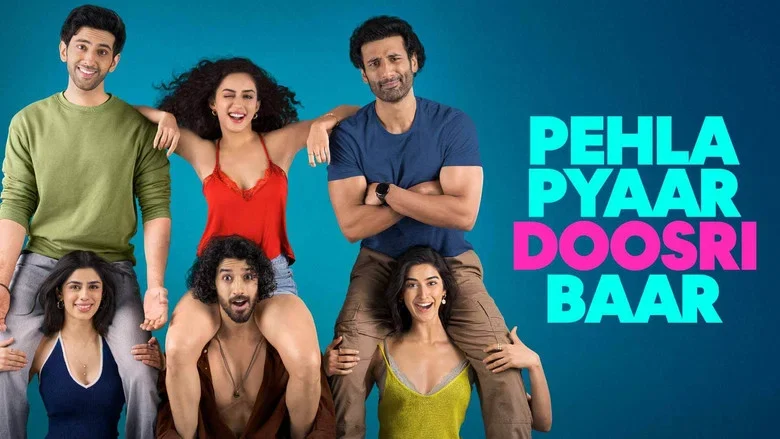
Three Delhi colleagues get drunk, book a hill-station trip, and decide to resurrect their school crushes. Anuj Saini’s romantic comedy treats that impulse with the gravity of a military operation.
When Grown Adults Treat Old Crushes Like a Rescue Mission
The film opens inside the specific misery of corporate adulthood: targets, promotion anxiety, and the slow humiliation of watching peers marry off.
Gautam, Vedant, and Shivi share that stagnation. Their solution is a school reunion in the hills, which the screenplay converts into three parallel romantic objectives with military precision.
That structure gives the film its clearest engine: loneliness weaponised into momentum. The comedy comes from how seriously these adults treat unfinished crushes.
Three Love Stories Compete for One Film’s Attention
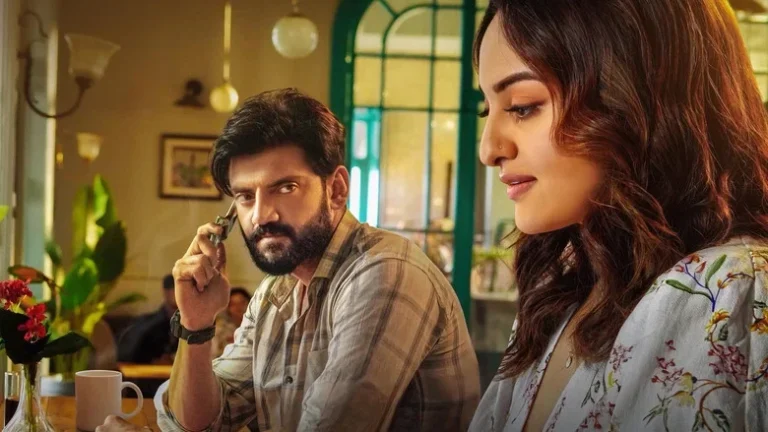
In Mussoorie, the parallel tracks diverge sharply. Gautam reconnects with Gehna, a confident woman nursing a recent heartbreak, and their intimacy produces a reversal.
Once she asks for permanence, his fantasy curdles into commitment anxiety. It is a familiar beat, and the screenplay plays it without adding fresh friction.
Vedant’s confession to Simran briefly becomes reciprocal, but her fiancé Vikesh arrives to impose a wedding deadline. That constraint is the film’s sharpest dramatic device.
Shivi’s arc is the messiest. She reinvents her appearance to attract Karan, a serial womaniser, and the resulting intimacy exposes a painful mismatch of emotional expectations.
The makeover material gestures at something real about self-worth, then retreats into convention. The comparison with the romantic thesis fumbled in Haiku is instructive: both films mistake premise for payoff.
The Stillness That Should Manufacture Pressure, and Doesn’t
Sparsh Walia plays Gautam as a shy idealist whose face does the work his dialogue avoids. Watch his posture collapse inward the moment Gehna mentions forever.
Kunal Vaid’s Vedant carries the most conventional pursuit, and his late confession scenes rely on a nervous half-smile that never quite lands as longing.
Sargun Kaur Luthra gives Shivi the film’s bluntest energy, gaalis included, and her rejection of a purely “cute” identity is the screenplay’s most interesting gender observation.
The physical staging between the couples stays polite and slightly distant. Chemistry is a spatial problem, and the blocking rarely closes the gap.
The restrained exhaustion Vaid brings to Vedant’s final push recalls the softer edges of Sumo Didi, where sincerity alone couldn’t manufacture heat.
A Director Who Trusts Structure More Than Spark
Saini moves the film cleanly from corporate Delhi to the hills and back, using the reunion to let nostalgia collide with present-day identities.
The tonal problem is escalation. Separate romantic failures should compound into shared emotional hangover, but the editing lets each track resolve before the next can build.
The second half fragments as commitment anxiety, a wedding deadline, and a heartbreak compete for screen time. The return-home mission narrows the objective without tightening the rhythm.
Music does heavy lifting where the screenplay cannot, carrying the nostalgia the dialogue fails to earn. The hills look pleasant rather than romantic, which is a meaningful distinction.
The screenplay resists the kinetic farce that powered Bhai Tera Star Hai, opting for gentler interpersonal conflict, but it never replaces that energy with anything equally propulsive.
Luv Ranjan’s Banner Bets on Newcomers and a Familiar Template
With Luv Ranjan’s banner attached, the commercial logic is legible: friendship-led romance, fresh faces, modest budget, and a music-driven marketing hook.
That template has sustained the Hindi romantic comedy pipeline for over a decade. It also carries fatigue risk when the chemistry doesn’t clear the bar.
The opening-day India net of ₹0.22 crore reported by Sacnilk signals a soft launch rather than a breakout. Newcomer-led ensembles need word of mouth, and this one lacks a defining scene to generate it.
For the producers, the bet is on the franchise-adjacent comfort of the format. For the cast, the bet is exposure. Both bets remain unresolved.
This patient, dialogue-first approach reflects a broader tonal shift across contemporary Hindi comedies, though patience here reads as hesitancy rather than confidence.
A Film That Mistakes Reunion for Resolution
The climax hinges on whether three adults can convert nostalgic fantasy into honest commitment before a wedding concludes. That is a genuine question, and the film asks it sincerely.
What it never solves is why these particular people deserve the answer. The friendship is warm; the romances are theoretical.
Saini’s film wants to argue that first love is a rehearsal and second chances demand maturity. It settles for saying so rather than dramatising it.
The result is a romantic comedy that understands loneliness better than it understands desire, and that gap is the whole movie.