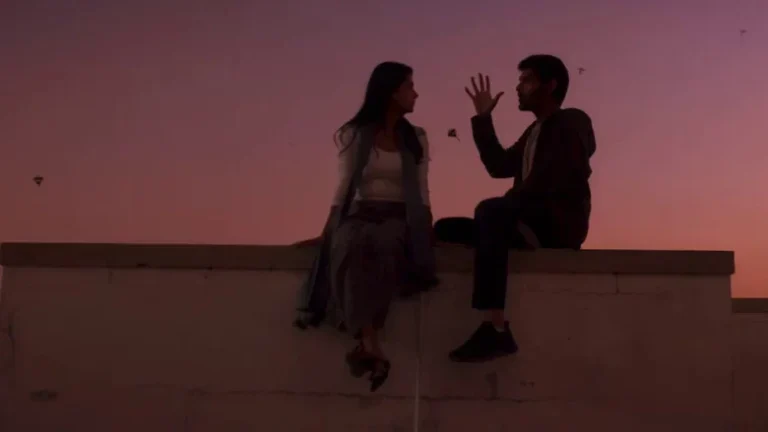
Jithu Madhavan opens Scene on a police station that feels less like an institution than a holding pen for misfits, and Suriya’s DSP Inbaraj walks through it with the distracted authority of a man who has already decided the room is beneath him.
The case he abandoned years ago is dragged back into the light. The film’s real subject, though, is the friction between a star who wants to brood and a director who wants to giggle.
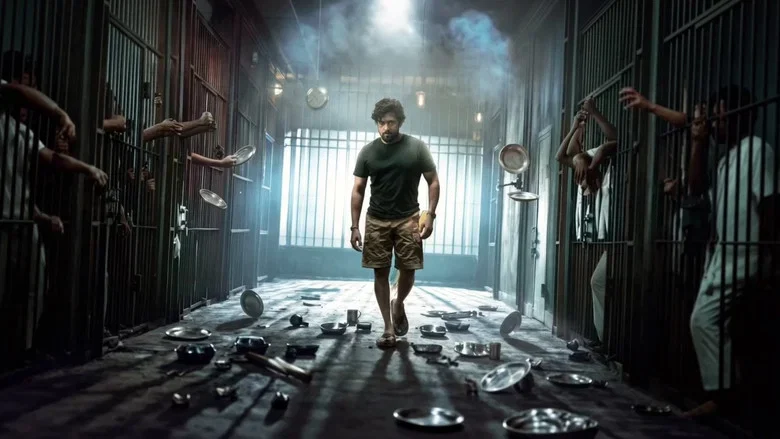
When a Star’s Stillness Collides With a Director’s Comic Instincts
Madhavan built his reputation on the loose, anecdotal comic rhythm of Romancham and the swaggering ensemble chaos of Aavesham. Here he tries to bolt that sensibility onto a procedural skeleton.
The first half leans hard into dark humour, and an early audience reaction calling it enjoyable and effective at setting up the second half is not wrong. The trouble is that the setup keeps promising a sharper film than the one that arrives.
Just as he demonstrated a tighter spatial discipline in Dilwali Diwali, Madhavan strips away decorative flourishes and lets the comedy sit in the room. But the room is full of actors waiting for a punchline that never quite lands.
A Defiant Cop Who Never Gets to Be Defiant Enough
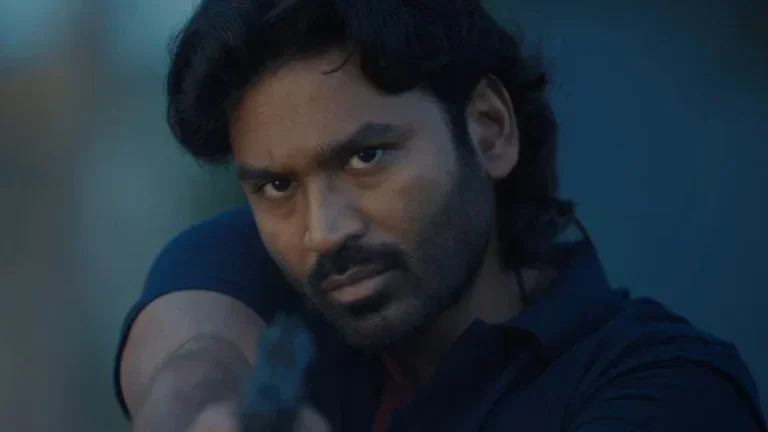
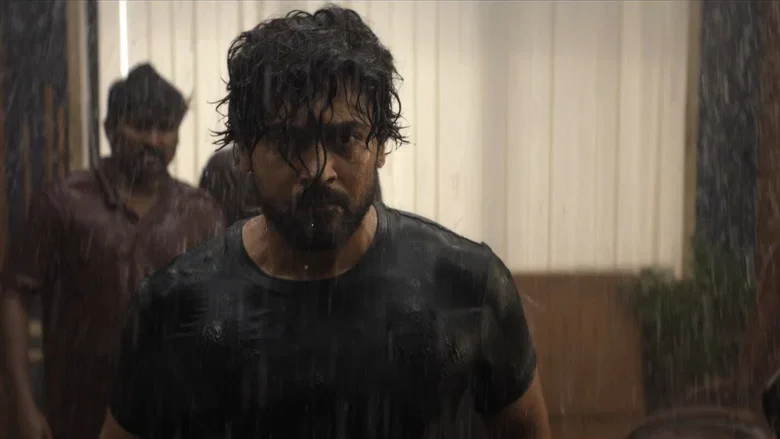
Suriya plays Inbaraj as a man who has stopped explaining himself. His shoulders stay squared in rooms where he is clearly the problem, and his voice drops to a near-whisper when colleagues challenge him.
The physical contrast is deliberate: he stands still while the team scrambles around him. That stillness is the performance’s best asset, and the film too often mistakes it for a joke.
The restrained physical exhaustion Suriya brings to Inbaraj’s quieter moments recalls the psychological weight of his turn in Vishwanath & Sons, where stillness carried genuine grief. Here it carries only attitude.
Nazriya Nazim registers in the ensemble through a single sustained look of disbelief during a team briefing, a small gesture that does more than most of the scripted banter around her. Naslen, making his Tamil debut, has a nervous energy that fits the chaos but no scene that lets him own it.
The Tamil Wordplay Problem Nobody Wants to Name
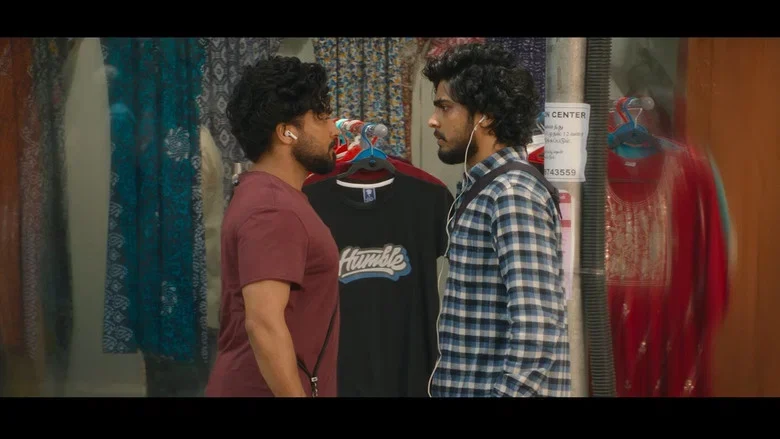
Early reactions flagged that Madhavan’s Malayalam wordplay does not translate cleanly into Tamil, and some jokes land as uninspired. Watching the film, that criticism holds.
The comic rhythm depends on a linguistic dexterity that the Tamil dialogue never quite matches. Lines that should crackle instead sit there, waiting for a laugh that the audience has already decided not to give.
The screenplay’s mechanism is clear enough: form the chaotic team, reopen the case, escalate the twists. What is missing is the intermediate texture that makes each step feel earned rather than scheduled.
The screenplay resists the kinetic sensationalism that overtook DC, opting instead for a deliberate, almost stage-bound dread. That choice is admirable in theory and sluggish in practice.
Vineeth Augustian’s Camera and Sushin Shyam’s Score Do the Heavy Lifting
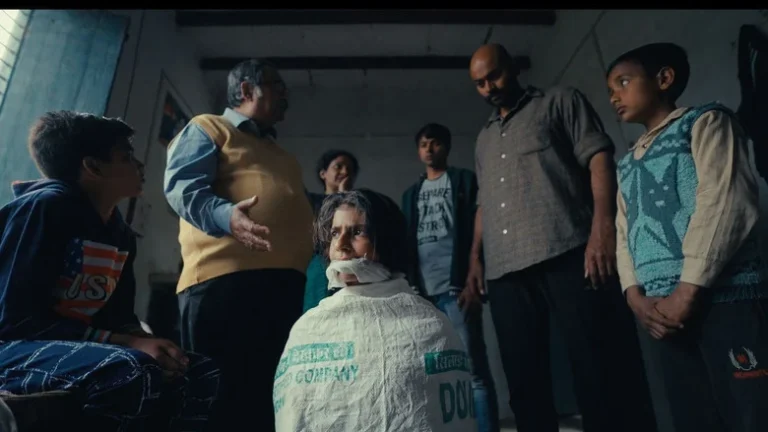
Vineeth Augustian’s framing keeps the team crowded into the same tight compositions, so that every conversation feels like an argument in a corridor. The lighting stays flat and institutional, which suits the premise even if it never surprises.
Sushin Shyam’s score, in his Tamil debut, is the film’s most confident element. It knows when to sit out and when to push, and it gives the second half a momentum the writing does not.
What the film never solves is tonal control. The comedy and the procedural stakes keep interrupting each other, and by the time the case reaches its climax, the audience has been trained not to take any of it seriously.
This patient character study signals a welcome tonal maturity across contemporary Tamil actions, proving that tension thrives without manufactured plot theatrics. Scene wants to be that film and keeps tripping over its own punchlines.
2D Entertainment’s Gamble on a Star Vehicle That Refuses to Be One
Suriya and Jyotika’s 2D Entertainment, alongside Zhagaram Studios, have backed a film that deliberately undercuts its own star’s mythology. That is a risk worth noting in a market that rewards louder, simpler vehicles.
The commercial math is harder to read. A UA16+ certificate narrows the family audience, and a comedy-heavy first half built on wordplay is a tough sell in a theatrical market that wants instant payoff.
Suriya’s box-office leverage remains considerable, but Scene tests whether that leverage can survive a film that asks him to play second fiddle to an ensemble. The answer will not be settled by opening weekend alone.
The Uncomfortable Resolution of a Case That Was Never Really the Point
The film ends without fully resolving the tension it spent two and a half hours building. Inbaraj gets his closure, but the team around him remains a collection of unresolved comic gestures.
That is the film’s quiet tragedy: a star vehicle that wanted to be an ensemble piece, and an ensemble piece that kept waiting for its star to save it. Neither gets what it needs.
Scene is a fascinating misfire, the kind of film that reveals more about its director’s instincts than its star’s range. It is worth seeing for Suriya’s stillness and Shyam’s score, and worth arguing about for everything else.