Pavan Sadineni opens on a village girl staring at an astrovan, and that single image carries the whole film’s promise. What follows is a tender, unhurried climb toward the stars, executed with sincerity but rarely with surprise.
When A Wedding Night Becomes A Moral Reckoning
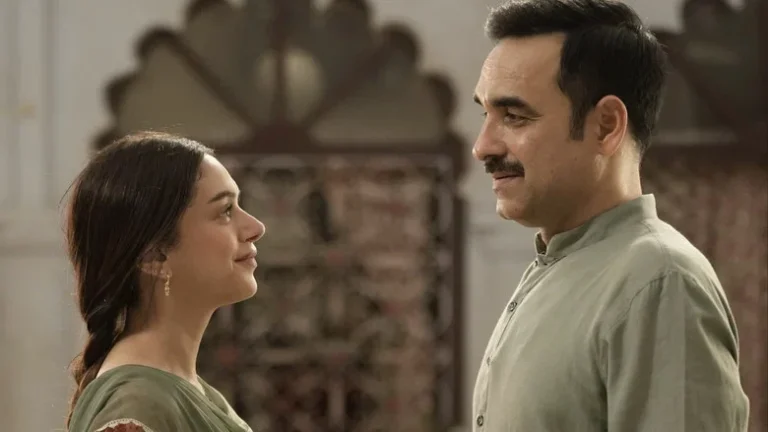
The film’s sharpest structural instinct arrives early, when Krishna discovers his bride is sixteen and dreaming of orbit. That revelation reframes a socially sanctioned union as a quiet crime, and the screenplay refuses to look away.
It is the rare mainstream Telugu drama that treats a husband’s ignorance as the inciting wound rather than his heroism. The discomfort lingers precisely because nobody in the room calls it what it is.
The District-Topper Result Is The Film’s Real Engine
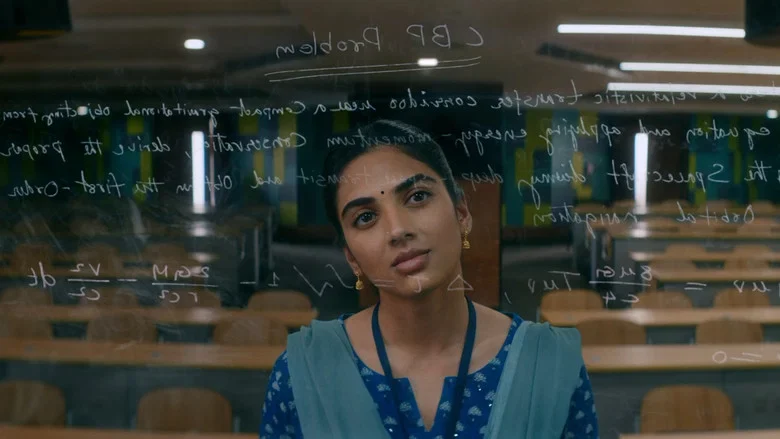
Once Kalpana’s rank arrives, the narrative converts academic proof into dramatic momentum. Krishna can no longer dismiss her ambition as a child’s fancy, and his overtime shifts as a driver become the film’s most persuasive argument.
Support here is measured in fuel bills and foregone sleep, not speeches. That material specificity is what separates this from the sentimental empowerment template that #Cult also circled without fully escaping.

Satvika Veeravalli Holds Innocence And Steel In The Same Frame
In her debut, Satvika Veeravalli plays Ammu with a wide-eyed stillness that never tips into precocity. Watch how she receives the topper news: no triumphant grin, just a held breath and a flicker of disbelief.
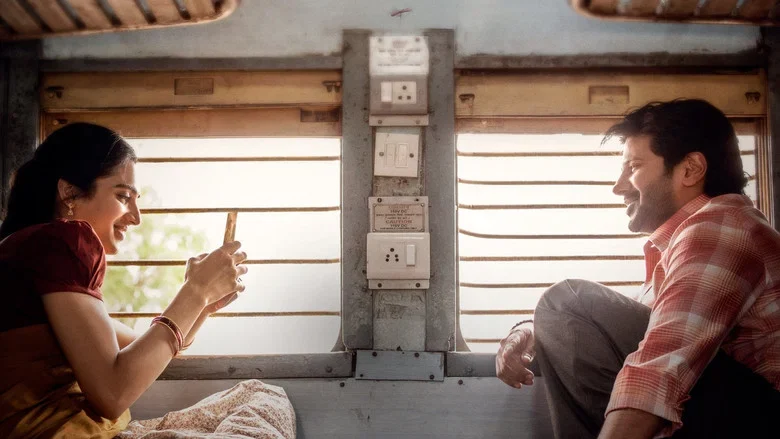
Dulquer Salmaan answers with a Krishna built on small physical surrenders, a slumped shoulder at the wheel, a hand that hovers before it settles. His warmth echoes the quiet endurance he brought to O.M, though here the stakes are domestic rather than tactical.
Where The Direction Loses Its Nerve
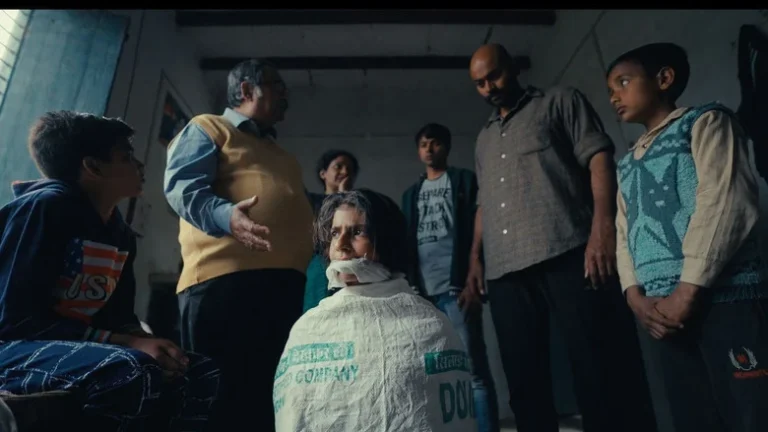
Sadineni stages the first hour with clean, readable turns, but the final act hands out apologies like festival sweets. The abusive father repents, the hostile sister-in-law softens, and the village that once sneered suddenly applauds.
That rapid thaw deflates the pressure the film spent two hours building. Real patriarchies do not dissolve on cue, and the convenience reads less like grace than a writer’s shortcut.
The tonal discipline on display here is noticeably tighter than the scattershot energy of Bachelor Party D'eux, yet both films share a reluctance to sit inside genuine discomfort.
Two Hours Thirty-Nine Minutes Of Repeated Motivation
The runtime is generous enough to accommodate the education arc, the financial strain, and the household escape. What it cannot justify is the third and fourth motivational beat that restates what the second already proved.
Cinematographically, the contrast between cramped domestic interiors and open sky does the thematic lifting. The camera rarely intrudes, which is both its virtue and its limitation.
The Supporting Ensemble And The Weight They Carry
Shruti Haasan and Ruhani Sharma register as significant presences, though the screenplay never grants either a confrontation worth remembering. Murali Sharma and Nassar fill the frame with veteran ease, but their characters exist as texture rather than pressure.
This is ultimately a two-hander, and the film knows it. The household functions as a collective antagonist, which is dramatically honest but leaves the supporting tier undernourished.
The Studio Bet And The Remake Economy
Geetha Arts, Swapna Cinema and Lightbox Media are backing a star vehicle that leans on Dulquer’s cross-language goodwill rather than spectacle. For a mid-budget family drama, that is a defensible wager.
The larger question is whether the dubbed-release pipeline into Malayalam and Tamil can sustain this template. Theatrical recovery will hinge on family footfalls in the Telugu belt, since the film offers no mass-action hook to pull opening-weekend crowds.
Dulquer’s box-office leverage here is softer than his romantic-period roles, and the producers are clearly counting on word-of-mouth rather than a record opening. Across contemporary Telugu dramas, this patient, message-first model is proving viable but not explosive.
The Uncomfortable Truth Beneath The Applause
The ending wants us to believe that success earns respect, and perhaps in this village it does. But the film never interrogates why the father’s apology only arrives after the rank, not before the marriage.
Aakasamlo Oka Tara is sincere, well-performed, and quietly moving in its best moments. It is also a film that mistakes reconciliation for resolution, and that gap between the two is where its ambition quietly stalls.