The premise arrives like a dare: a mute romantic lead in a Telugu action drama, carried entirely by gesture, eyeline, and physical intent. Halfway through Mahesh Uppala’s film, that dare starts to feel like a dare the screenplay never fully accepted.
A Silent Protagonist Is a Formal Promise, Not a Gimmick
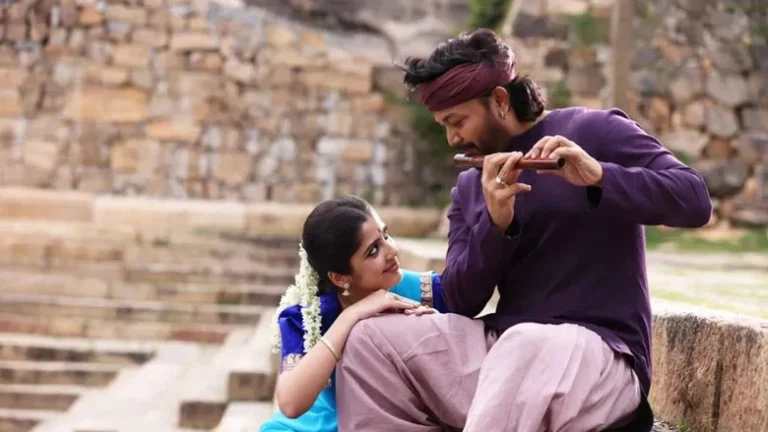
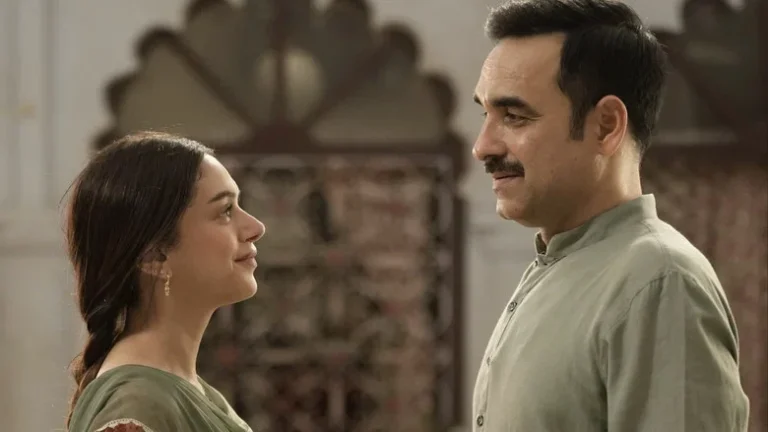
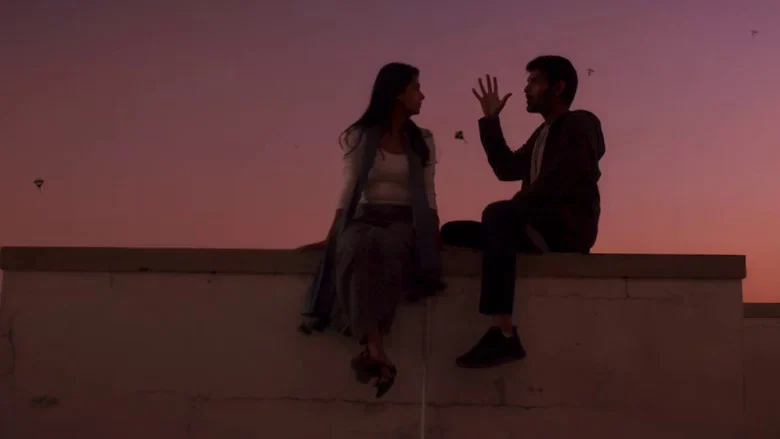
Arjun’s speech impairment is the film’s organizing principle, and in the first stretch it pays dividends. Uppala stages courtship as a series of negotiations, a held glance across a doorway, a hand offered and withdrawn, Keerthi reading intent off posture rather than dialogue.
Sai Aniesh plays these beats with a stillness that reads as discipline rather than blankness. Watch how he tilts his head a fraction before responding to Keerthi, buying himself the half-second a speaking actor would spend on a line.
The problem is that silence is expensive. Once Peddanna’s world intrudes, the film needs Arjun to communicate threat, strategy, and moral resolve without a voice, and the writing stops supplying him with situations that demand it.
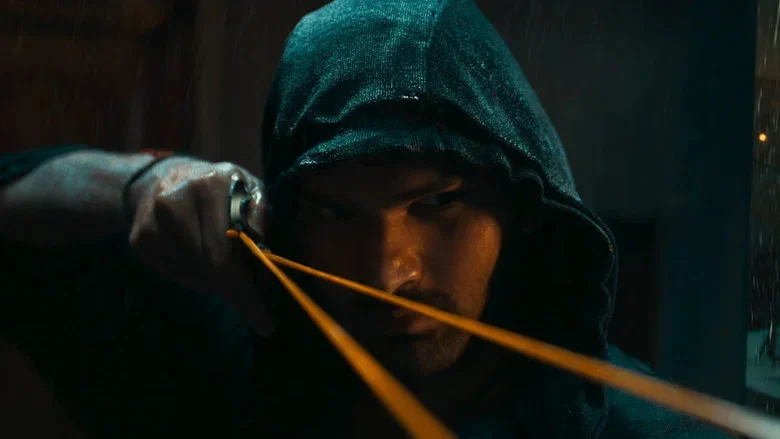
When the Villain Becomes Weather Instead of a Person
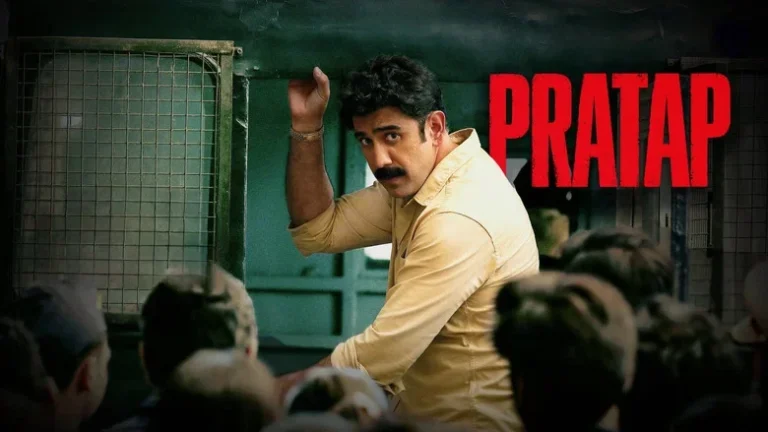
Mukesh Rishi’s Peddanna is introduced with the right gravitational weight: a man who occupies doorways, whose stillness makes other characters move first. Rishi’s baritone and unhurried bearing do the early work of making him feel like a system rather than a person.
Then the film lets him become an abstraction. Peddanna’s power is asserted through dialogue about him rather than scenes with him, and a villain who is discussed more than confronted stops generating pressure.
Compare the tonal discipline of a peer release like Parivarik ManuRanjan, which understood that domestic tension needs a visible source in the room. Here the threat is real in premise and diffuse in execution.
The Performance Carries What the Screenplay Won’t
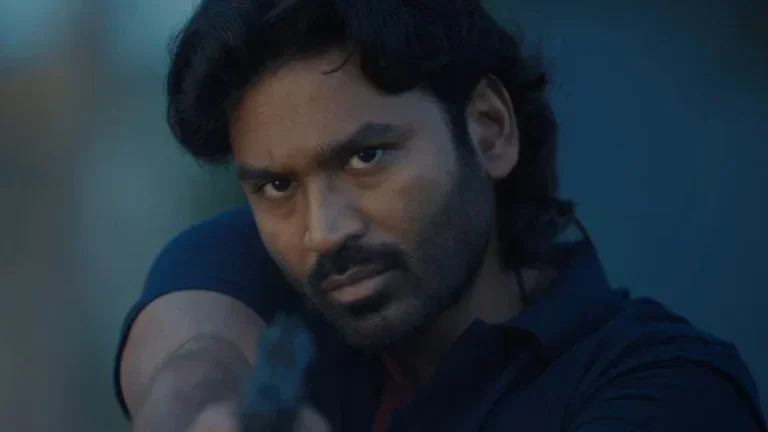
Aniesh’s best work comes in the transition from lover to protector, where the body has to change register without a line to announce it. His shoulders drop, his gait shortens, and the film briefly remembers what it promised.
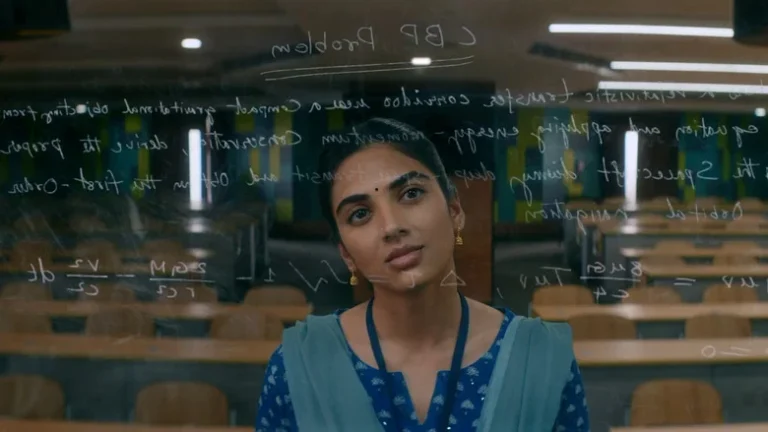
Anaswara Rajan’s Keerthi is the more interesting problem. She is written as the object of protection rather than a participant in the danger, and Rajan fills the gaps with a watchfulness that suggests a character the script never bothered to build.
The supporting bench is thin in function. Vennela Kishore registers in comic beats that recall the looser register of his work in Raakaasa, but too many named performers hover at the edge of scenes without a job to do.
Thaman’s Score Is Doing the Talking the Hero Can’t
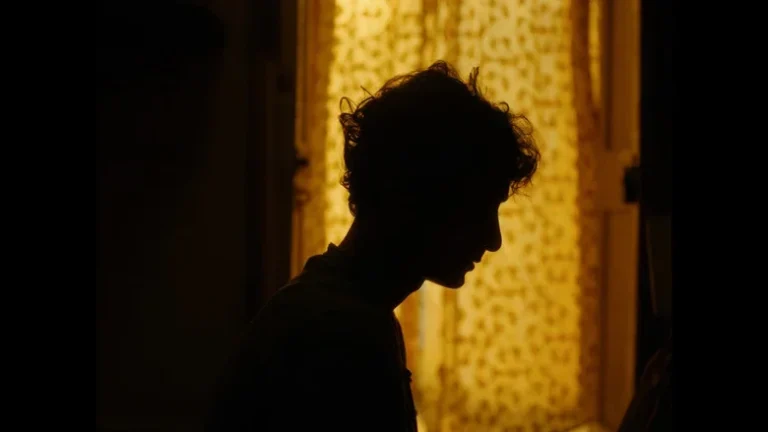
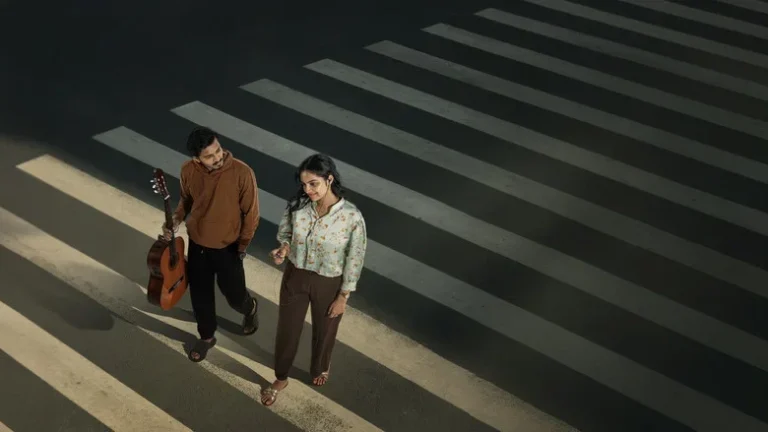
Raja Mahadhevan’s camera favors medium shots that keep Arjun and Keerthi in the same frame, which is the correct instinct for a nonverbal romance. The framing lets proximity carry the emotional information the dialogue refuses to.
Then Thaman’s score arrives to explain everything the images already said. Cues swell on emotional beats that Aniesh has already landed with his face, and the music effectively dubs a performance that didn’t need dubbing.
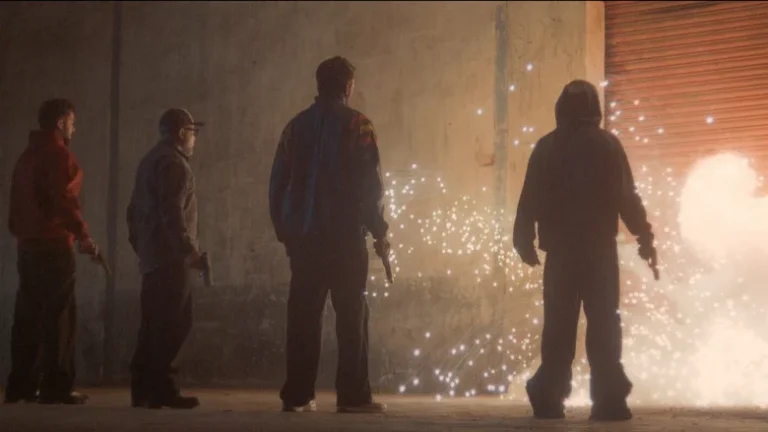
Uppala’s staging in the action passages is competent but anonymous, coverage that keeps the geography legible without ever using the hero’s silence as a tactical idea. A mute fighter should be a choreographic problem, not just a narrative one.
The Remake Economy Wants Scale. This Film Wants Intimacy.
Annapurna Studios, Haashtag Media, and What Next Entertainments are betting on a mid-budget action romance in a market that increasingly rewards event-scale spectacle. That’s a defensible wager, but it requires the film to pick a lane.
The advance sales of roughly ₹1.33 crore signal curiosity rather than conviction, and curiosity does not survive a soft second weekend. The star’s theatrical leverage here rests on a premise, not a proven draw.
The wider pipeline keeps chasing the kinetic model that Peddi represents, while this film’s real asset, a physically expressive lead in an intimate register, is the thing it keeps apologizing for.
Across contemporary Telugu actions, the tension between scale and stillness is the defining commercial question of the season, and this one answers it by hedging.
A Film That Trusts Its Silence Only Halfway
The climax asks Arjun to resolve everything through action, and Aniesh delivers a physical commitment that earns the moment. What the film never resolves is its own uncertainty about whether quiet can hold a commercial frame.
Itllu Arjuna is a genuine formal experiment wearing commercial clothes it doesn’t quite fit. The performance is the argument; the screenplay is the rebuttal.