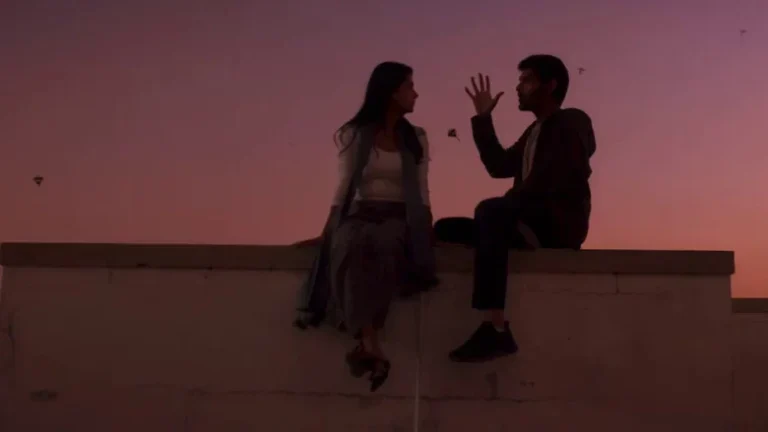
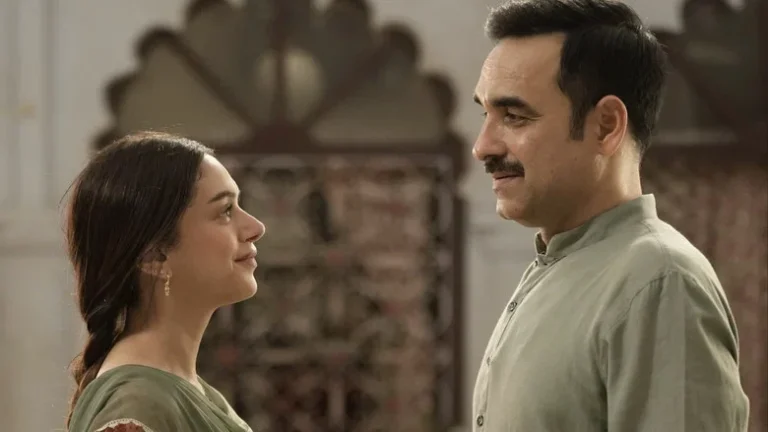
Kidney opens on a village split clean down the middle, and it wants you to feel the inheritance before you feel the love. The trouble is the film keeps announcing its own stakes instead of letting them bite.
A TikTok Romeo Is a Sharp Idea Trapped in a Tired Frame
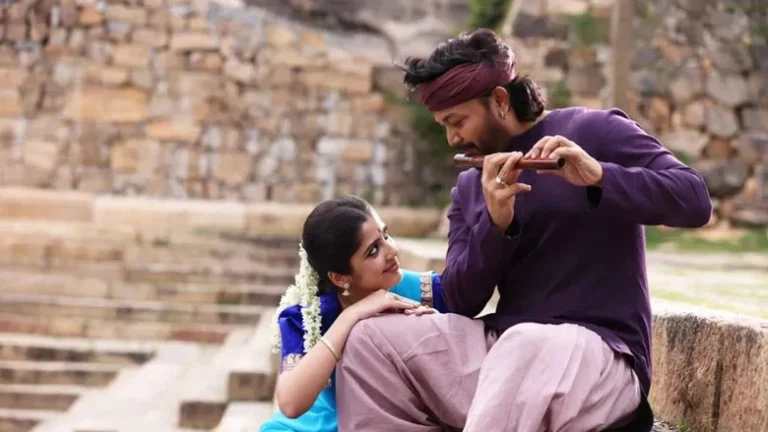
Here is the premise the Sansanwal brothers are selling: a young man chasing TikTok fame falls for a girl from the family his own people have been feuding with for generations. That collision of digital self-invention and inherited hatred should be combustible.
It isn’t, because the film treats the phone as set dressing rather than a weapon. Rudrashish Majumdar’s character performs for a camera we barely see, and the village reacts to his ambition with a shrug the movie mistakes for irony.
The romantic breach across a Hindu-Muslim family line is loaded material, and the film knows it. What it doesn’t do is dramatize the moment the breach becomes unbearable, it just keeps insisting the families are rivals until we take its word.
The Inheritance Dispute Is the Engine, but Nobody Steps on the Gas
Money is the sharpest thing in this movie, and I mean that as both compliment and complaint. The inheritance claim is what turns a private romance into a public war, and the screenplay understands that greed is funnier and crueler than ideology.
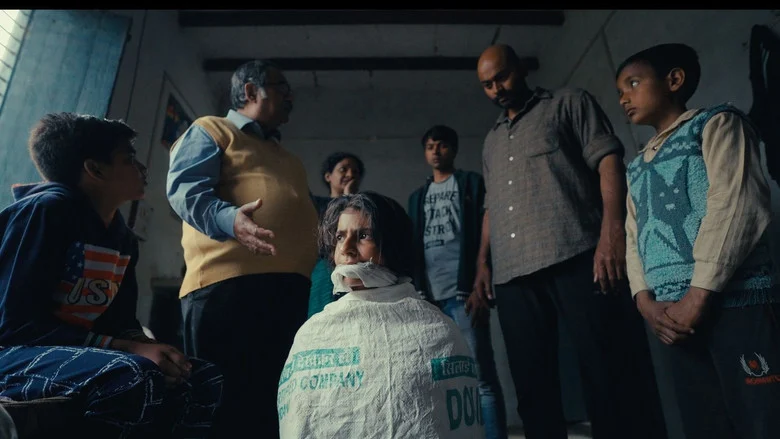
Yet the dispute unfolds at a distance. We hear about old grievances, we watch elders posture, but the film never puts us in the room where a single rupee changes hands and a loyalty curdles.
Black comedy lives or dies on proximity, the wrong person sitting too close to the wrong secret. Kidney keeps its feuding families in separate frames, so the satire stays theoretical when it should be sweaty and claustrophobic.
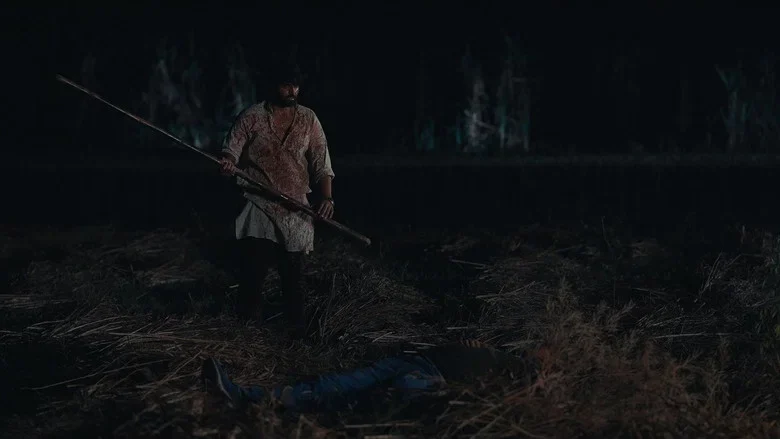
Majumdar Has the Face for It; the Film Gives Him Nothing to Do With It
Majumdar’s best moments are the quiet ones between performances, when the smirk drops and you catch a kid who genuinely doesn’t know if he’s anybody without an audience. That flicker is the movie’s real subject.
His romantic scenes with Simran Tandon carry a nervous energy, the way he watches her like she’s the one person who might see through the act. Tandon, for her part, plays escape as a physical instinct, always angled toward a door.
The supporting elders, by contrast, are a wall of beards and disapproval with no individual face. When a film can’t distinguish its own patriarchs, it can’t make their violence feel like it belongs to anyone.
The Sansanwals Have an Eye for Place and No Ear for Rhythm
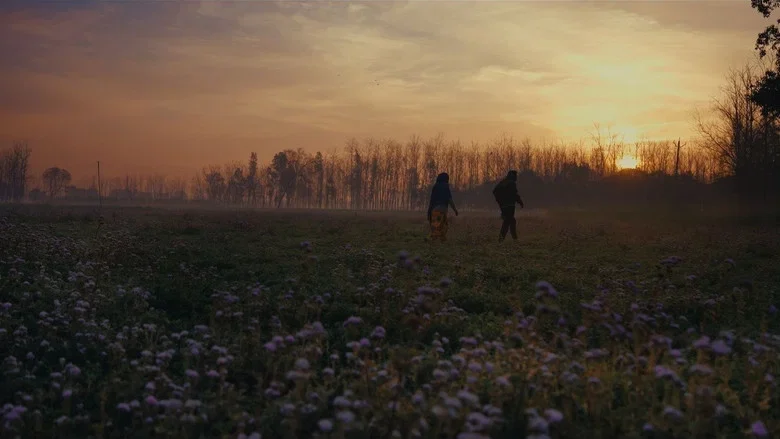
What the brothers get right is the texture of the village, dust, distance, the way a courtyard can feel like a courtroom. There’s a patience to the framing that suggests they trust silence more than dialogue.
But patience without escalation becomes inertia. The middle stretch drifts between comic asides and ominous warnings without ever committing to either register, and Shray Saxena’s score keeps nudging us toward gravity the scenes haven’t earned.
Compare the spatial discipline on display in Sooriyan Maraindha Maalai, where restraint becomes pressure, and Kidney’s looseness reads as indecision. The camera is willing; the screenplay keeps looking away.
Two Lovers, One Feud, and a Threat That Never Lands
The film promises bloodshed and delivers murmurs. That gap between threatened violence and actual consequence is where a black comedy either finds its knife or reveals it’s holding a spoon.
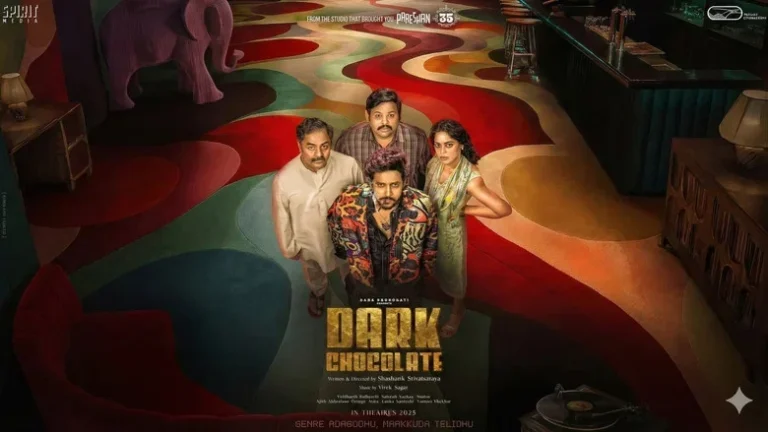
There is a version of this movie, tighter, meaner, more willing to let its lovers be complicit in the greed around them, that would cut deep. The performances in Dark Chocolate show how much a single room and a single lie can carry when the film refuses to blink.
Kidney blinks constantly. Every time the tension tightens, it cuts to a comic beat that releases the pressure instead of redirecting it, and the accumulated effect is a movie that keeps apologizing for its own seriousness.
Enfant Terrible’s Gamble and the Festival Circuit’s Cold Math
Enfant Terrible Productions, with Shiladitya Bora’s Platoon One Films co-producing, is betting on the festival-to-theatrical pipeline that has become the lifeline for independent Hindi cinema. The Tallinn Critics’ Picks slot is real currency, but it buys attention, not screens.
The grassroots production story, a farming community finishing the film after the budget ran dry, is genuinely moving and also a warning about the resources behind the final cut. Ambition outran the money, and you can feel it in the uneven polish.
Against the broader appetite for contemporary Hindi comedies, this one arrives without stars, without a marketing hook beyond its premise, and without the crowd-pleasing rhythm that fills multiplexes. It will find its audience in pockets, not waves.
The comparison to a film like Parivarik ManuRanjan is instructive: that one buckled under tonal confusion too, but at least it had the courage of its own mess.
The Uncomfortable Truth About a Film That Refuses to Choose
Kidney ends where it began, two families circling each other, two kids caught between inheritance and desire, and the ambiguity might be the point. But ambiguity only stings when the film has made us feel the cost of not choosing.
This one hasn’t. It has shown us a village, a feud, a phone, and a girl who wants out, and it has asked us to care about all of it without ever putting any of it at risk.
The real tragedy of the film is its own timidity. It had a TikTok Romeo, a Muslim-Hindu divide, an inheritance war, and a community that literally built it, and it made a movie that whispers when it should have screamed.