Vishwadev Rachakonda’s Fire Star Yagna summons three ghosts of his own career to a mansion and then insists they are figments of his skull. Shashank Srivatsavaya’s chamber piece wants to be a comedy about a has-been and a horror film about the same man, and for long stretches it is neither.
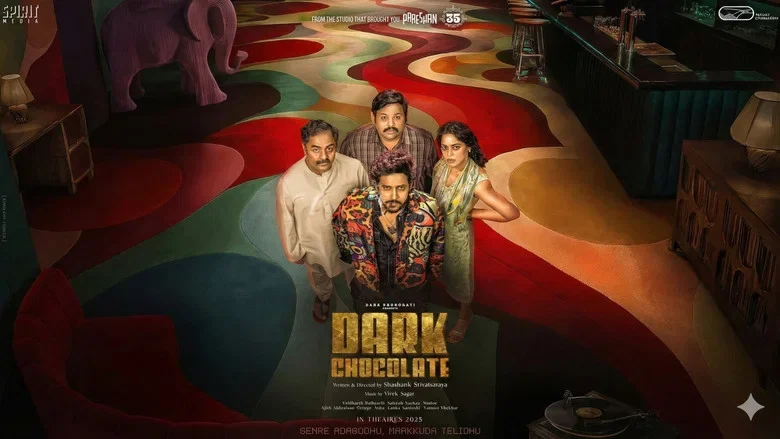
A Disgraced Star Invites His Own Hallucinations To Dinner
The premise is the film’s most seductive asset. A washed-up leading man, humiliated by flops and public mockery, lures three influential figures from his past to an isolated house under the guise of a comeback negotiation.
Then he announces, with the flat calm of a man who has rehearsed the line in a mirror, that they are not real. It is a genuinely unnerving curtain-raiser, and Srivatsavaya stages it with a stillness that refuses to wink at the audience.
The mansion does the heavy lifting. Its corridors are shot at a distance that keeps Yagna small in frame even when he is shouting, and the refusal to cut on his outbursts lets the silence curdle around him.
The Unreliable Narrator Is The Only Engine, And It Sputters
Once the declaration lands, the film has a structural problem it never quite solves. If the visitors may not exist, every confrontation carries a built-in escape hatch, and the screenplay keeps reaching for it whenever tension needs a reset.
Yagna’s stated goal, eliminate the imagined figures and reclaim control of his reality, is a fascinating dramatic engine. It is also a narrative that can justify any scene as either literal or symbolic, and that latitude becomes a crutch by the second hour.
The comedy layer is the more interesting gamble. Srivatsavaya plays the absurdity of a man negotiating with his own delusions for laughs before pulling the floor out, and the tonal whiplash is deliberate rather than sloppy.
Whether it is effective is another matter. The film’s refusal to clarify what is happening is not the same as ambiguity earned through craft, and the difference between the two is the entire ballgame.
The genre sibling Raakaasa wrestled with a similar patchy screenplay and at least had a clearer physical threat to fall back on.
Rachakonda Holds The Frame, And The Frame Is All He Has
The lead performance is the film’s most disciplined element. Rachakonda plays Yagna’s arrogance as a physical tic, the chin lift before a sentence, the way he straightens his collar when he is losing an argument, rather than as a general air of superiority.
His best moments are the quiet ones. When Hamsa, played by Bindu Madhavi with a watchful stillness that suggests she is cataloguing his lies, asks him a direct question, Rachakonda’s face does something rare: it pauses before it answers.
That micro-beat is the film’s thesis in miniature. Yagna is a man who has spent his life performing a version of himself, and the horror is that the performance no longer stops when the cameras do.
The supporting ensemble, by contrast, is given little to do beyond react. Rakesh Rachakonda and Ramesh Konambhotla register as presences rather than people, and the screenplay never gives them a scene that justifies their presence beyond Yagna’s need for an audience.
The comparison to Itllu Arjuna is instructive here. That film asked a lead to carry material that was not fully built for him, and the strain showed in the shoulders.
Rachakonda’s burden is different but related: he is asked to be the entire psychological architecture, and the script keeps handing him beams that do not quite meet.
Srivatsavaya Writes, Edits, And Directs, And The Seams Show
Concentrated authorship is not automatically a virtue. Srivatsavaya holds the writer, director, and editor credits, and the film bears the fingerprints of a single sensibility working without a counterweight.
The editing is the tell. Scenes that should breathe are trimmed to the bone, while others linger past their dramatic usefulness, as if the filmmaker could not decide which moments were load-bearing.
Sathish Saakar’s camera work is the film’s most confident craft contribution. The lighting in the mansion’s long hallway scenes is deliberately underpowered, so faces emerge from shadow only when Yagna chooses to let them, a visual grammar that mirrors his need to control who gets to be seen.
Vivek Sagar’s score is used sparingly, and that restraint is welcome. The film trusts silence more than most Telugu thrillers of its budget tier, and the moments where the soundtrack drops out entirely are its most effective.
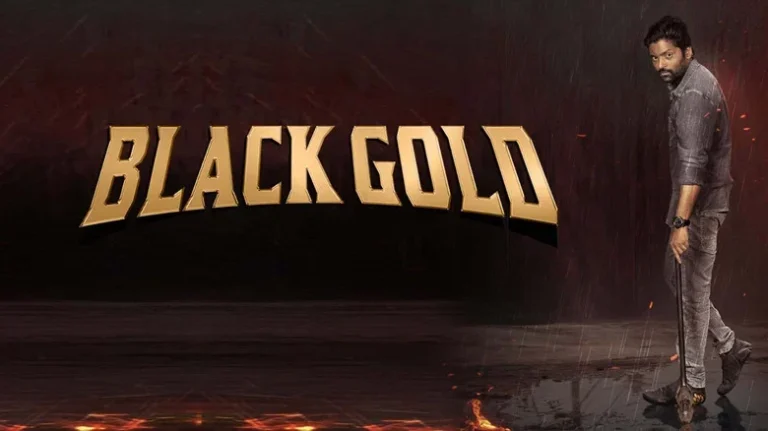
What the film lacks is a firm hand on the tiller of its own ambiguity. Watching Yagna’s reality buckle is compelling; watching the film’s reality buckle is less so. The peer release Black Gold took a similarly confined premise and committed to a harder-edged resolution, and the contrast is not flattering here.
Spirit Media And Waltair Productions Are Betting On A Difficult Sell
Rana Daggubati and Siddharth Rallapalli are producing through Spirit Media and Waltair Productions, and the commercial math here is genuinely uncomfortable. An A-certificate psychological thriller with no conventional antagonist and a lead whose box-office pull is still being tested is not a safe theatrical proposition.
The advance booking figures reported before release were modest, and the film’s viability will depend almost entirely on word of mouth from the niche audience it is actually built for. This is the kind of title that finds its real audience on streaming, and the producers likely know it.
What is at stake for the banners is credibility rather than profit. Backing a formally ambitious, deliberately uncommercial chamber piece signals an appetite for risk that the contemporary Telugu thrillers landscape has been quietly rewarding, even when the individual film does not fully land.
The Ending Refuses To Explain Itself, And That Is The Point
The final act pushes Yagna toward a confrontation with his own sanity, and the film resists the urge to hand the audience a clean ledger of what was real and what was not. That refusal is either its most mature instinct or its most evasive one, depending on your patience.
What lingers is not the puzzle but the portrait. A man who built his identity on being watched discovers that being watched by no one is the only thing left, and the film’s final image sits in that loneliness without flinching.
Dark Chocolate is a flawed, occasionally thrilling, frequently frustrating piece of work, a film that trusts its lead and its camera more than it trusts its own script. It does not fully earn its ambiguity, but it earns its unease, and that is more than most films in this space manage.
Rachakonda’s Yagna will not be the role that defines him. It may, however, be the role that proves he can hold a frame when the frame is all the film has to offer.