Red sandalwood is the perfect MacGuffin for a Rajkumar Periasamy film: rare, sacred, and bled out of temple country by men who quote scripture while counting crates. The director of Amaran returns with a near-three-hour infiltration epic that mistakes density for depth.
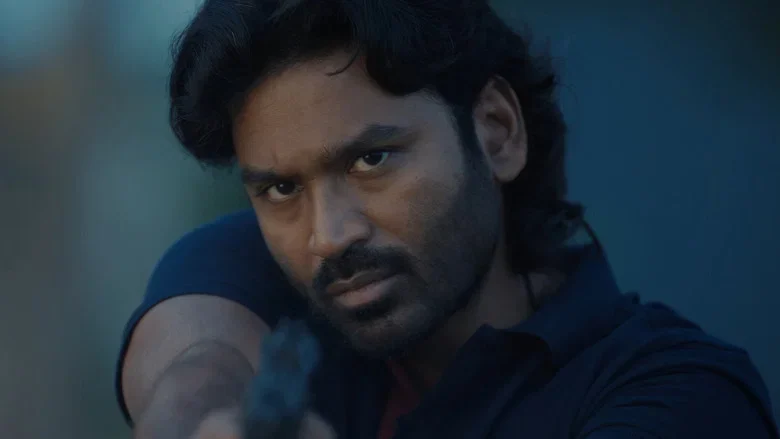
Dhanush Walks Into a Syndicate That Already Knows He’s Coming
The opening hour plants its operative inside the transnational red-sanders trade with admirable patience, letting him absorb the vocabulary of smuggling before he speaks it. What he finds is a cartel run less like a criminal enterprise than a bureaucracy with blood on its ledgers.
Periasamy shoots the Tirupati corridors as places of commerce rather than devotion, pilgrims and porters blurring into a supply chain. It’s the film’s sharpest idea, and it arrives in the first twenty minutes before the plot buries it.
The internal task force running “Operation Mole” is introduced through procedural shorthand that flattens what should be a paranoid second layer. Every handler speaks in mission briefings; none of them seem to have a life outside the operation.
When Every Character Is a Function, Nobody Has Anything to Lose
The screenplay’s central problem is structural, not tonal: it stacks a covert task force, a trafficking syndicate, temple administration, and local political machinery into a single plot, then gives each faction exactly one representative.
That means the mole hunt, the film’s ostensible engine, has no real suspects to hunt, only archetypes to eliminate. Tension requires the possibility of being wrong about someone, and this script is never wrong about anyone.
Where a leaner thriller would let the operative’s cover fray in a single, unbearable scene, this one distributes the pressure across a dozen subplots. The result is a film that feels busy without ever feeling dangerous.
Sai Pallavi Holds Still While the Plot Runs Around Her
Pallavi gets the film’s only scenes built on silence, and she plays them with the same coiled restraint she brought to Ramayana, a performer who understands that withholding is a form of aggression. Her character’s function is never fully explained, which may be the point, but she makes the ambiguity feel intentional.
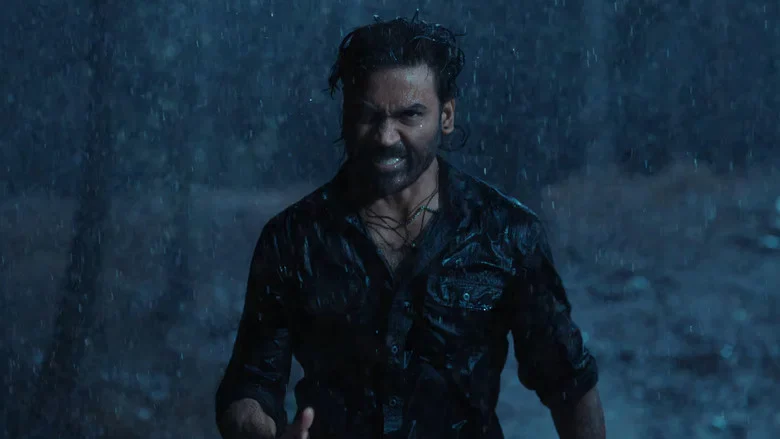
Dhanush, meanwhile, is doing something subtler than the material asks: a low, flat voice register in the cartel scenes that snaps into a higher pitch the moment he’s out of earshot. It’s a physical tell, not a monologue, and it’s the closest the film comes to genuine suspense.
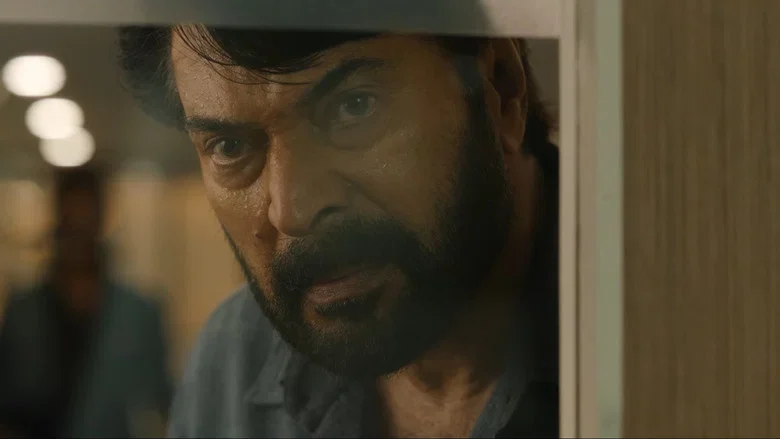
Mammootty’s screen time is limited to a handful of confrontations, but he uses stillness the way the script refuses to, sitting, waiting, letting the other man fill the silence. Indrans and Naseeruddin Shah appear in scenes that feel trimmed to the bone, their authority established and then abandoned.
Periasamy’s Camera Trusts the Corridors More Than the Script
The film’s visual grammar is its strongest asset: wide, patient frames that let crowds press against the edges of the image, and a color palette that treats red as a warning rather than decoration. The camera understands that the temple is a place where money changes hands.
But the editing betrays that patience in the back half, cutting away from confrontations just as they find their rhythm. A near-three-hour runtime should buy room to breathe; here it buys room to add, and the film keeps adding.
The score does the heavy lifting in scenes that haven’t earned their tension, swelling under moments that would land harder in silence. When the film finally does go quiet, a single held shot of a man realizing he’s been outmaneuvered, it’s the most thrilling sequence in the whole enterprise.
Panorama and the Remake Economy Can’t Afford This Kind of Bloat
For the producing banners backing a Tamil-language tentpole of this scale, the economics are unforgiving: a three-hour runtime means fewer daily shows, and fewer shows mean every opening-weekend seat has to justify itself. The advance numbers are respectable, but respectability isn’t profitability.
The bigger question is whether the Tamil thriller market can sustain another sprawling syndicate epic when leaner, meaner films like Black Gold prove that atmosphere and economy can coexist. Dhanush’s box-office leverage is real, but it’s been spent on films that knew when to stop.
Compared to the compression discipline on display in Ghamela, this film’s refusal to cut is less a stylistic choice than a structural failure of nerve. The contemporary Tamil thrillers that endure are the ones that trust the audience to fill silence, not the ones that fill it for them.
The Mole Is Found, and the Film Still Hasn’t Learned What It’s About
The climax resolves the cartel plot with efficiency but never answers the question the premise poses: what does it cost a man to live inside a lie long enough to dismantle it? The film’s answer is a body count, not a reckoning.
What lingers isn’t the operation but the geography, those temple corridors, sacred and transactional at once, where the film briefly becomes something stranger and sadder than a procedural. Periasamy has the eye for that movie. He just hasn’t yet written it.
A near-three-hour thriller that trusts its camera more than its screenplay is a frustrating thing to watch, because the talent is visible in every frame that the script doesn’t smother. O.M: Operation Mole is a film about infiltration that never quite infiltrates its own story.