Nitesh Tiwari opens his Ramayana not in Ayodhya but in the cold architecture of the cosmos, where Brahma, Vishnu and Shiva arbitrate a war between Devas and Asuras. It is a bold, almost defensive gesture: announce the mythology before the mortals arrive.
What follows is the most expensive act of world-building Indian cinema has ever attempted, roughly ₹4, 000 crore across two parts, per the project’s own disclosures, and a first instalment that mistakes the promise of a sequel for the satisfaction of a story.
A Villain Who Argues Instead of Roaring
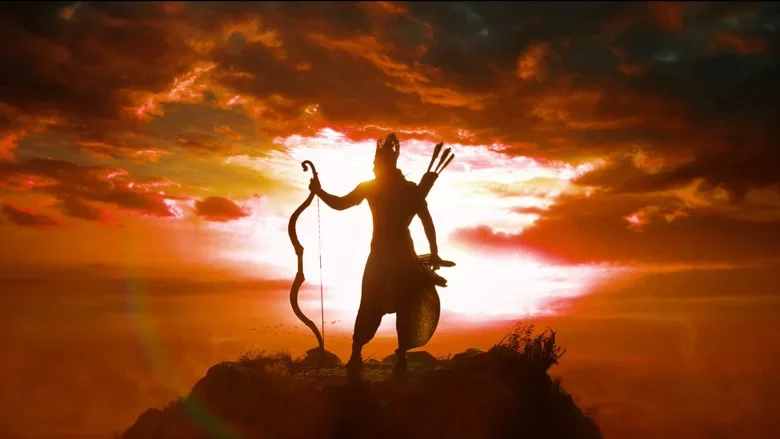
Yash’s Ravana is the film’s genuine architectural achievement. Introduced as an Asura child shaped by divine rejection, he grows into a ruler whose grievance against Vishnu is ideological rather than appetitive.
Watch how Yash plays the throne room: shoulders squared but voice dropped to a conversational register, as though conquest were a matter of clerical correction. The performance earns its authority through stillness, not volume.
It is a canny recalibration of the star’s screen grammar after the ornate dual-role architecture of Toxic, trading operatic doubling for a single, coiled presence that dominates every frame he occupies.
Ranbir Kapoor Plays a God Who Keeps Choosing Second Place
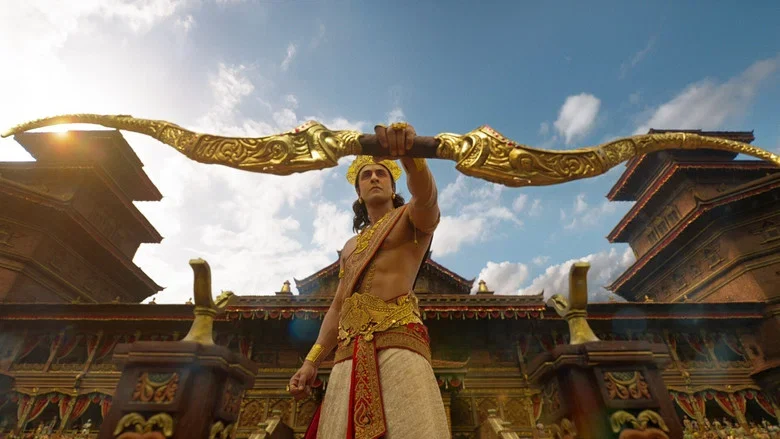
Kapoor’s Rama is built almost entirely from restraint, a prince who lowers his eyes before he lowers his voice, whose most violent act in the first hour is accepting a sentence he did not deserve.
The performance works precisely because Kapoor refuses the divine register. He plays Rama as a man perpetually outvoted by duty, and the film’s best moments are the ones where his jaw tightens and nothing else happens.
Sai Pallavi’s Sita anchors the palace section with a similar economy, though the screenplay gives her little to do beyond bearing the transition from wedding to wilderness with quiet composure.

The Exile Is Where the Movie Finally Breathes
Once Ayodhya recedes, Tiwari’s staging loosens. The forest sequences abandon the symmetrical compositions of the court for handheld proximity, and the film briefly becomes the intimate drama it should have been all along.
The marriage-then-exile sequence is the clearest demonstration of what this adaptation could achieve: romance, royal tragedy and quest narrative compressed into a single rupture.
Just as he demonstrated a firmer command of escalating dread in the ritual-thriller framework of Geriga, Tiwari shows here that his instincts sharpen when the scale contracts and the stakes become personal.
When the Score Does the Acting’s Job
The Hans Zimmer and A.R. Rahman collaboration is deployed with almost nervous frequency, swelling under scenes that would land harder in silence.
There is a recurring visual motif of light fracturing through temple stone, and the cinematography uses it well, but the sound design rarely trusts the image to carry its own weight.
The CGI infrastructure, for all its international polish, still renders the cosmic realms with a weightlessness that sits awkwardly against the tactile, dust-and-sweat texture of the exile passages.
A First Instalment That Refuses to Close Its Own Argument
The structural problem is not the two-part format itself; it is the marketing sleight of hand that rebranded “Part 1” as “Rise of a Legend, ” implying a completeness the film never delivers.
The narrative stops rather than resolves, and the audience is asked to treat an intermission as a conclusion. That is a commercial decision dressed as an artistic one.
The screenplay’s compression problem mirrors the tonal imbalance that undermined the ambitions of Nayyi Navelli, where grand mythological scaffolding could not compensate for a script that never quite decided what it wanted to be.
The Balance Sheet Behind the Mythology
Prime Focus Studios, DNEG and Yash’s Monster Mind Creations are not merely producing a film; they are underwriting a bet that Indian mythology can be sold as global franchise IP.
That bet requires the first film to function as both a standalone experience and a trailer for the second. It manages the latter far better than the former.
The multilingual, IMAX-positioned release pattern suggests a distribution strategy built on event-viewing rather than repeat-viewing, a model that works only if the sequel arrives before audience patience expires.
Within contemporary hindi fantasys, this is the most expensive proof of concept yet mounted, and the most fragile.
The Verdict: A Cathedral Built Around an Empty Altar
Ramayana: Rise of a Legend is a genuine visual and performative achievement in search of an ending it has been contractually forbidden from providing.
Yash builds a villain worth fearing; Kapoor builds a hero worth following; Tiwari builds a world worth returning to. None of them are permitted to finish the sentence.
What lingers is not the spectacle but the suspicion that the most sacred story in the culture has been restructured around the least sacred logic available: the sequel greenlight.