Two films, both titled Father’s Day, drop in 2026, one from Finland, one from India. One tracks twin girls hunting an alcoholic dad in a care home; the other sends a soon-to-be father on a motorcycle ride through rural Karnataka. What connects them is a shared, raw question: why do we keep seeking out men who left us?
Twin Girls vs. a Motorcycle Ride
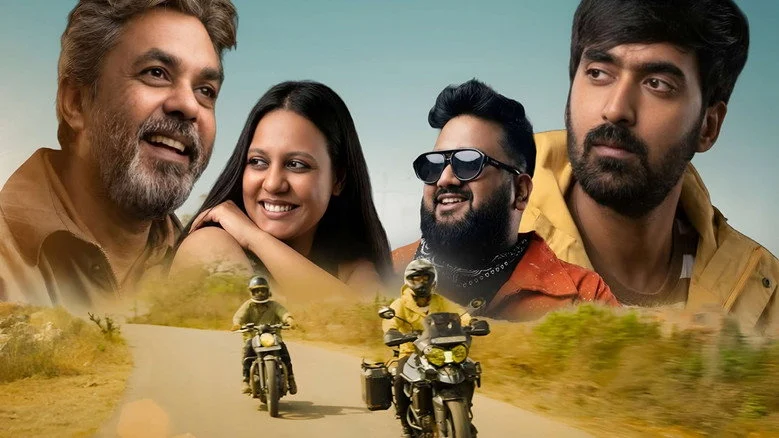
The Finnish version opens with a very specific image: teenage twin girls walking into a care home looking for their father, Tinke, an alcoholic. That single frame does more storytelling than pages of backstory ever could. In contrast, the Indian film saddles up a man named Sushant, who learns his estranged father is still alive and rides off on a one-day motorcycle trip to find him, a premise that feels more general, less specific.
The Gravity of Tinke’s Silence
What makes the Finnish film land harder is what happens in that care home: Tinke’s friend Veikko intervenes when Saimi, the twins’ mother, tries to block the meeting. Here, you get conflict that is both domestic and moral. The twins don’t walk into warmth; they walk into a fight. This is not a road trip, it is a siege. The Indian version, by contrast, seems to lean on the healing power of travel, which risks feeling like a familiar vacation drama.
Drama That Doesn’t Flinch
Drama, when done right, is about people making hard choices in confined spaces. Finnish director Aleksi Salmenperä understands this: the care home is not just a location, it becomes a pressure cooker. The twins must sit with the mess of their father’s addiction while also facing their mother’s resistance, that is not a simple equation. For a drama to work, the audience needs to feel the weight of every decision the characters make.
The Indian film’s structure, on the other hand, relies on the journey itself, the road, the scenery, the memories that pop up along the way. It is an inherently looser format. The risk here is that the emotional reconciliation at the end can feel earned only if the ride is filled with specific, lived-in details, not just expansive landscapes. Without critic scores or specific scene references, one can only hope the writing is tight enough to justify the metaphor.
Good drama also requires an antagonist who believes they are right, not evil. Saimi, in the Finnish version, fits that description, she is not a villain; she is a protector. That makes the twins’ mission morally complex. The Indian film, with its absent father and no clear antagonist, has a harder road to tension. The drama must come entirely from Sushant’s internal conflict, which is a tougher ask.
Veikko and Saimi: The Side Characters That Matter
In the Finnish film, Veikko is the kind of supporting character who makes the message land. He doesn’t just facilitate; he argues with Saimi, taking a moral stand. That fight is the film’s spine. Saimi, as the ex-partner trying to block the reunion, gives the story its emotional friction, she is not cruel, just wounded. Without these two, Tinke’s story would be a one-note tragedy. The Indian film, sadly, provides no comparable supporting cast in the research, which suggests the drama may be shouldered entirely by its lead.
For more thoughtful storytelling, browse our collection of Kannada movie reviews.
Hard Truths, Soft Roads
The Finnish Father’s Day makes you earn the catharsis, the twins find their father’s humanity only after sitting through his addiction. That is a tough but honest arc. The Indian version flips the script: a man on the verge of fatherhood seeks the father who abandoned him, hoping to reconcile before he becomes a parent himself. The premise is emotionally rich, but without critical data or dialogue to judge, it reads like a synopsis that still needs execution. I suspect the Finnish version will resonate more with audiences who want their drama gritty, not just gentle.
If you are looking for a film that sits with discomfort rather than skimming past it, the Finnish Father’s Day is your pick. The Indian version, for now, remains a hopeful question mark, promising but unproven. Watch the Finnish one first, preferably on a streaming platform where you can pause and think.
The Finnish film earns a solid but stern 3.5/5 for refusing to romanticize addiction while still finding the father’s heart, a tough balancing act that not every drama dares to attempt, and a far more compelling reason to watch Father’s Day than its Indian counterpart’s still-untested road trip.
For a film that shares this director’s focus on interpersonal friction, check out Idhayam Murali review.
If you prefer dramas where conflict is domestic and generational, Gatta Kusthi verdict offers a similar tug-of-war but in a more physical register.