Radhika Bansal opens her feature on a widower walking back into a Lucknow house mid-Diwali, and the film never quite lets him leave the doorway.
What follows is two hours of diyas, overlapping relatives, and a surprise wedding announcement that Bansal treats as a plot engine when it is really just a match strike.
A Grieving Man Buried Under a Hundred Diyas and One Announcement
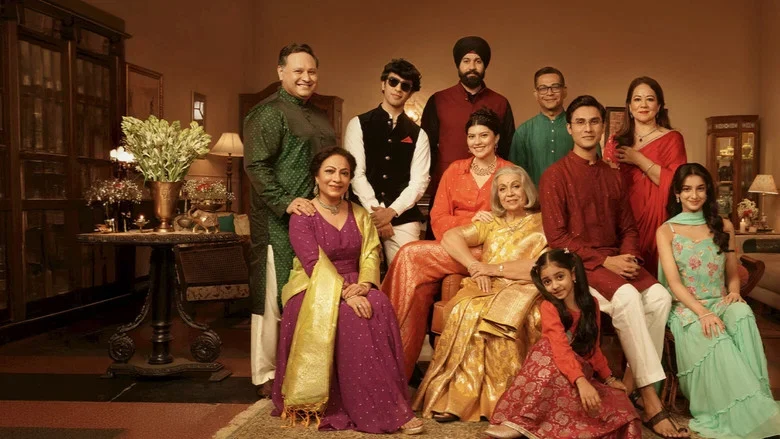
Jai, played by Ritwik Bhowmik, returns to his grandmother’s home carrying the specific silence of someone recently widowed. Bansal sets him down inside a crowded, intrusive household where every relative has an opinion about how he should be feeling.
The premise is sound. Grief inside a festival is a rich, cruel pressure chamber, and the surprise marriage announcement from Jai’s sister should detonate the room.
It doesn’t detonate. It merely adds one more voice to a house that already has too many, and the film’s central dramatic event gets swallowed by the noise around it.
When Every Relative Gets a Line, No One Gets a Scene
The ensemble is large, and Bansal treats each family member as though they were owed their own subplot. Old disagreements surface, secrets get half-exposed, and the film keeps cutting away from Jai just as his face begins to do something.
Rohini Hattangadi’s Nani anchors the house with a specific kind of grandmotherly stillness, holding court from a chair and letting her eyes travel the room before she speaks. Ayesha Raza, as Amrita, gets one good moment of resistance at the dinner table, shoulders squared, voice dropping rather than rising, and then the screenplay moves on.
That is the pattern. Performers get one gesture, one glance, one half-beat, and then the film rushes to the next relative’s grievance.
Ritwik Bhowmik’s Widower Never Gets a Room of His Own
Bhowmik is the film’s best asset and its most underused one. His Jai is a man performing normalcy in a house that refuses to let him be quiet, and the actor plays the exhaustion in his posture, the way he sits slightly apart from the circle, the way his hands stay in his lap while everyone else gestures.
There is a real performance buried in here. Bhowmik has the specific skill of letting grief sit behind the eyes rather than announcing itself, and it recalls the quiet register that made the somber pivot in Nizhalilirundhu Velicham so effective in its best passages.
But the screenplay keeps interrupting him. Every time Jai is about to sit with his loss, a cousin barges in, or a song cue drops, or the marriage dispute reasserts itself, and the emotional throughline gets chopped into fragments.
The Diwali Aesthetic Is Warm and Completely Undramatic
Bansal’s camera loves the house. String lights, marigolds, crowded interiors, the warm amber of evening, the film looks like a festival greeting card, and that is precisely the problem.
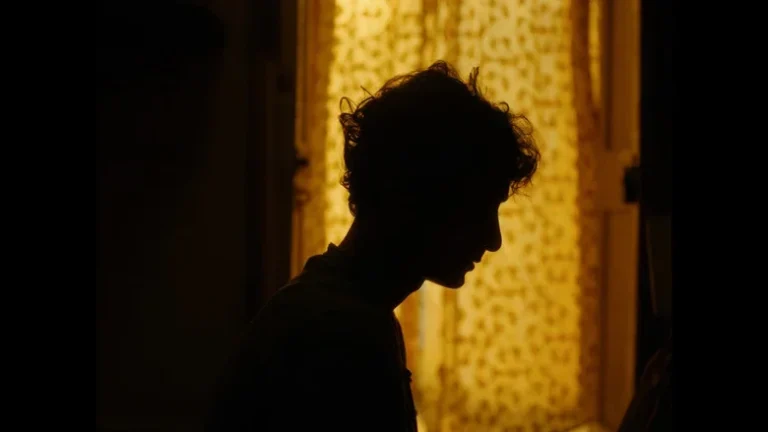
There is no visual language for Jai’s grief. When he retreats to a balcony, the film shoots it with the same warm, even lighting as the family dinner, and the contrast that should exist between his interior and the household’s exterior never materializes.
Compare that to the tonal discipline on display in Doosra, where the visual grammar actually shifted when the emotional register shifted. Here, the camera stays polite and pretty from beginning to end.
The Surprise Wedding Is a Plot Device, Not a Wound
The announcement that Jai’s sister is getting married should be the film’s real engine, a family forced to reckon with a choice that exposes old fractures. Instead, Bansal treats it as a scheduling problem.
Relatives argue about logistics. Somebody objects. Somebody else defends. The film moves through the dispute with the efficiency of a procedural, but it never lets the marriage mean anything beyond its function as a catalyst.
There is a version of this film where the wedding is genuinely destabilizing, where the family’s resistance comes from something specific and ugly, and where Jai’s grief collides with it in a way that forces him to choose. That version is not on screen.
Radhika Bansal Has an Eye but Not Yet a Rhythm
For a debut feature, the film is competent. Bansal knows how to stage a crowded family scene, how to let overlapping dialogue feel natural rather than chaotic, and how to get warm, unforced work from her ensemble.
What she doesn’t yet have is a sense of rhythm. The film moves at one steady, comfortable pace from start to finish, and that pace does not distinguish between a comic beat, a dramatic confrontation, or an emotional turning point.
The comparison to the middling family-crime hybrid in Aadarsha Kutumbam House No is instructive. That film at least varied its register, even when the tonal shifts didn’t land. This one stays in the same key throughout.
Netflix Gets a Family Drama That Will Play Well and Linger Briefly
As a direct-to-Netflix release, the film avoids the box-office pressure that would have crushed a theatrical family drama with this little dramatic escalation. The streaming audience for Diwali-set Hindi family dramas is real, and this film fits comfortably into that slot.
But the commercial calculation is also the creative problem. This is a film designed to be pleasant, warm, familiar, undemanding, and pleasant is not the same as memorable.
The wider landscape of contemporary Hindi dramas has been moving toward sharper, more specific family portraits, and this one feels like it was made for a version of the audience that no longer quite exists.
The Ending Resolves the Wedding and Forgets the Grief
By the final act, the family has confronted the marriage dispute, some secrets have surfaced, and Jai has ostensibly begun to reconnect. The film resolves its plot mechanics cleanly and then treats that resolution as an emotional one.
But Jai’s grief does not get a scene. It gets a montage. The film that spent two hours interrupting his mourning ends by skipping past it, and the reconciliation feels earned by narrative convention rather than by anything the character actually does.
Bhowmik deserved a final moment, a real one, in real time, with the camera holding on his face and the family quiet around him. Bansal gives him a smile instead.
Meethe Mein Kya Hai is a warm, well-performed, fundamentally under-dramatized film that mistakes a crowded house for an emotional landscape. It will play well on a Sunday afternoon and be forgotten by Monday.