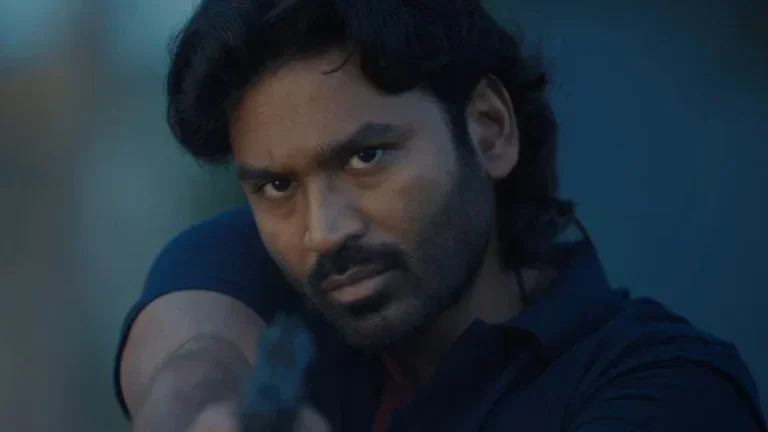
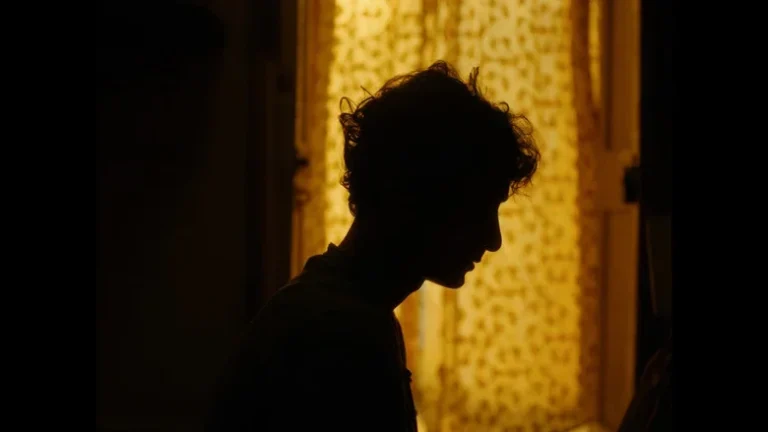
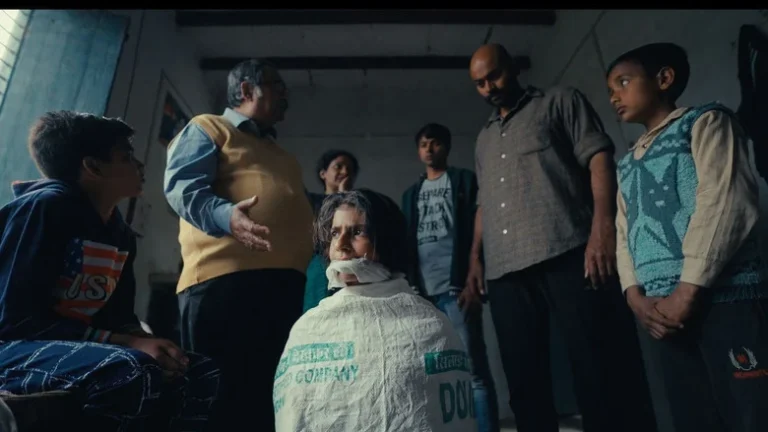
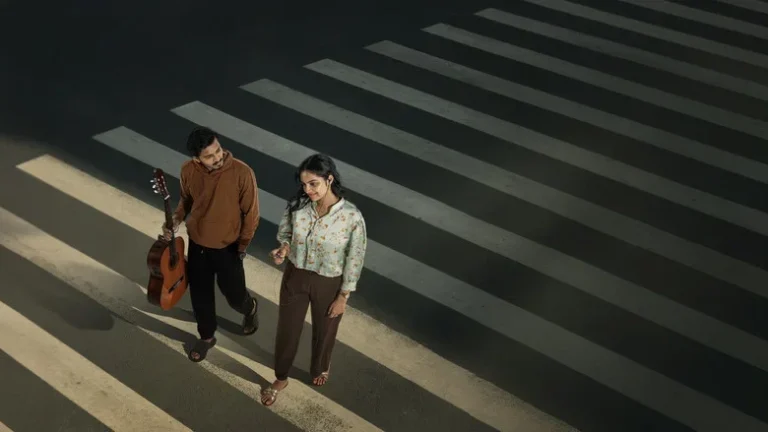
Bhushan opens Manduka with a collision the screenplay never bothers to explain: a schizophrenic girl stumbling into the orbit of four criminals. The film wants us to feel the accident before we understand it. That instinct is admirable. The execution is another matter.
When The Inciting Incident Refuses To Become A Story
The premise is genuinely unnerving on paper. A vulnerable woman, four men with everything to hide, and a police force closing in, the geometry of suspicion should produce tight, escalating pressure. Bhushan, who also writes the screenplay, clearly wants the girl’s fractured perception to be the mystery’s engine.
But the film treats that engine as a premise rather than a process. The accidental meeting arrives, the criminals scatter into concealment, and the police pursuit begins, and the narrative keeps circling these same three beats without deepening them.
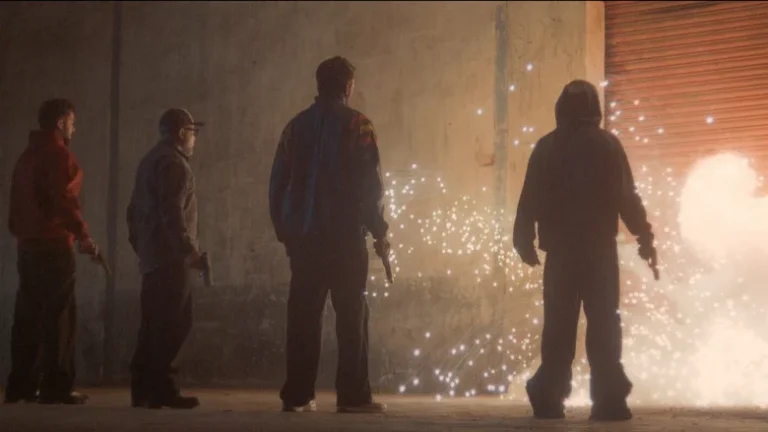
Four villains ought to mean four competing agendas. Instead they function as interchangeable obstacles, a criminal chorus rather than a set of distinct men with distinct fears.
What’s missing is the connective tissue: the small betrayals between the criminals, the moments where the girl’s testimony could be trusted or dismissed, the procedural friction that makes a pursuit feel earned. The 104-minute runtime suggests economy, but economy without escalation just feels short.

The Schizophrenia Problem: A Symptom In Search Of A Character
Here is the film’s most significant risk, and its most significant failure. Schizophrenia is deployed as a narrative device, a generator of uncertainty about what the girl saw, what she remembers, what she can testify to.
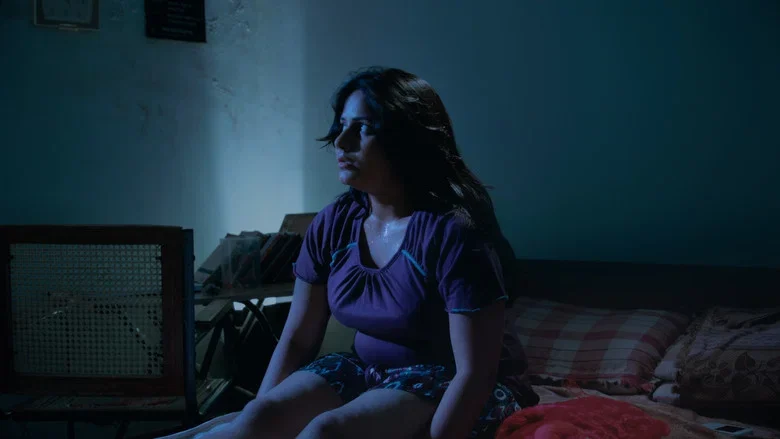
That’s a legitimate dramatic tool. But a tool needs a hand to wield it, and Manduka never gives Anjala’s character enough interior life to make her perception matter.
We understand her condition as a plot mechanism. We do not understand her as a person who has lived with it, who has strategies for it, who has reasons to fear the police as much as the criminals.
The film’s psychological texture is asserted rather than dramatized, and that gap hollows out the central mystery. If we don’t know what she’s capable of perceiving, we can’t invest in what she perceives.
Compare this to the way a performer like Zaid Khan anchored emotional stasis as a visible physical condition rather than an annotation in #Cult.
That film understood that a psychological state has to live in the body, in posture, in hesitation, in the specific weight of a held gaze. Manduka keeps its heroine at arm’s length, and the mystery suffers for it.

Four Villains, One Voice: The Criminal Group As Blur
Bhushan casts himself in a negative role alongside Mysore Raju, Manikanta, and Zoom Ravi, and the decision is both practical and revealing.
A filmmaker playing his own villain can create unnerving proximity, a sense that the director’s eye and the antagonist’s intent are the same eye. But here the four men never differentiate enough to generate the paranoia a group thriller needs.
What should be a pressure cooker of divided loyalties plays as a single criminal mass. There’s no scene, or none the film makes legible, where one man’s fear of another becomes the story’s real threat.
The police pursuit, meanwhile, stays external and procedural, a countdown imposed from outside rather than a force that reshapes the criminals from within.
The genre has shown how much tension lives in that internal fracture. The one-night pressure of Gajab Raat worked because every character’s next move was legible and consequential. Manduka has the same compressed clock but not the same clarity of motive.
Bhushan’s Unified Authorship: A Strength That Becomes A Trap
There is a real argument for a single creative author across writing and direction. The psychological premise and the crime mechanics can share one sensibility, one rhythm, one set of priorities.
Bhushan’s control is total, and in the film’s better passages, the initial encounter, the first scramble into concealment, you can feel a coherent authorial hand shaping the unease.
But unified authorship also means unified blind spots. When the same mind writes the mystery and stages it, there’s no second intelligence asking whether the audience can actually follow the chain of suspicion. The film’s pursuit sequences move, but they don’t accumulate. Each hide-and-seek beat resets rather than compounds.
The visual grammar stays functional where it needs to be expressive. A film about unstable perception should make us doubt the frame itself, a held shot that lingers too long, a reaction we can’t quite read, an edit that withholds the confirming angle.
Manduka mostly shoots its uncertainty straight, which leaves the schizophrenia as subject matter rather than experience.
The Quiet Craft Of A Film That Trusts Its Own Dread
Where the film does earn some credit is in its refusal to overstate. There’s no bombast in the pursuit, no swelling score telling us how to feel about the girl’s condition.
Bhushan stages the criminals’ concealment with a certain patience, and the compact runtime keeps the film from indulging in the decorative detours that sink longer crime mysteries.
That restraint is a genuine virtue, and it’s the kind of discipline that has been quietly reshaping contemporary Kannada thrillers, filmmakers trusting atmosphere over spectacle, silence over explanation. The problem is that restraint without dramatic clarity becomes vagueness. The film withholds, but it doesn’t always know what it’s withholding for.
Anjala, working with a role the script underdevelops, at least carries the physical vulnerability of a woman who knows she is not believed. It’s a performance of guarded stillness, shoulders drawn in, eyes tracking exits, and it suggests a richer character than the screenplay provides. The film around her never quite rises to that watchfulness.
The Commercial Arithmetic Of A Small True-Crime Bet
The economics here are modest and precarious. With an estimated budget in the range of ₹75 lakh and no verified theatrical revenue to speak of, Manduka is a small-scale Kannada crime mystery betting on the genre’s loyal theatrical audience rather than on star power or spectacle.
That’s a defensible bet in a market where compact thrillers can find their viewers, but it’s also a bet that requires word-of-mouth to do the marketing.
For Bhushan, the multi-hyphenate risk is real: writing, directing, and playing a villain concentrates both credit and blame. If the film finds an audience, it will be on the strength of its premise and its restraint.
If it doesn’t, the same unified authorship will be the explanation. The Kannada thriller pipeline has room for films like this, but not infinite room, and not without the clarity that turns a premise into a must-see.
The Verdict: A Fragile Mystery That Never Quite Cracks Open
Manduka is a film with a genuinely unsettling idea at its center, vulnerability weaponized by circumstance, perception itself made unreliable, and a screenplay that never builds the architecture to support it.
Bhushan’s control gives the film coherence but not depth; the four criminals blur into one threat, the police pursuit stays external, and the heroine’s condition remains a premise rather than a person.
What lingers is the sense of a film that trusted its own dread a little too completely, believing atmosphere could substitute for the slow accumulation of suspicion that a true-crime mystery lives on.
The girl at the center deserved a movie that knew what she was afraid of. Manduka knows she’s afraid. It just never finds out why, and neither do we.