The village of Naivad has a ritual for summoning the dead. Vijay has a ring light, four collaborators, and a content calendar.
That collision, sacred grief versus the attention economy, is the engine of Bhaskar Bantupalli’s Geriga, a Malayalam possession thriller that knows exactly what it wants to say and says it twice as often as it needs to.
A Hoax With A Body Count Waiting To Happen
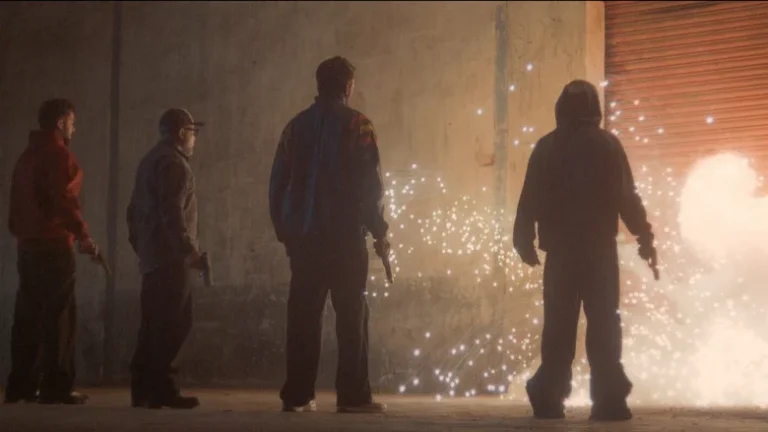
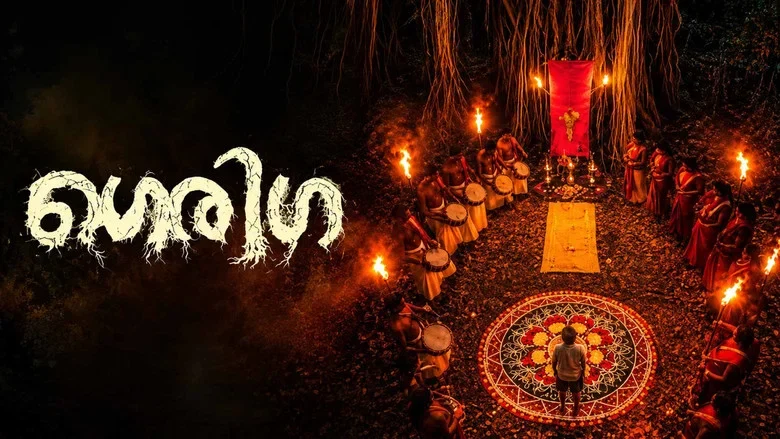
The opening stretch is the film’s cleanest piece of construction. Bantupalli stages the Geriga ceremony as a production set: boom arms, rehearsed chant cadence, Vijay directing his friends like a junior vfx supervisor.
What sells the sequence is the village watching. Elders stand at the perimeter with folded arms, and the film lets their stillness do the accusing.
Then the hoax stops being a hoax. Vijay’s possession lands in the same beat as news of his father’s sudden death, and the screenplay earns its one genuinely cruel irony, the son who monetised death loses a father mid-performance.
The Twelve-Day Clock Is A Plot Device, Not A Pressure Cooker
Once the deadline is set, the film shifts registers from satire to survival procedural. That’s a defensible pivot, but a pivot is all it is; the middle hour treats the countdown as a calendar rather than a vise.
Compare the spatial discipline at work in Manduka, where confinement tightens scene by scene. Here the deadline mostly generates dialogue about the deadline.
The creator-economy satire, meanwhile, gets abandoned rather than complicated. Nobody’s follower count matters after the possession, which feels like a missed second act.
Rishan Sha Carries The Possession Without The Showboating
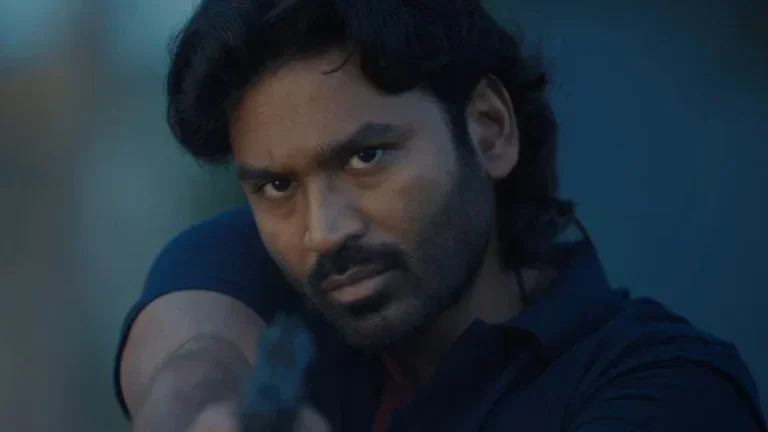
Rishan Sha’s best work happens in the transition, not the contortion. Watch how he plays Vijay’s first on-camera invocation: chin lifted, eyes flicking to the lens to check the frame, a performer who has never once been sincere in his life.
Post-possession, he strips that vanity out. The shoulders drop, the voice flattens into a register that sounds like a man listening to something behind him, and the film’s dread finally has a pulse.
The grief beat is trickier, and he doesn’t overplay it. The restraint recalls the quiet physical exhaustion anchoring Pyre, though Sha has less material to work with when the script reduces him to a vessel.
Neebha Bala registers as the group’s most grounded presence, mostly through a recurring gesture of checking exits before entering rooms. It’s the only performance that treats the village as a place with rules.
Prashanth Kanchapalli’s Camera Understands The Village Better Than The People
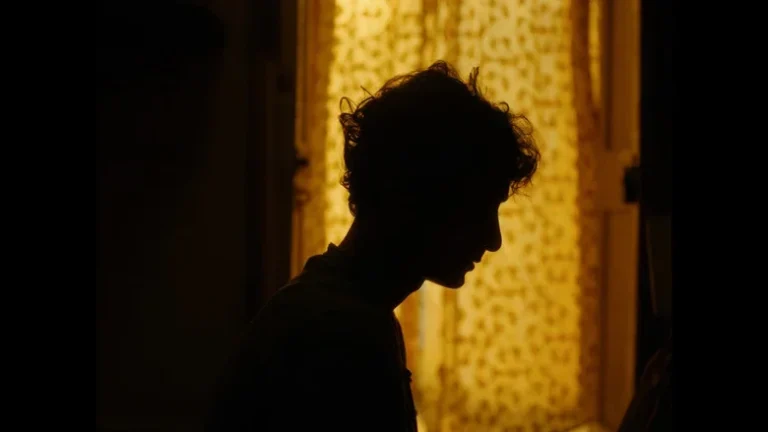
Kanchapalli, doubling as editor, shoots Naivad with an eye for thresholds: doorways, verandah edges, the treeline holding the frame shut. Lantern light sits low and yellow, leaving faces half-lit and half-negotiating.
The cutting, though, is impatient. Scenes that need a held silence get trimmed into coverage, and the ritual sequences are assembled like montage rather than dread.
Jinu Vikayan’s score leans on sustained low strings, and it’s mixed loud enough to pre-announce every scare. The best horror in the film is the quietest, a village elder refusing to translate a chant.
What It Shares With The Current Malayalam Horror Wave
The film belongs to a lineage that treats regional ritual as infrastructure rather than decoration. It avoids the kinetic sensationalism that overtook Aroopi, opting for slower, community-rooted dread.
That patience suits the material. What it lacks is the nerve to let the village itself become the antagonist, rather than a backdrop for five outsiders with a camera.
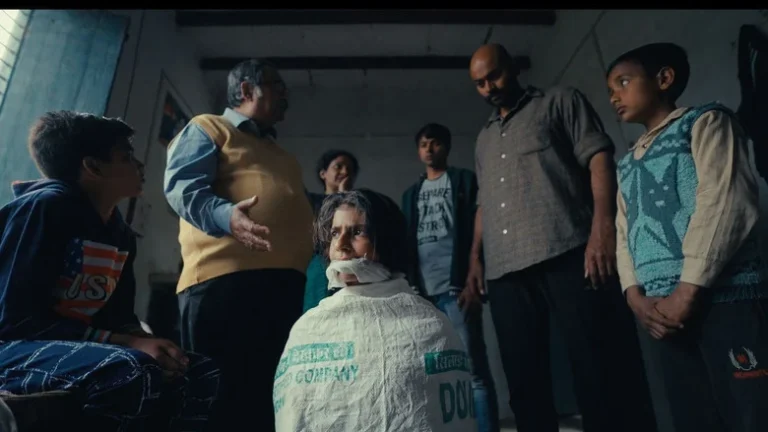
The supporting cast is largely functional, a producer figure, a sceptic, a believer, and the film rarely gives them a scene that isn’t exposition. When the group fractures, it’s plot, not character.
The Box-Office Math On A Ritual Horror With No Stars
Geriga arrives without franchise scaffolding, star wattage, or a verified marketing hook beyond its premise. That makes its theatrical run a referendum on whether original Malayalam horror can open on concept alone.
The producer, Venugopal Devi, is betting on the ritual-lore audience that has sustained this recent Malayalam horror cycle, a segment loyal enough to show up opening weekend and fickle enough to vanish by week two.
Without disclosed budget or opening figures, no honest trade verdict can be assigned. What’s clear is that the film’s ceiling depends on word-of-mouth surviving its own slack middle hour.
The Ending Refuses To Let Anyone Off The Hook
The climax commits to the ritual’s completion without resolving whether the thing summoned was ever fully sent back. That ambiguity is the film’s smartest choice, it refuses to let the hoaxers walk away clean.
But ambiguity is not the same as consequence. The friends who monetised a village’s grief end the film without having to answer for it, and the village gets no final word.
Geriga is a possession thriller with one genuinely sharp idea and a running time that keeps asking it to repeat itself. Sha is worth the ticket; the screenplay is worth a rewrite.