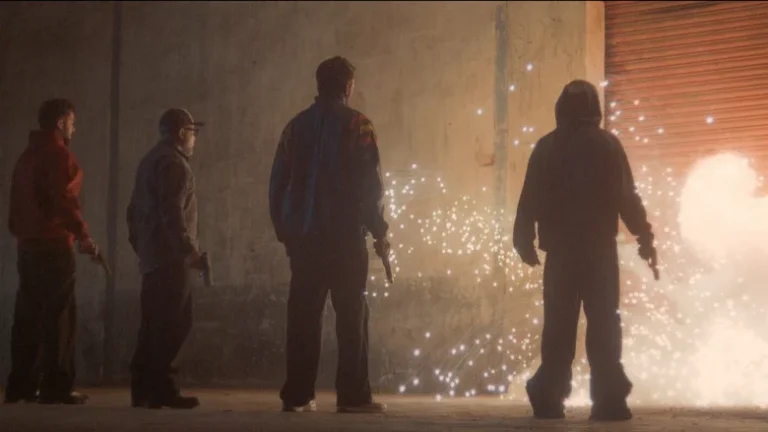
Ullas Chemban opens on a retro-lit street corner where a crew of restless friends trade laughter for a quick score, and the film’s first promise is seductive: a crime comedy with a pulse. Two and a half hours later, that promise is still being cashed.
When the Hustle Becomes the Whole Movie
The premise is lean and familiar: Ousu and his friends chase easy money and stumble into an underground mystery that swallows them whole. The first act coasts on group chemistry, all overlapping banter and shoulder-punching swagger.
Chemban stages the boys’ camaraderie with an easy, unhurried rhythm, letting the comedy breathe before the criminal machinery engages. It is the film’s most confident stretch.
Then the score turns, and the tonal shift from carefree scheming to revenge and survival arrives with a thud. The transition is announced rather than earned.
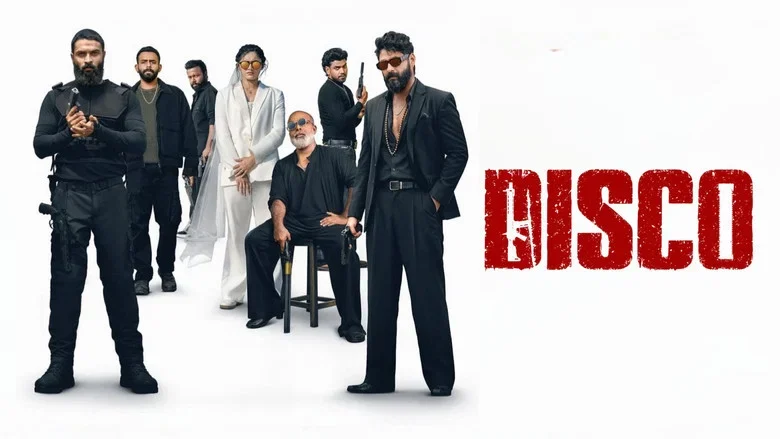
A Mystery That Refuses to Tighten Its Grip
The central engine is a quick-money plan gone wrong, which ought to be the film’s tightening noose. Instead, the underworld expands sideways, introducing factions and betrayals without sharpening the threat.
Where a leaner thriller would compress, this screenplay dilates. The middle hour trades momentum for incident, and the mystery’s stakes stay abstract.
That looseness is a real liability in a genre built on pressure. The film keeps promising a reckoning it keeps postponing.
The comic register compounds the problem. Because the friends are never truly cornered, the descent into danger feels like a change of costume rather than consequence.
Antony Varghese Holds the Center While the Frame Drifts
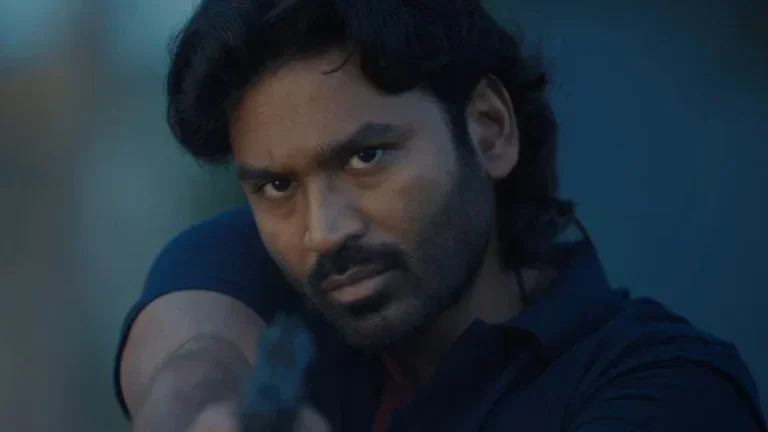
Antony Varghese anchors Ousu with a wiry, watchful stillness, his jaw tightening before his fists do. He plays the shift from casual hustler to cornered survivor in the eyes, not the dialogue.
The physical restraint he brings here echoes the lean economy of his turn in Kattalan, where less screen time bought more menace. Here he has more room and, frustratingly, less to push against.
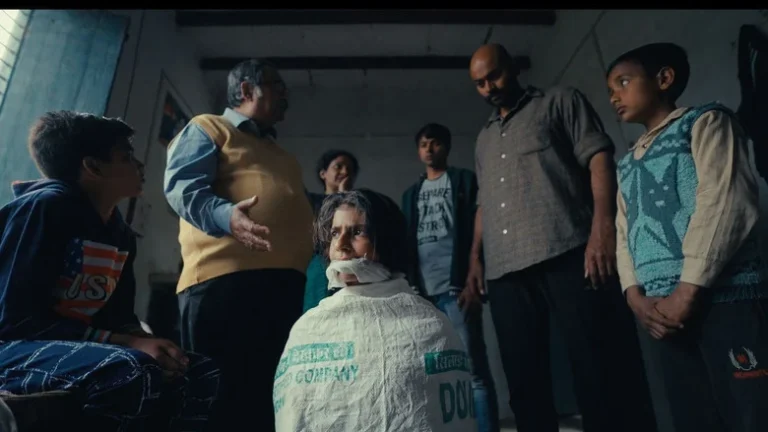
Arjun Ashokan and Lukman Avaran fill the ensemble with lived-in texture, trading insults in a cramped van with the ease of men who have shared a thousand such rides. Chemban Vinod Jose registers in a handful of scenes with a slow, appraising stare that briefly raises the temperature.
Yet the antagonist slot stays a vacuum. No figure commands the frame with enough weight to make the heroes’ panic feel earned, and the villains blur into interchangeable muscle.
Retro Texture That Outpaces the Story
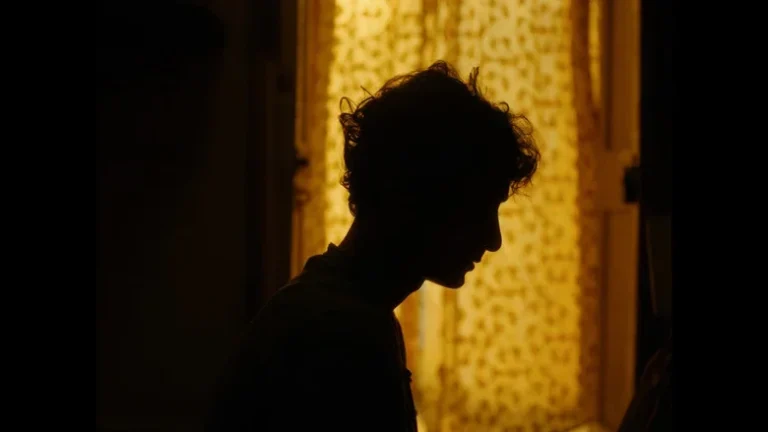
Armo’s camera leans into a buzzing retro backdrop, all warm tungsten and cramped interiors that give the hustle a lived-in grime. The visual world is specific and handsome.
But the styling often substitutes for tension. Long, unhurried takes let the air out of confrontations that needed clipped coverage and hard cuts.
The comparison to a tighter contemporary peer is instructive. Just as Scene wrestled a restless comic energy into an uneven shape, this film’s tonal ambition outruns its discipline.
Manikandan Ayyappa’s score does its best to separate the comic passages from the darker ones, but it cannot manufacture dread the staging withholds.
The Malayalam Thriller Boom Needs Sharper Instincts
The film arrives into a crowded field where the regional crime thriller has become a reliable theatrical draw. That appetite rewards atmosphere, but it punishes slack pacing.
This is a case where the genre’s commercial confidence has outgrown its editorial patience, a tension visible across contemporary Malayalam thrillers that mistake length for depth.
The survival-driven climax gestures at the moral cost of easy money, but the resolution arrives without the cruel clarity the premise demanded. The film wants to say something about greed; it settles for saying something about trouble.
Chembosky’s Bet and the Star’s Box-Office Leverage
Chembosky Motion Pictures is staking real capital on an ensemble crime comedy in a market that increasingly favors star-driven event releases. The A certificate narrows the family audience and puts the burden squarely on the youth and fan base.
Antony Varghese’s theatrical pull is real but untested at this scale, and a two-hour-thirty-eight-minute runtime is a hard sell without a must-see hook. The film’s commercial fate rests on word of mouth outrunning its own sprawl.
The remake-and-ensemble pipeline keeps churning, but original crime IP only sustains when the craft matches the ambition. Here, the ambition is visible; the discipline is not.
The genre sibling closest in spirit, Thudakkam, understood that survival thrillers live or die on compression. This one keeps adding rooms to a house that needed fewer walls.
A Hustle That Never Quite Finds Its Score
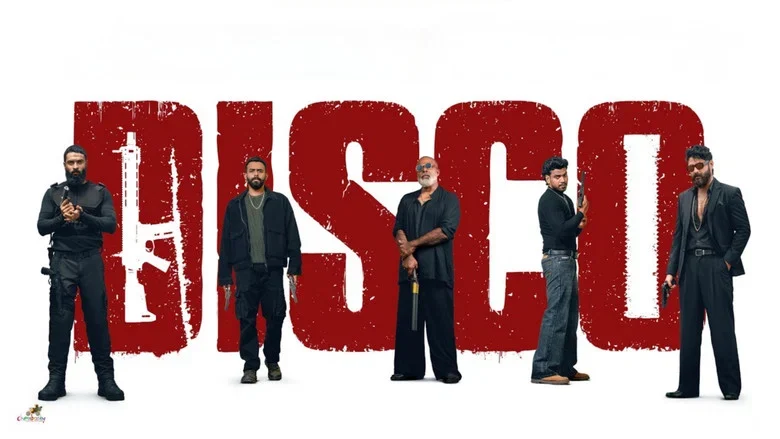
Disco is a film with a strong opening hand and a stubborn refusal to play it. The ensemble hums, the retro world glows, and Antony Varghese gives the center a pulse worth following.
What it lacks is the cruelty of a real crime story: the sense that every wrong turn costs something irreversible. Instead, the danger keeps arriving politely, and the film keeps making room for one more detour.
By the final reel, the hustle has exhausted itself, and the audience is left counting the minutes rather than the bodies. A crime thriller that cannot tighten its own screws is a curious thing to watch, handsome, restless, and ultimately unwilling to close the deal.