Vasudha Rungta’s short-form drama opens on the smoke-stained edges of Mumbai’s criminal economy, all fluorescent corridors and whispered negotiations. Bharat (Delzad Hiwale) has a wife, a Dhanteras deadline, and a promise he intends to keep.
A Festive Deadline Is Not the Same as Dramatic Urgency
The premise leans hard on Dhanteras: the festival of wealth, the household purchase, the marital obligation folded into a criminal errand. It is a clean conceptual hook, and the 28-minute runtime promises the kind of concentrated pressure that forces characters into corners.
But compression is not the same as intensity. A deadline only generates tension when the audience understands what breaking it costs, and Rungta’s film sketches that cost in broad strokes rather than specific, lived-in detail.
Bharat’s wife exists as a wish rather than a person, and the underworld exists as a mood rather than a system. The result is a film that announces its stakes rather than dramatizing them.

Delzad Hiwale’s Restraint Carries More Than the Script Does
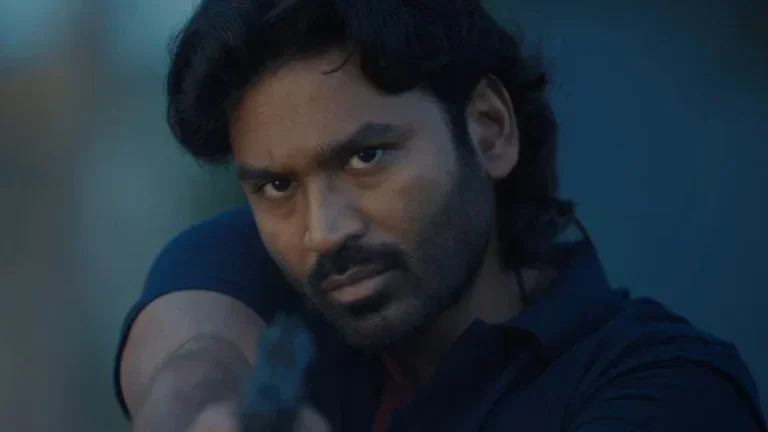
Hiwale plays Bharat with a deliberateness that reads as exhaustion rather than calculation. His shoulders stay slightly collapsed, his gaze drops before he answers questions, and he absorbs pressure without theatrical reaction.
That physical discipline does the heavy lifting in scenes where the writing leaves him stranded. When the camera holds on his face during a negotiation, the tension comes from what he refuses to show, not from what the screenplay has given him to say.
The contrast with the more expansive male turns in Sooriyan Maraindha Maalai is instructive: where that film lets its lead breathe into a chamber romance, this one keeps Hiwale on a leash that occasionally feels tighter than necessary.
The Underworld Needs Architecture, Not Just Atmosphere
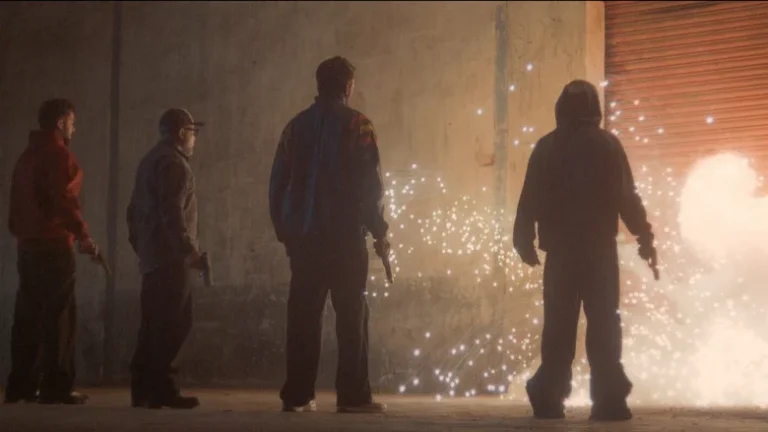
Rungta shoots Mumbai’s criminal spaces with a preference for cramped interiors, low ceilings, and light that comes from single sources. That visual choice is consistent and creates a claustrophobia that suits the material.
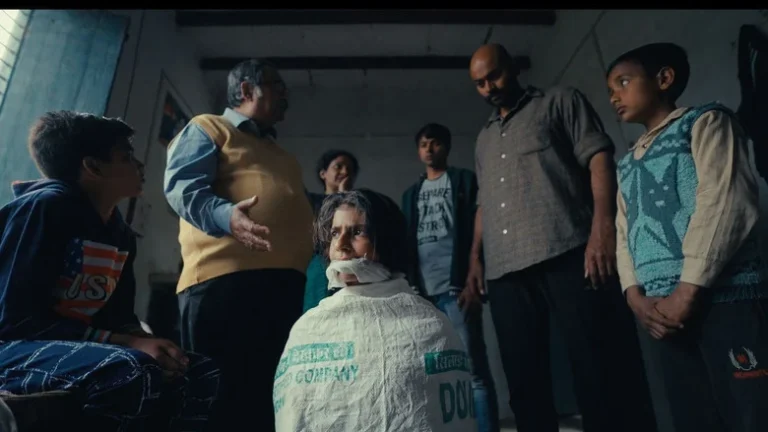
What the film lacks is a sense of hierarchy. The underworld here is a collection of faces rather than a structure, and the supporting cast, including Imaad Shah and Vijay Maurya, register as textures rather than characters with competing agendas.
Akarsh Khurana appears in a handful of scenes with a watchful stillness, but the film never gives his presence a clear dramatic function. The cast list promises a world; the runtime delivers a hallway.
Rungta’s Direction Finds Rhythm but Not Escalation
The film’s strongest sequences are its quietest: a phone call conducted in half-sentences, a walk through a market where the festival crowd becomes a source of visual noise. Rungta has an eye for the way ordinary commerce and criminal business share the same streets.
Where the direction falters is in escalation. The middle section moves laterally rather than forward, introducing complications that raise the temperature without tightening the vise. By the time the climax arrives, the film has generated unease but not dread.
The editing keeps things lean, and there is no wasted shot, but leanness is not the same as momentum. A 28-minute film can still feel like it is marking time, and this one occasionally does.
A Short Film That Wants to Be a Feature Without the Room
Comparisons to other contemporary Hindi dramas are inevitable, and the film’s domestic-criminal collision shares thematic DNA with the kind of intimate storytelling in Dilwali Diwali. Both films are interested in the way family obligation distorts decision-making.
But where that film uses silence to build pressure, this one uses silence to fill space. The difference is structural: one has a spine, the other has a premise.
The comparison with Kidney is also telling. Both films are working with compressed formats and morally compromised protagonists, but Kidney understands that a short film needs a single, sharp turn rather than a series of soft ones.
What ZEE5 Gets Right, and What It Doesn’t
ZEE5’s investment in short-form Hindi content is a genuine experiment in the market, and Ghamela represents the kind of mid-budget, character-driven risk that streamers should be taking. The platform’s willingness to back a 28-minute drama with a recognizable cast is not nothing.
But the film also exposes the limits of that model. Short-form requires a different kind of discipline than feature-length storytelling, and Ghamela often feels like a feature that has been trimmed rather than a short that has been designed.
For a platform building a slate of contemporary Hindi dramas, the lesson is clear: compression should sharpen the story, not shrink it.
The Verdict: A Promise Unfulfilled
Ghamela is not a failure of ambition. It is a failure of specificity. The film has a premise, a deadline, and a lead performance that deserves a sharper script, but it never quite locates the moment where Bharat’s personal wish and criminal reality collide with real consequence.
What lingers is Hiwale’s face in the final minutes: tired, unresolved, and carrying the weight of a film that asked him to hold more than it was willing to give him. That is a performance worth watching. The film around it is still waiting for its own Dhanteras.