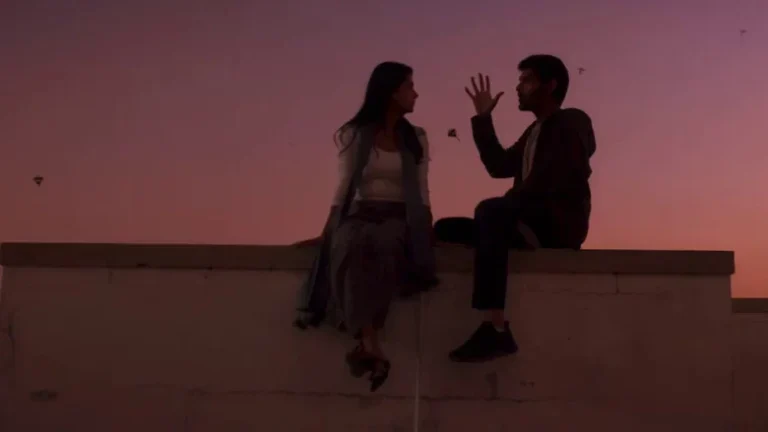
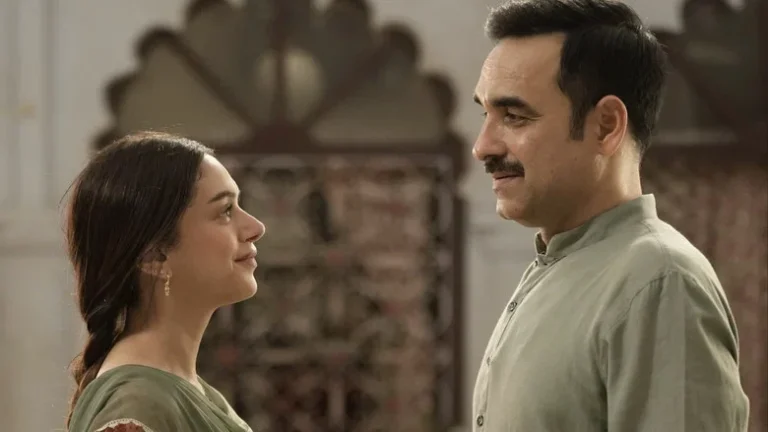
The opening night crowd at the multiplex expected the old Amal Neerad swagger, the slo-mo walk, the brass-and-shadow grammar, the ensemble strut. What they got instead was a film forever glancing backward at its own 2012 predecessor, hoping nostalgia would cover the cracks.
That is the central problem with Bachelor Party D’eux, and no amount of Kunchacko Boban cool or Tovino Thomas attitude can disguise it.
A Sequel That Argues With Its Own Ghost
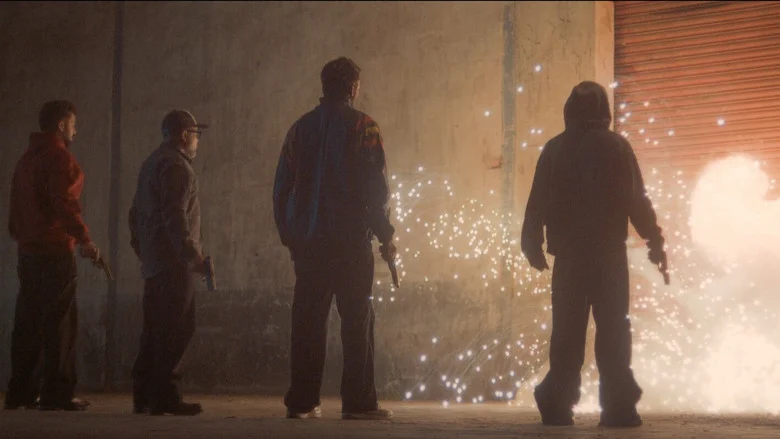
Fourteen years after the original Bachelor Party became a cult touchstone for a certain kind of Malayalam moviegoing, irreverent, stylish, aggressively male, Neerad returns to the same well. The premise this time is a group of thieves whose loyalty to one another is tested when a job goes sideways and the escape turns deadly.
On paper, that is a clean, muscular hook. In practice, the film treats friendship as a slogan it keeps repeating, not a pressure system it actually tests. When every character insists they will not abandon a brother, the line stops being a moral stake and becomes a marketing tagline.
Where the Ensemble Splinters Instead of Cohering
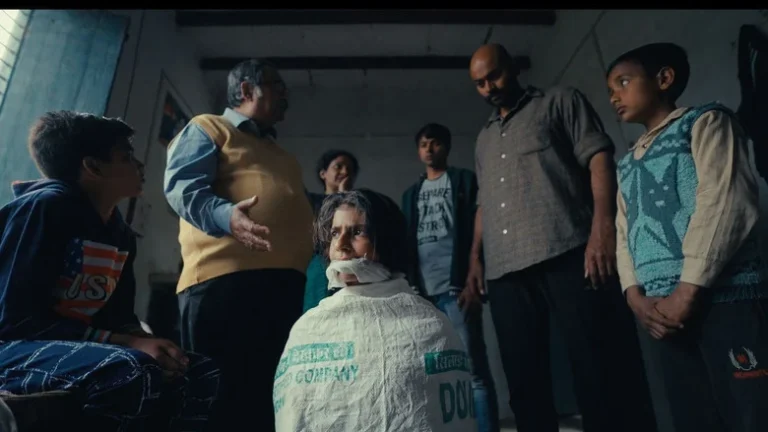
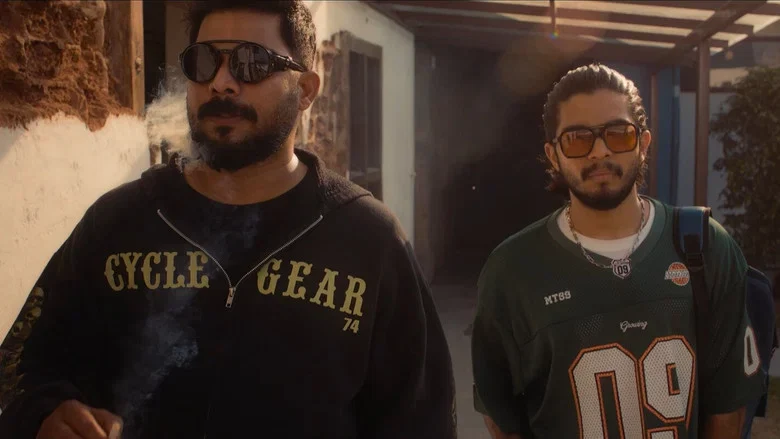
A group thriller lives or dies on the friction between bodies in a room. Neerad has assembled one of the densest ensembles Malayalam cinema has offered in years, and yet the camera keeps them in formation rather than in conflict.
Kunchacko Boban carries the calm center of the group with an easy, low-register authority, the kind of stillness that works when the world around him is loud.
Just as the filmmaker demonstrated tighter spatial discipline in O.M, the staging here tries to prioritize group movement over solo heroics. But the choreography rarely allows the actors to actually collide.
Naslen, coming off the restless energy he brought to Scene, is deployed here as comic relief rather than as a dramatic engine, and the film wastes the exact quality that made him interesting, a nervous, kinetic unpredictability.
Soubin Shahir, meanwhile, gets the film’s most thankless assignment: standing at the edge of frames, reacting to chaos rather than generating it.

The Comedy That Undercuts the Crime
Neerad’s tonal control has always been his strength, but the hybrid genre structure here, action, comedy, crime, drama, thriller, all at once, keeps the film from settling into any register long enough to build real dread.
A tense standoff will be punctured by a bit of banter; a chase will pause for a punchline. The result is a film that feels less like a pressure cooker and more like a party where the music keeps changing before anyone can dance.
The screenplay resists the kinetic sensationalism that overtook Disco, opting for a deliberate, almost suffocating urban dread in its middle stretch. But it never quite earns the dread, because the film keeps winking at the audience to remind them it is all in good fun.
The Camera That Keeps Its Distance
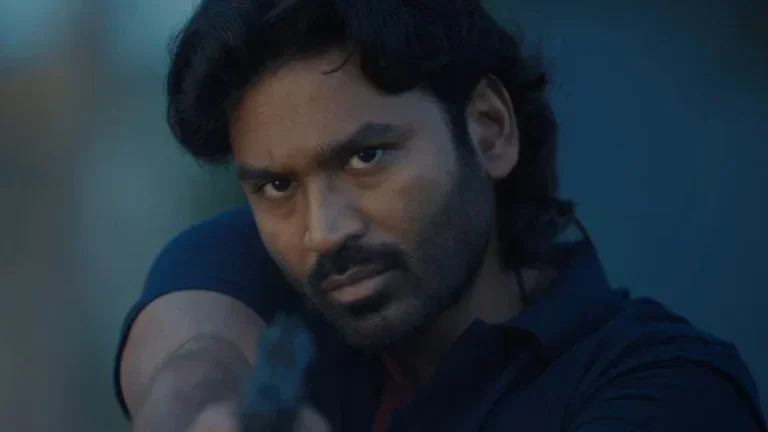
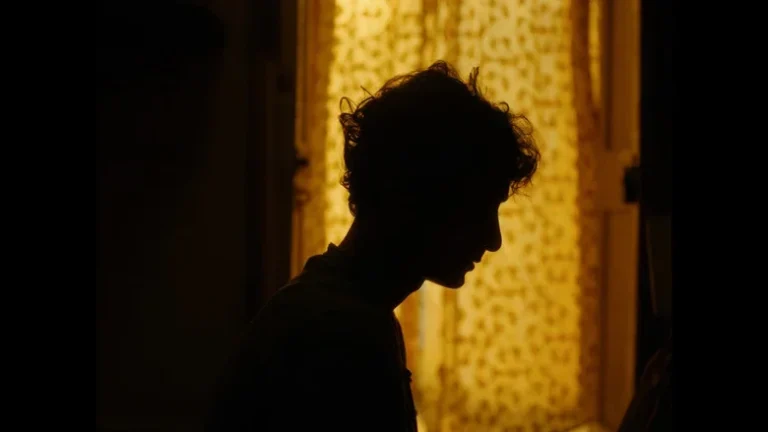
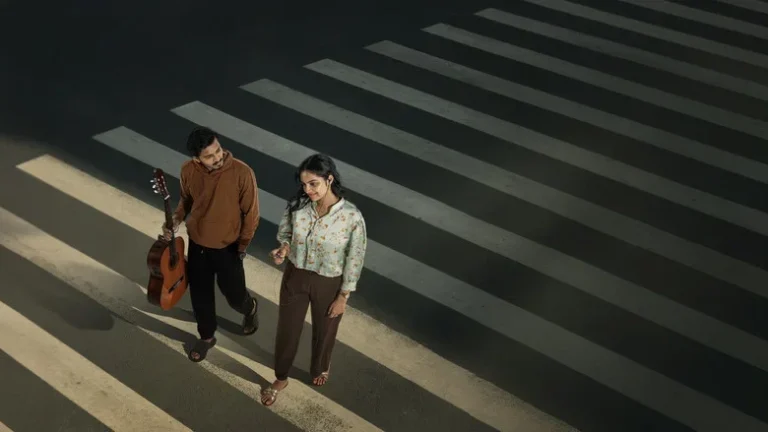
Neerad’s visual grammar remains intact, the low angles, the backlit silhouettes, the saturated night exteriors that turn every alley into a stage. There is a moment in the second act where the group moves through a rain-slicked lane, and the camera tracks them from behind at chest height, refusing to cut.
That shot is the film’s best argument for itself: the ensemble as a single organism, breathing together. But it is an isolated grace note in a visual scheme that otherwise repeats the same three compositions, the walk, the stare, the slow-motion exit.
The editing in the first half is patient, almost too patient, letting the setup breathe while the audience waits for the crime to ignite. The second half accelerates into the escape, but the escalation feels mechanical rather than earned.
What the Ensemble Actually Delivers
Sharafudheen, in one of the film’s sharper beats, plays a man whose loyalty is visibly costing him something, a tightening around the jaw, a hesitation before he speaks. It is a small performance inside a loud film, and it lands.
Tovino Thomas, meanwhile, is given the film’s most physically demanding sequences and executes them with the coiled economy of someone who knows exactly how much screen time he has. But the script never gives him a scene that requires him to be more than a presence.
The supporting women, Rajisha Vijayan, Jyothirmayi, Nadhiya, are present in the frame but not in the story, which is a structural failure the film never acknowledges. They appear, they react, they exit. The ensemble is dense in numbers and thin in dramatic function.
The Commercial Arithmetic of a Beloved Franchise
The producing banners behind this release are betting on a specific kind of nostalgia, the 2012 film’s cult status as a generational touchstone for a certain Malayalam audience. That bet is not unreasonable, but it is also not a strategy.
Amal Neerad’s theatrical leverage has always rested on style as a commercial proposition, and that proposition is being tested here against a market that has grown far more crowded.
The regional remake pipeline and the sequel economy are both running hot, and a film like this needs to justify its existence beyond the logo on the poster.
This patient, ensemble-driven crime drama signals a welcome tonal maturity across contemporary Malayalam thrillers, but maturity without momentum is just a slower way to lose the room.
The Verdict: A Reunion That Never Quite Arrives
Bachelor Party D’eux is not a disaster. It is something more frustrating, a film with the right cast, the right director, and the right premise that never finds the scene where the friendship actually costs someone something.
The ending, when it comes, resolves the escape but not the question the film keeps asking: what does loyalty mean when the group is already broken?
Neerad stages the final beat with his usual precision, but the emotion underneath it is thin, because the film spent two hours telling us about brotherhood instead of showing us its price.
There is a version of this movie, leaner, meaner, less in love with its own mythology, that would have been worth the fourteen-year wait. This is not that version. It is a reunion where everyone showed up, but nobody brought the argument that made the first one matter.