Sangeeth Sivan’s final film opens on Christmas lights strung over a lie. A suspended officer, a blackmailed kid, and five crore rupees that refuse to stay missing.
That premise should hum. Instead, Blind Game, the late director’s Hindi reworking of the Malayalam thriller 7th Day, spends its running time telling us what it should be showing us.
A Suspended Cop Is Only Interesting When He Has to Improvise
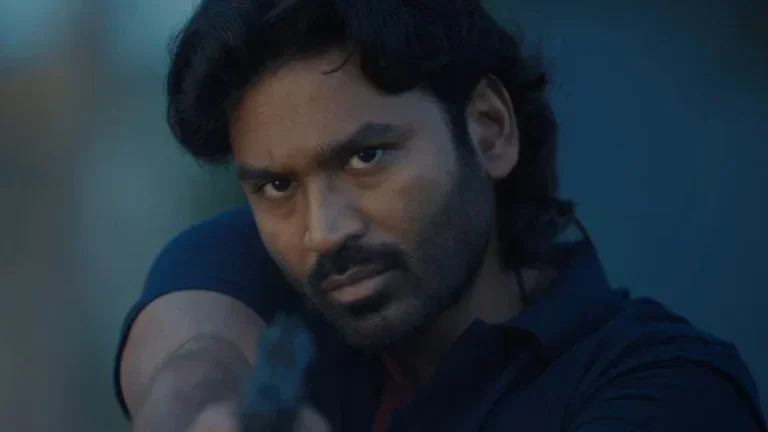
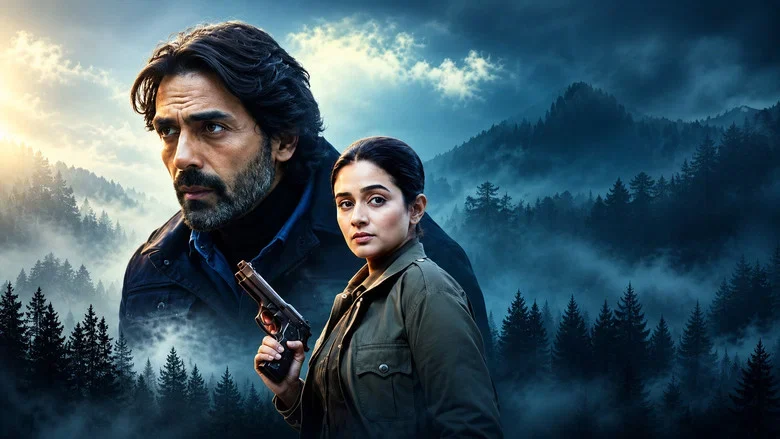
Arjun Rampal’s Sikander Singh enters the frame with the posture of a man who still answers to a rank nobody revoked on paper. Shoulders squared, voice kept at a low register, he moves through the blackmail discovery like a man conducting an inquiry he was never authorized to run.
That tension, authority without a badge, is the film’s most fertile ground. Sivan plants it early, when Sikander decides to help Shaan and Vicky despite the danger curling around them.
Just as a certain mythological epic this season mistook scale for substance, Ramayana and this film share a structural flaw: both assume the audience’s patience is infinite.
The difference is that Blind Game has no spectacle to hide behind. It has Rampal, a Christmas-night backdrop, and a screenplay that keeps interrupting itself.
The Friends Are the Problem, Not the Crime
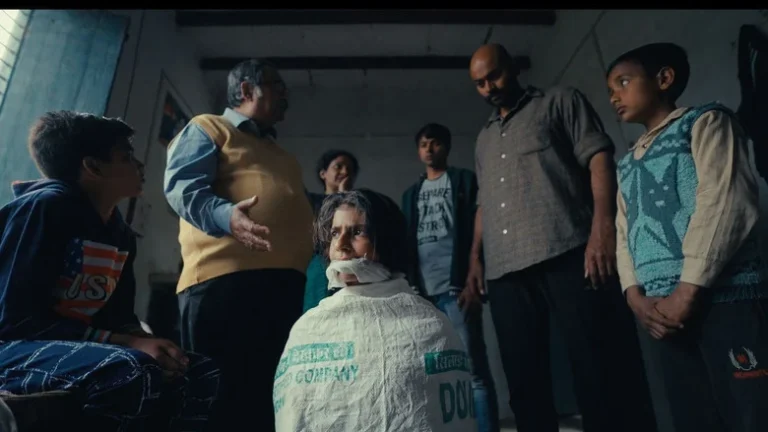
Here is where the film’s engine stalls. The Shaan–Vicky friend group, and the rotating cast of young men orbiting them, consumes screen time that the central investigation badly needs.
Every time Sikander gains momentum, the film cuts back to the friends explaining themselves. And then explaining again. And then explaining what they explained.
Akash Makhija’s Shaan is the hinge, his encounter with Sikander is what drags the suspended officer back into active duty, and he plays the role with a nervous, jittery energy that works in isolation.
But the screenplay never lets that energy breathe. It buries it under backstory.
Rohit Chandel’s Vicky carries the blackmail pressure with a convincing strain around the eyes, the kind of man who has already done the math on his own survival and doesn’t like the answer. These are functional performances trapped in an over-explained structure.
Priyamani Brings Procedure Where the Film Wants Panic
The most grounded presence in the film is Priyamani’s Yamini, the official police counterpoint to Sikander’s freelance investigation. She plays the role with a clipped, procedural efficiency, no theatrics, no ornamental flourishes, just a cop doing her job while the men around her spiral.
It’s a performance that recalls the controlled exhaustion she brought to Jana Nayagan, where she similarly anchored chaos with stillness rather than volume.
The Sikander–Yamini dynamic is the film’s best asset. Two professionals, one suspended, one active, circling the same truth from different angles.
And then the screenplay sidelines them. Again. For the friends.
Sivan’s Direction Knows the Mood but Not the Tempo
The Christmas-night setting is a smart container. Twinkling lights against criminal dread, social gatherings concealing transactions, the holiday cheer functioning as ironic wallpaper for greed.
Sivan understands atmosphere. He understands that a missing ₹5 crore is a more potent engine than a corpse, because money can be moved, hidden, lied about.
What he doesn’t control is exposition. Long stretches of dialogue exist to clarify what a single well-placed image could accomplish. The alleged suicide, the film’s central ambiguity, keeps getting explained instead of felt.
The genre sibling that understood this better is Gajab Raat, which trusted its audience to sit inside uncertainty without a narrator holding their hand.
Blind Game doesn’t trust. It explains. And every explanation drains another ounce of tension from the room.
David Walter Williams Is a Threat Without a Face
The antagonist, David Walter Williams, exists primarily as a name whispered with fear. He is described as one of Southeast Asia’s most dangerous criminals, and the film treats him accordingly, as a pressure system rather than a person.
That works, up to a point. Blackmail, gang retaliation, the slow squeeze on Vicky, all of it lands because we never quite see the hand applying pressure.
But a villain who is only a threat eventually becomes a concept. And concepts don’t generate dread. People do.
The film’s climax tries to correct this, forcing the friends into a survival scenario where betrayal is as dangerous as the gang. The twist-driven resolution arrives, but the mechanics of it feel less like revelation and more like the screenplay finally running out of ways to withhold.
Soham Rockstar and ThunderSky Bet on a Format That Doesn’t Forgive Sloppiness
Produced by Deepak Mukut and Hunar Mukut under Soham Rockstar Entertainment, alongside Kushagra Sharma and Srishti Sharma’s ThunderSky Entertainment, Blind Game arrives as a direct-to-digital release on ZEE5 and Free 5 rather than a theatrical proposition.
That’s a financially sensible choice for a mid-budget crime thriller in a market where theatrical screens are increasingly reserved for event cinema. But it’s also a choice that exposes the film’s weaknesses more brutally than a big-screen release might have.
OTT audiences have a lower tolerance for convolution. They can pause, rewind, and, crucially, leave.
The remake pipeline that once guaranteed returns is showing fatigue across contemporary Hindi thrillers, where original IP is increasingly outperforming recycled material. Blind Game doesn’t reverse that trend.
For Rampal, this is a reminder that his screen presence remains an asset, the kind of actor who can hold a frame without dialogue, who understands that stillness reads as authority. But presence alone cannot rescue a screenplay that mistakes explanation for complexity.
The Verdict: A Thriller That Forgets the Thrill Is in the Withholding
Blind Game is a film about deception that never quite deceives us. It tells us there are layers, then peels them back one by one, narrating each removal as if we hadn’t already seen the shape underneath.
Sivan’s final film is not without merit. Rampal and Priyamani give it a professional spine. The Christmas setting offers texture. The missing-money premise has genuine intrigue.
But a thriller’s contract with its audience is simple: keep us uncertain, keep us leaning forward, keep us afraid of what we don’t know. Blind Game keeps explaining instead.
And in a genre built on what remains unsaid, the loudest thing this film does is talk.