Vinoth Kishan spends the first act of Angelina doing something quietly radical for a Tamil romance: he waits. The film hands him a six-month courtship deadline and then, in a single tonal pivot, turns his patience into a police interrogation.
A Romantic Deadline That Collapses Into A 24-Hour Manhunt
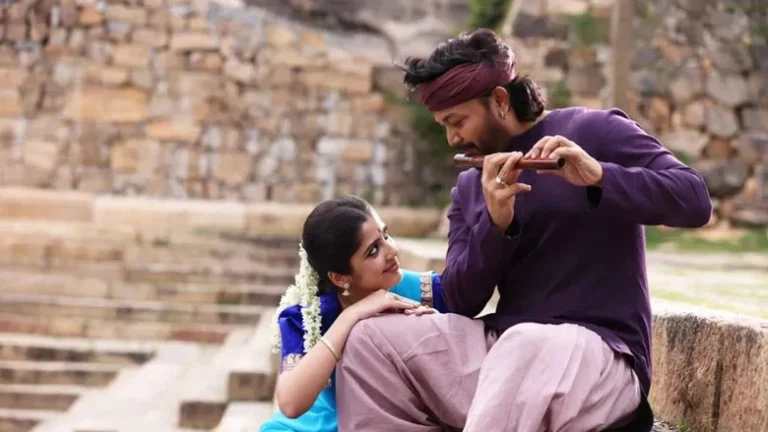
The opening movement belongs to Monica Chinnakotla’s Angelina, a college student who sets her suitor a literal calendar of affection. It is a charming enough conceit, and it gives the screenplay a built-in countdown that most Tamil romances lack.
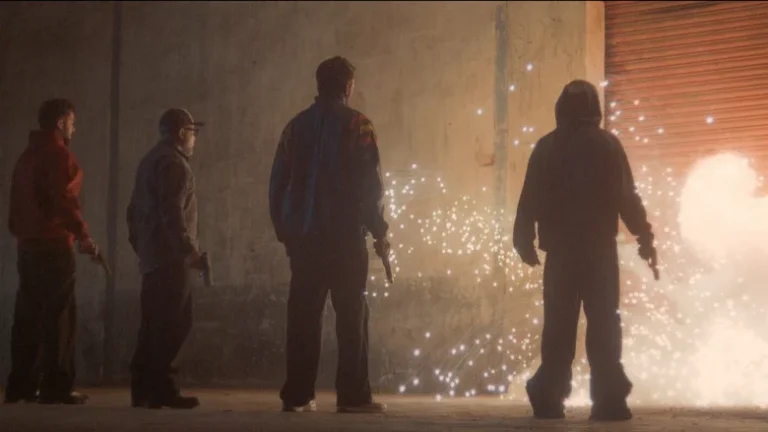
Then the film finds her critically injured, and the clock resets. The police now have twenty-four hours to identify who put her there, and the suspect pool is drawn from the people who claimed to love her.
That structural hinge is the film’s only genuinely interesting idea. Romance as a timed test becomes crime as a timed test, and the same impatience that drove the courtship now drives the investigation.
When Everyone Is A Suspect, Nobody Is A Character
This is where the film’s engine begins to sputter. A closed-circle mystery lives or dies on the friction between its suspects, and Angelina spreads its suspicion so thin that no single relationship gets the pressure it needs.
Friends who should crack under interrogation instead recite their alibis with the flat competence of people reading a call sheet. The screenplay mistakes a crowded suspect list for dramatic density.
The tonal shift is also handled with a bluntness that undercuts the earlier charm. One scene trades flirtation for forensics without a transitional beat, and the audience is left to recalibrate alone.
Compare the discipline on display in Nooru Kodi Vaanavil, which understood that muted romance requires a held camera and a patient edit. Here the pivot is announced rather than dramatized.
Vinoth Kishan Holds The Frame While The Script Loses Its Grip
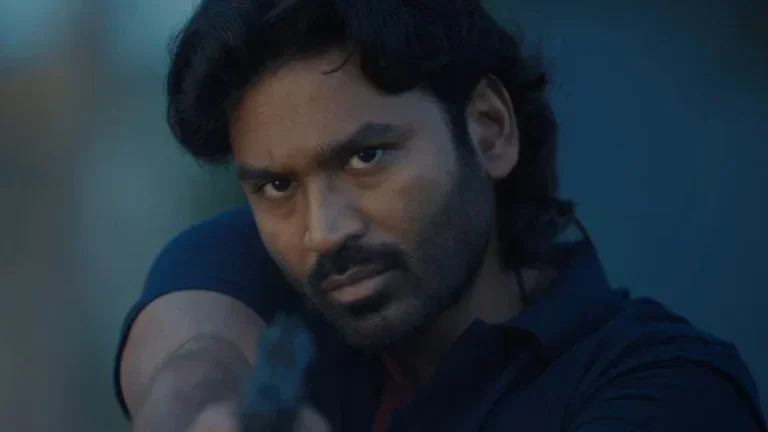
Kishan is the film’s most reliable asset. Watch his posture in the courtship scenes: shoulders angled toward Angelina, hands perpetually half-raised as if rehearsing a gesture he hasn’t earned the right to make yet.
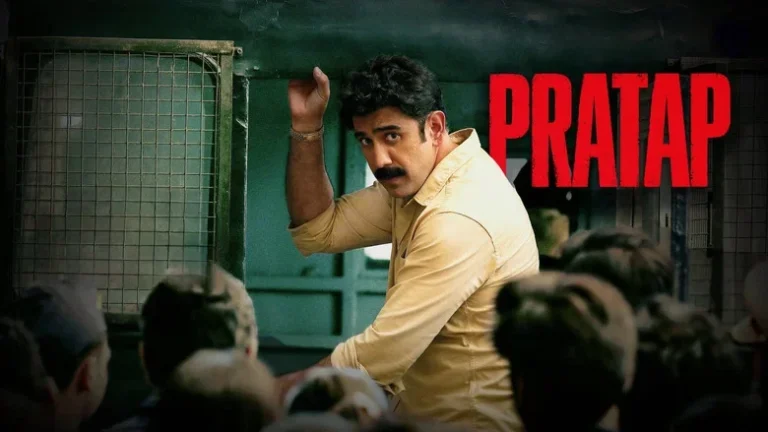
That physical hesitancy pays off in the investigation. When he is questioned, the same half-raised hands become a tell, and the film briefly finds the psychological texture it has been missing.
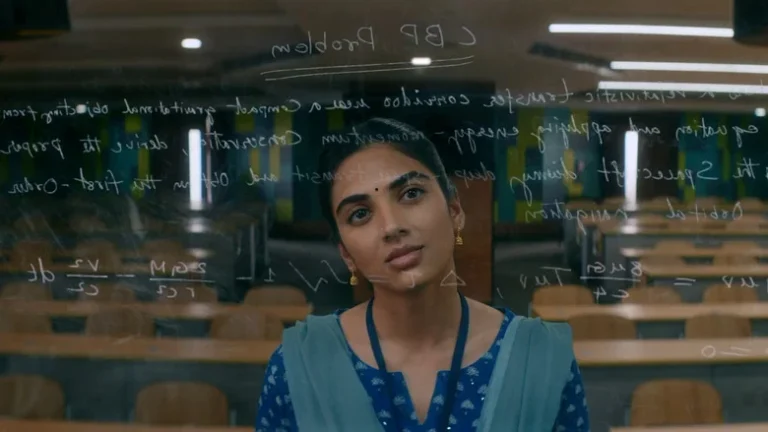
Chinnakotla has less to work with once her character is confined to a hospital bed, and the screenplay never gives her a scene that matches the wit of her introduction. Her stillness in the later passages is dignified but dramatically starved.
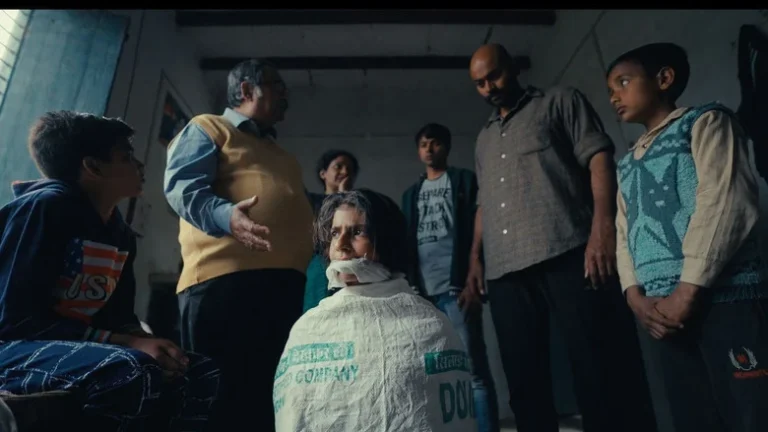
The supporting ensemble is treated as a collective rather than a set of individuals. College friends and neighborhood elders drift through the frame without a single distinguishing gesture between them, which is fatal for a whodunit.
Kishan’s restraint here recalls the exhausted interiority he brought to Mookuthi Amman 2, though that film at least gave him a mythology to push against. This one gives him a stopwatch.
Camera Discipline That Never Commits To A Point Of View
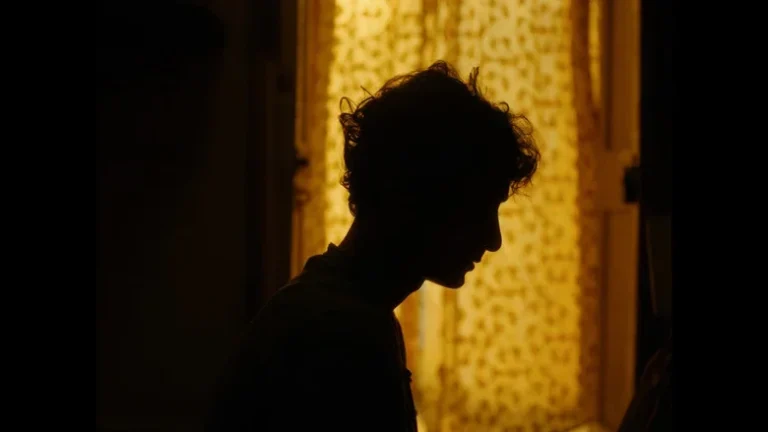
The visual grammar is competent without being expressive. The courtship scenes are shot in warm, shallow-focus medium shots that keep the couple centered and the world blurred, which is standard but effective.
The investigation scenes, however, adopt the same flat coverage. There is no shift in lens, no change in lighting temperature, no spatial strategy that signals the audience has entered a different moral universe.
A procedural needs the camera to become suspicious. Here it remains neutral, observing interrogations from a respectful distance as if afraid to intrude on the characters’ privacy.
The editing in the second half does find a useful rhythm, cutting between interview rooms with a clipped efficiency that mimics the twenty-four-hour deadline. It is the one technical choice that genuinely serves the premise.
What the film lacks is the suffocating intimacy that a story like this demands. The thematic sibling Nizhalilirundhu Velicham understood that a compressed timeline requires the frame itself to feel like a closing door.
The Ending Resolves The Crime And Evaporates The Stakes
Without spoiling the reveal, the resolution arrives with a tidiness that feels unearned. The culprit is identified, the twenty-four hours expire, and the film closes on a note of moral ambiguity it has not actually constructed.
The final image tries to suggest that trust is the real casualty, but the screenplay has spent so little time on any single relationship that the loss registers as abstract rather than personal.
There is a version of this film, perhaps thirty minutes longer and far more claustrophobic, where that ending would land like a verdict. What we have instead is a shrug dressed as a conclusion.
A Modest Release In A Crowded Tamil Drama Season
The producing banners behind Angelina have kept the budget modest, which is the film’s only real commercial advantage. A hundred-minute runtime and a two-name cast make the break-even math forgiving.
But forgiving math does not build a franchise. Tamil cinema’s current appetite for contained relationship dramas with investigative pivots is real, and this film sits squarely inside that trend without distinguishing itself from it.
Kishan’s box-office leverage remains tied to ensemble credibility rather than solo draw, and a film this small will not change that calculus. The theatrical window will be short, and the eventual streaming life will be where most of its audience finds it.
The broader landscape of contemporary Tamil dramas is currently rewarding films that commit to a single tonal register and execute it with discipline. Angelina hedges, and hedging is the one thing this market no longer forgives.
A Film That Times Its Romance But Forgets To Feel It
Angelina is built on two clocks and one good performance. The six-month courtship and the twenty-four-hour investigation are clever bookends, but the space between them is filled with suspects who never become people.
Kishan’s half-raised hands are the film’s truest detail, a small physical confession that the screenplay never learns to match. Everything else moves on schedule, hits its marks, and leaves no residue.
By the time the credits roll, you may find yourself thinking less about who hurt Angelina and more about the film that could have hurt harder. It is a procedural without pressure, a romance without heat, and a deadline without dread.